


Why Blended Fabrics Are Emerging as the Industry’s Growth Driver
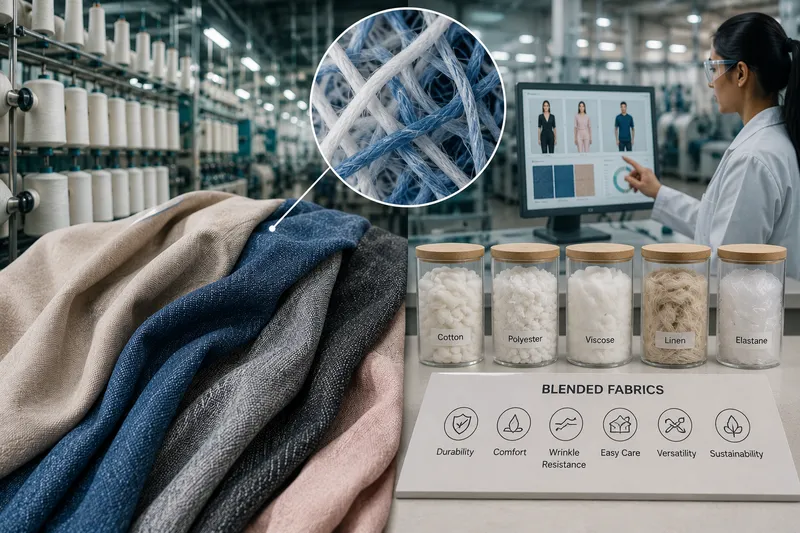
A transformational stage in the worldwide textile industry has begun. So far, fabrics have been evaluated on cost and/or bulk. In the future, evaluation will be based on meeting the changing needs of consumers. This means that fabrics are no longer required to serve a single function (versatile, durable, comfortable) but must perform these functions simultaneously. Therefore, the transition to the use of blended fabrics has significantly increased.
By blending two or more types of fibre (natural and/or polyester) together when creating yarn for new materials, manufacturers can now engineer fabrics that deliver multiple functions. This type of development is achieved during the yarn spinning process, where fibre types are blended to form one continuous length of yarn. This process produces blended textiles that combine the most desirable aspects of individual fibres (i.e., cotton for comfort and polyester for durability). The combined fibre offers enhanced strength, texture, and quality, with many fabrics being less expensive than if they had been made using a single fibre type. Due to their adaptability, blended fabrics will play a key role in the next growth cycle of the textile industry.
Denim: Leading the Blended Fabric Transformation
The denim category is evolving as it moves into performance apparel. Where denim was once a functional, utilitarian (100% cotton) fabric made predominantly for male workers, it has now evolved into a high-performance blend (a combination of multiple materials) with a strong emphasis on comfort, eco-friendliness, and durability. The shift toward multifunctional use (work, leisure, or everyday wear) has been driven by consumer demand. As a result, many manufacturers are now producing high-performance blends using materials such as elastane and Tencel, while also integrating recycled fibres into denim production processes.
The transition from rigid denim to blended fabric construction has powered this transformation. By adding elastane to create elasticity, denim now offers greater wearability for daily use. Furthermore, polyester and viscose blends contribute to enhanced durability, improved drape, and better colour retention, important characteristics in today’s rapidly changing fashion environment. Blended denim is no longer an alternative option but a mainstream one. Consumer expectations have evolved to demand denim that fits well, retains its shape, and performs at a high level while maintaining style.
Balancing Performance with Sustainability
Sustainability is now a key driver accelerating the adoption of blended fabrics, especially denim, due to rising consumer demand and global export requirements. Although cotton remains a primary component, its resource-intensive cultivation has prompted innovation within the industry.
Improved cultivation practices, including organic farming and regenerative agriculture, are paving the way for more sustainable production. These innovations create opportunities to grow cotton with consideration for environmental limits. Additionally, incorporating recycled fibres and adopting manufacturing processes that reduce water usage and environmental impact allows for fabric production without compromising performance. As brands and consumers become more environmentally conscious, balancing sustainability with functionality will be critical for long-term success.
Driving Efficiency and Innovation in Manufacturing
Blended fabrics offer multiple advantages to manufacturers. They enable flexibility in the production process, faster manufacturing timelines, and the ability to tailor products for diverse markets from everyday wear to high-performance apparel. For India, this presents a significant opportunity. With an established textile base and a growing focus on value-added manufacturing, the country is well-positioned to capitalise on the increasing demand for blended fabrics. Denim, in particular, holds strong potential for expansion, innovation, and enhanced export competitiveness.
The Road Ahead
The growth of blended fabrics is not merely a cyclical trend; it represents a structural shift in the textile industry. As demand rises for performance-driven, sustainable, and versatile textiles, the need for blended fabrics will continue to grow.
Denim remains at the forefront of this transformation, driven by continuous innovation in fabric blends. It is emerging as a key growth driver within the textile industry. Manufacturers must now focus on creating fabrics that not only meet current consumer expectations but also anticipate future needs.
Blended fabrics, especially denim, are redefining how modern textiles are perceived and, in turn, how the textile industry will operate in the years ahead.
- Core Fashion & Textile Value Chain
- Circularity, Sustainability & Waste Management
- Sustainability Enablers & Solutions
- Technology, Platforms & Innovation
- Retail, Trade & Market Access
- Knowledge, Institutions & Ecosystem Builders
- Finance, Investment & Support
- Logistics, Infrastructure & Operations
- Media, Communication & Culture
- Others

 English
 Arabic
 French
 Spanish
 Portuguese
 Deutsch
 Turkish
 Dutch
Dutch
 Italiano
 Russian
 Portuguese (Brazil)
 Greek
Greek