


Responsive Policymaking for Trade Push
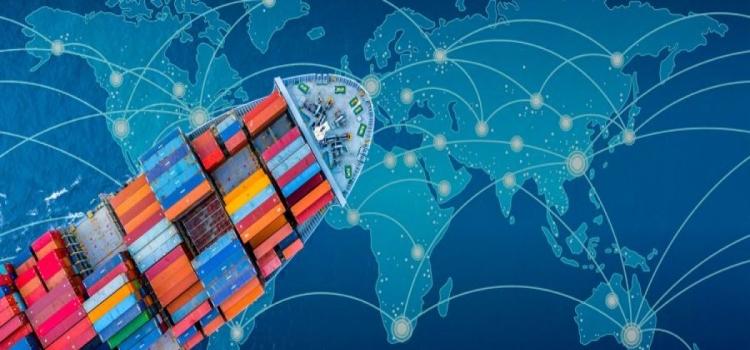
India’s textile industry finds itself at a defining juncture, shaped by a mix of strategic trade measures, evolving international alliances, and pressing domestic policy concerns. The government’s recent decision to limit textile imports from Bangladesh to only two seaports—Kolkata and Nhava Sheva—has created a ripple effect in the garment sector’s supply chain. When paired with the India-UK Free Trade Agreement (FTA) and industry demands for regulatory reform, this development marks the beginning of a transformative phase for India’s textile ecosystem.
Commerce Ministry data reveals that India’s exports to Bangladesh fell by 3.16 per cent in FY25 (up to February), totalling $2.09 billion, while imports surged by 15.6 per cent to $313.85 million year-on-year. The government’s decision to redirect imports exclusively through seaports is a deliberate effort to close loopholes that enabled the entry of duty-free Chinese fabrics into India via Bangladesh—circumventing the 20 per cent import duty on direct imports from China. This indirect route had provided Bangladeshi garments with a competitive pricing advantage, undercutting domestic manufacturers. The new trade controls are expected to help Indian producers recover lost ground, opening up a potential ₹10–₹20 billion business opportunity.
Currently, Bangladesh accounts for 35–40 per cent of India’s apparel imports, predominantly in readymade garments. The shift is not simply logistical—it aims to restructure trade in favour of local producers. Although some short-term disruptions and minor price hikes in categories like T-shirts and denim are anticipated, the long-term gains include enhanced domestic manufacturing capacity and increased job creation. With India importing garments worth approximately ₹60 billion from Bangladesh annually, the opportunity for substitution is significant.
The move aligns with the recent finalisation of the India-UK FTA, a pivotal agreement that removes tariffs on nearly 99 per cent of Indian textile and apparel exports to the UK. With Indian textile exports to the UK currently valued at $1.4 billion—making up 6.6 per cent of the UK’s total imports—the deal could enable India to double exports over the next five to six years. With an expected compound annual growth rate of 13 per cent, the FTA positions India to surpass competitors like Pakistan and Turkey and become the UK’s third-largest apparel supplier.
Yet, while external trade prospects look promising, internal regulatory barriers threaten to stall momentum. Chief among them is the Quality Control Order (QCO) on textile machinery. The industry has raised strong objections, arguing that it could impede India’s push towards technological advancement. To meet the projected market growth from $165 billion to $350 billion by 2030, the sector will need nearly 4.5 lakh high-speed weaving machines—many of which are not produced locally and are essential for sectors like embroidery that demand frequent tech upgrades. Rigid implementation of the QCO risks detaining machines at ports, locking up capital, and deterring banks from financing such imports. Industry associations have urged the government to revise or exempt specific machinery categories from the QCO as they believe to keep pace with rising domestic and international demand, the industry must have seamless access to world-class equipment.
In summary, India’s textile sector is at a critical turning point. The confluence of import restrictions and trade agreements is creating valuable new opportunities; yet internal policy obstacles like the QCO could hamper progress. If India aspires to become a global textile leader, it must pair trade strategy with smart, responsive policymaking.
- Core Fashion & Textile Value Chain
- Circularity, Sustainability & Waste Management
- Sustainability Enablers & Solutions
- Technology, Platforms & Innovation
- Retail, Trade & Market Access
- Knowledge, Institutions & Ecosystem Builders
- Finance, Investment & Support
- Logistics, Infrastructure & Operations
- Media, Communication & Culture
- Others

 English
 Arabic
 French
 Spanish
 Portuguese
 Deutsch
 Turkish
 Dutch
Dutch
 Italiano
 Russian
 Romaian
 Greek
Greek