


Dyeing and finishing technologies gain momentum ahead of ITM 2026
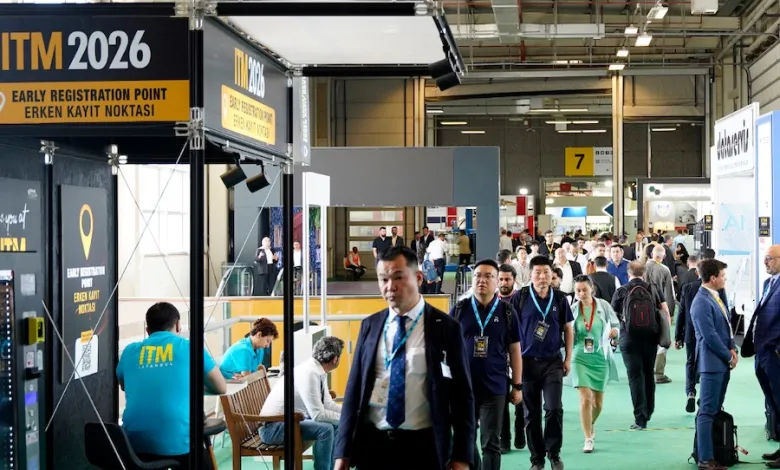
Dyeing and finishing, among the most value-driven stages in textile production, are seeing steady global growth. As manufacturers face pressure to improve efficiency and reduce environmental impact, new technologies are moving from pilot projects into mainstream adoption. These developments will be on display at the ITM 2026 International Textile Machinery Exhibition, taking place from June 9 to 13 at the Tüyap Fair and Congress Center in Istanbul.
Halls 11 and 12, dedicated to dyeing and finishing, will bring together machinery and systems designed to reduce resource use, improve process control, and support consistent quality across production lines.
Market growth supported by demand and sustainability goals
The global textile finishing lines market reached $7.67 billion in 2024 and is projected to grow to $10.05 billion by 2029, reflecting a compound annual growth rate of 5.9%. Growth is being driven by rising demand in sectors such as automotive and technical textiles, alongside increasing investment in efficient and higher-quality production processes.
The textile dyeing machinery market is also expanding. Valued at around $6 billion in 2025, it is expected to grow at an annual rate of over 5.5% between 2026 and 2030. For manufacturers, this signals continued demand for equipment that can balance productivity with stricter environmental requirements.
ITM 2026 will serve as a meeting point for companies looking to explore these market shifts, assess investment options, and connect with technology providers.
Shift toward cleaner and more efficient processes
Across dyeing operations, reducing water and chemical use remains a priority. Low-liquor ratio machines and salt-free dyeing systems are helping mills cut consumption while improving dye absorption and shortening process times.
Waterless or low-water alternatives are also gaining attention. Supercritical CO₂ dyeing removes the need for water entirely in certain applications. Dope dyeing, where color is added during fiber production, eliminates several downstream steps. Enzyme-based processes are being adopted as a milder alternative to conventional chemical treatments.
In finishing, energy use is another focus area. Heat pumps, energy recovery systems, and alternative energy sources are helping reduce overall consumption. Technologies such as plasma, ozone, and UV treatments are enabling functional finishes like antibacterial or water-repellent properties while limiting the need for heavy chemical inputs.
Digital control brings consistency and transparency
Digitalization is changing how dyeing and finishing lines are managed. Systems based on industrial IoT allow operators to monitor key parameters such as temperature, pH levels, and color consistency in real time. This improves process stability and reduces the risk of defects.
Artificial intelligence is being used in color management and quality control. These systems help match shades more accurately and reduce reprocessing, which saves both time and resources.
Automation is also becoming more visible on the factory floor. Robotic handling systems and automated loading solutions are reducing manual work and helping maintain a steady production flow. At the same time, modern stenters, jet and overflow dyeing machines, and continuous processing lines are being designed with better tension control and energy efficiency in mind.
A platform for collaboration and investment
For many companies, ITM 2026 will be an opportunity to see how these technologies perform in practice. Beyond machinery, the exhibition offers a space to discuss partnerships, compare solutions, and evaluate how different approaches fit specific production needs.
As the textile sector continues to adjust to environmental targets and cost pressures, dyeing and finishing remain key areas where measurable improvements can be made. The technologies presented in Istanbul will reflect how the industry is responding step by step, with a focus on practical gains in efficiency, resource use, and product quality.
- Core Fashion & Textile Value Chain
- Circularity, Sustainability & Waste Management
- Sustainability Enablers & Solutions
- Technology, Platforms & Innovation
- Retail, Trade & Market Access
- Knowledge, Institutions & Ecosystem Builders
- Finance, Investment & Support
- Logistics, Infrastructure & Operations
- Media, Communication & Culture
- Others

 English
 Arabic
 French
 Spanish
 Portuguese
 Turkish
 Dutch
Dutch
 Italiano
 Russian
 Romaian
 Portuguese (Brazil)
 Greek
Greek