


Indian Textile Companies Target Export Growth Through FTAs With EU and UK
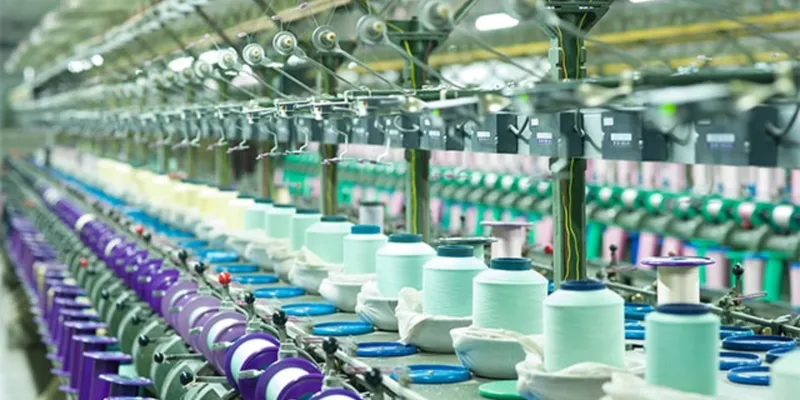
Industry players expand overseas presence as free trade agreements open opportunities in European markets
Indian textile companies are looking to increase exports to the EU, UK and other international markets through free trade agreements and supply chain realignment strategies. Industry players including Gokaldas Exports, KPR Mill, Arvind, Welspun Living, Vardhman Textiles and Pearl Global Industries have indicated plans for export growth in these regions.
The sector is also focusing on reducing dependence on single markets after being affected by the US tariff escalation last year, while European and UK buyers diversify sourcing away from Bangladesh and Vietnam.
Free trade agreements are expected to provide Indian textile companies with opportunities to strengthen their presence in the EU, UK and other overseas markets by improving competitiveness.
Large textile companies such as Gokaldas Exports, KPR Mill, Arvind, Welspun Living, Vardhman Textiles and Pearl Global Industries have signalled export growth plans in these markets.
Some companies, including Trident and Arvind, are setting up showrooms, increasing brand visibility at trade fairs and appointing local executives in Europe to strengthen their market presence.
The industry, which was among the sectors impacted by the US tariff escalation last year, is seeking to reduce dependence on a single market. European and UK buyers are also increasingly diversifying sourcing away from Bangladesh and Vietnam.
Pallab Banerjee, managing director of Pearl Global Industries, said tariff parity through FTAs would support India’s export push.
“The EU and UK buyers are already placing trial orders and building vendor bases in India in anticipation of implementation of the FTA,” he said.
Jitin Makkar, SVP and group head at ICRA, said benefits from the trade deals are likely to accrue from FY28 onwards, with an expected 10-15% revenue growth.
“Given ongoing tariff-related uncertainty, corporate India will adopt geographical diversification as a key risk mitigation strategy in the long term. Exporters would look to strengthen their efforts to build a more geographically diversified customer footprint, even if it involves parting with some margins in the near term. This can attract long-term investments in the sector,” he said.
However, companies have identified capacity addition as a major constraint. While some firms are increasing production, others such as Arvind are pursuing investment-light expansion through partner factories in Sri Lanka, Bangladesh and Egypt.
The report noted that India’s textile exports to the EU and UK stood at $9.76 billion in FY25. Industry estimates suggest this could rise to $15 billion once FTAs are fully operationalised.
- Core Fashion & Textile Value Chain
- Circularity, Sustainability & Waste Management
- Sustainability Enablers & Solutions
- Technology, Platforms & Innovation
- Retail, Trade & Market Access
- Knowledge, Institutions & Ecosystem Builders
- Finance, Investment & Support
- Logistics, Infrastructure & Operations
- Media, Communication & Culture
- Others

 English
 Arabic
 French
 Spanish
 Portuguese
 Turkish
 Dutch
Dutch
 Italiano
 Russian
 Romaian
 Portuguese (Brazil)
 Greek
Greek