


New report identifies trims as key obstacle to textile-to-textile recycling systems
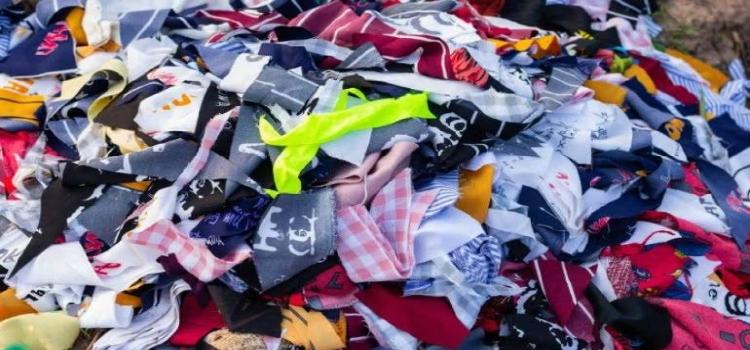
A new report from non-profit Accelerating Circularity has identified trims and other overlooked garment components as some of the “most persistent barriers” to effective textile-to-textile (T2T) recycling.
The white paper, titled Toward Circular Systems for Trims and Ignored Materials (CSTIM): Challenges and Opportunities, states that these small but significant elements disrupt fibre recovery processes and contaminate recycling streams, making it difficult to create pure, recyclable feedstocks.
YKK Global sustainability senior manager Brian LaPlante, who contributed to the research, said: “This whitepaper helps further our understanding of the role that trims play as disruptors within recycling systems. I hope that it leads designers to think more about the durability and repairability of trims than just their end of life.”
According to the report, 92m metric tonnes of textiles are either landfilled or incinerated worldwide annually. This disposal represents a considerable loss of material and economic value within the global textile industry.
Accelerating Circularity argues that these discarded textiles could instead serve as raw materials for new fibres, yarns, and fabrics if the industry can overcome the technical challenges posed by trims and ignored materials.
Trims include items such as adhesives, laminates, threads, fasteners, and labels. Although they make up a small proportion of garments by weight, the CSTIM report finds that their presence complicates the recycling process.
These components can interfere with fibre separation technologies and introduce contaminants into recycled material streams.
In 2023, Accelerating Circularity convened the CSTIM Working Group to address these issues. The group brought together companies and experts from materials science, finishing technologies, recycling innovation, and apparel design to explore practical solutions for integrating trims into circular systems.
Their work focused on developing methods for designing trims that can be recovered or recycled easily at scale.
Recommendations from the report
The CSTIM white paper outlines several foundational requirements for advancing the circularity of trims and ignored materials:
- Scaling both manual and automated sorting processes to handle mixed-material inputs more effectively.
- Improved recycling technology capable of managing complex product assemblies.
- Designing garments for disassembly so that trims and attachments can be removed or recycled alongside base textiles without contaminating the recycling stream.
- Cross-sector collaboration between brands, recyclers, and material innovators to align standards and data systems across the sector.
- Solving for trims and ignored materials is essential to unlocking true textile circularity.
The organisation urges brands, manufacturers, and recyclers to engage with the CSTIM findings and participate in further development of circular systems within the textile industry.
Refiberd CEO and co-founder Sarika Bajaj, another contributor to the study, stated: “Trims and overlooked materials present some of the biggest challenges in the textile-to-textile recycling supply chain – yet they remain the least understood. Through the CSTIM programme, we’ve developed a consistent language to frame these challenges, a critical first step toward building scalable solutions with partners across the supply chain.”
- Core Fashion & Textile Value Chain
- Circularity, Sustainability & Waste Management
- Sustainability Enablers & Solutions
- Technology, Platforms & Innovation
- Retail, Trade & Market Access
- Knowledge, Institutions & Ecosystem Builders
- Finance, Investment & Support
- Logistics, Infrastructure & Operations
- Media, Communication & Culture
- Others
 Portuguese
 English
 Arabic
 French
 Spanish
 Deutsch
 Turkish
 Dutch
Dutch
 Italiano
 Russian
 Romaian
 Portuguese (Brazil)
 Greek
Greek