


Birla Cellulose brings sustainable fibres to India’s handloom clusters
India’s handloom sector is built on centuries of weaving knowledge, regional techniques and distinctive textile traditions. As consumer preferences and market requirements change, the sector is also looking for ways to improve product performance, manage raw material challenges and remain commercially viable.
Birla Cellulose is working with handloom communities to address some of these challenges through the wider use of sustainable man-made cellulosic fibres (MMCFs). The company is introducing Livaeco™ Viscose, Livaeco™ Modal and Livaeco™ Lyocell into traditional weaving clusters, allowing artisans to combine familiar weaving practices with alternative fibre options.
Adding new fibre options to traditional weaving
Cotton and silk have traditionally been central to India’s handloom sector. Changes in raw material prices and supply, though, can make production difficult for small-scale weavers.
Birla Cellulose is supporting the use of cellulosic fibres that can either be blended with conventional yarns or used on their own. These fibres can provide fabrics with softness, improved drape and greater versatility while retaining the character associated with handloom textiles.
The approach is not simply about introducing a different fibre. It involves working directly with weavers and local organisations to understand their production requirements and develop products suited to their markets.
Birla Cellulose has supported yarn-seeding programmes, technical guidance for dyeing and product development, fabric testing and supply arrangements that allow weavers to purchase smaller quantities of yarn. Cone-to-hank conversion facilities have also been introduced in some areas to make the yarn easier to use within traditional handloom production systems.
From Assam to multiple weaving clusters
Assam was selected as the first pilot location for the programme. The initiative has since expanded to weaving clusters in Odisha, West Bengal, Gujarat, Madhya Pradesh and Uttar Pradesh.
The company has worked with organisations including ARTFED, KHAMIR, the Kutch Weavers Association and state-supported handloom societies. These partnerships have helped introduce fibre blends suited to specific regional weaving traditions.
One example is the development of Silk x Livaeco™ Modal Chanderi fabrics in Madhya Pradesh. In Varanasi, weavers have also developed Banarasi fabrics using blends incorporating Livaeco™ Modal and Livaeco™ Lyocell.
These developments show how alternative fibres can be incorporated without removing the traditional identity of handloom fabrics.
Odisha partnership focuses on Lyocell
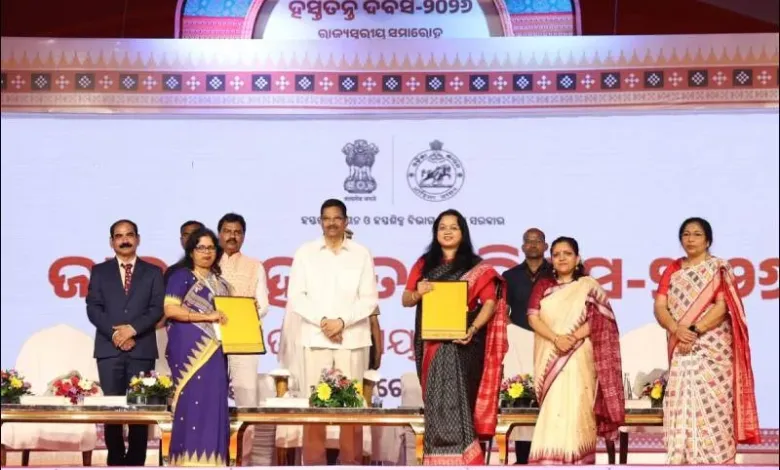
A recent development is Birla Cellulose’s collaboration with the State Agency for Development of Handloom Cluster (SADHAC), Odisha.
Under a Memorandum of Understanding (MoU), the two organisations will work on developing handloom fabrics using Livaeco™ Lyocell. The aim is to combine Lyocell with traditional handloom yarns to create premium handcrafted textiles while retaining the regional characteristics of Odisha’s weaving traditions.
The partnership was formalised in the presence of Guha Poonam Tapas Kumar, IAS, Commissioner-cum-Secretary, Handlooms, Textiles & Handicrafts Department, Government of Odisha.
The collaboration is expected to support product and design development while helping Odisha’s handloom clusters explore new market opportunities.
Commenting on the initiative, Manmohan Singh, Chief Marketing Officer, Birla Cellulose, said, “Our partnerships represent a sustainable and high-growth opportunity for small-scale enterprises. By combining traditional weaving excellence with fibre innovation, weavers can innovate faster, diversify their offerings and respond more effectively to changing consumer preferences.”
Building support around the weaver
The scale of the programme has grown significantly over the past year.
Birla Cellulose has conducted more than 150 micro-meets and cluster engagements across Assam, Meghalaya, Mizoram, Gujarat, Odisha, Tamil Nadu and Uttar Pradesh. The programme has added more than 80 partners and trained around 7,000 weavers.
The company says nearly 3,500 tonnes of fibre and yarn are now consumed annually within the handloom ecosystem through these efforts.
These figures point to an approach that goes beyond fibre sales. For small-scale weavers, access to the right yarn is only one part of the challenge. Technical knowledge, testing facilities, product development support and access to suitable quantities of material can also determine whether a new fibre can be adopted successfully.
By working across these areas, Birla Cellulose is seeking to make the transition easier for weaving communities while creating more options for fabric development.
Keeping tradition commercially relevant
India’s handloom sector faces the challenge of preserving its cultural and regional identity while responding to changing consumer expectations. Fibre selection can play a role in that process.
The use of Livaeco™ Viscose, Livaeco™ Modal and Livaeco™ Lyocell gives weavers additional choices without requiring them to abandon traditional techniques. The resulting fabrics can retain the character of handloom production while offering different levels of softness, drape, comfort and sustainability.
Birla Cellulose’s growing network of partnerships also highlights the importance of collaboration at the cluster level. When fibre producers, handloom organisations, government agencies and artisans work together, new materials can be tested and adapted to local production practices.
For India’s handloom communities, the goal is not simply to replace traditional materials. It is to expand the range of materials available to artisans and create products that can compete in changing markets.
The experience across multiple states suggests that sustainable fibre adoption can become part of this process, helping handloom weaving remain commercially relevant while preserving the skills and regional identities that make India’s handloom sector distinctive.
- Core Fashion & Textile Value Chain
- Circularity, Sustainability & Waste Management
- Sustainability Enablers & Solutions
- Technology, Platforms & Innovation
- Retail, Trade & Market Access
- Knowledge, Institutions & Ecosystem Builders
- Finance, Investment & Support
- Logistics, Infrastructure & Operations
- Media, Communication & Culture
- Others

 English
 Arabic
 French
 Spanish
 Portuguese
 Deutsch
 Turkish
 Dutch
Dutch
 Italiano
 Russian
 Romaian
 Portuguese (Brazil)