


Reju advances circular polyester with successful knitting and fabric development trials
The transition to a circular textile industry depends on more than developing recycled raw materials. Regenerated fibres must also perform reliably on existing manufacturing lines, delivering the quality and consistency that textile producers expect without requiring major changes to production processes.
Reju has taken another step in that direction by successfully converting its regenerated polyester yarn into greige fabric during a series of industrial development trials. The work demonstrates that regenerated polyester can move beyond laboratory development and operate within commercial textile manufacturing environments.
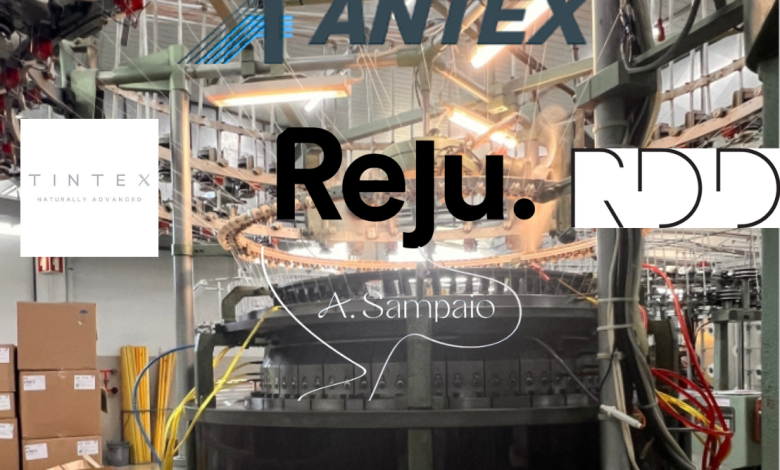
The trials were carried out in collaboration with ANTEX, A. Sampaio & Filhos – Têxteis S.A., Tintex Textiles, and RDD Textiles, bringing together expertise from across the textile value chain. The partnership covered several stages of production, from yarn processing and circular knitting to dyeing and finishing.
According to Reju, the regenerated polyester yarn was successfully fed through circular knitting machines before being converted into greige fabric. The material then completed dyeing and finishing processes, producing the first finished fabrics from the development programme.
The achievement highlights an important aspect of textile circularity. Developing recycled fibres is only one part of the challenge. Manufacturers also need materials that can run efficiently on existing machinery while maintaining consistent performance throughout production. Compatibility with current infrastructure can reduce barriers to adoption and help accelerate the use of recycled materials across the industry.
Reju’s approach focuses on regenerating polyester from European textile waste into high-quality raw material suitable for repeated use. By returning post-consumer and post-industrial textile waste back into textile production, the company aims to reduce dependence on virgin polyester while supporting a more resource-efficient supply chain.
The latest trials also demonstrate the value of collaboration. Fibre producers, yarn manufacturers, textile mills, dyeing facilities and fabric developers each play a role in validating new materials before they can be introduced at commercial scale. Successful development work across multiple production stages provides manufacturers with greater confidence in adopting regenerated fibres for future collections.
As brands and manufacturers face increasing pressure to reduce textile waste and meet circularity targets, practical demonstrations like these become increasingly significant. They provide evidence that regenerated polyester can perform within existing manufacturing systems rather than remaining limited to pilot-scale concepts.
While further development and commercial scaling will continue, the successful conversion of regenerated polyester yarn into finished fabric marks another milestone in demonstrating the practical application of circular materials. Each successful production trial adds to the industry’s understanding of how regenerated fibres can be integrated into mainstream textile manufacturing, helping move circularity from ambition to everyday production.
- Core Fashion & Textile Value Chain
- Circularity, Sustainability & Waste Management
- Sustainability Enablers & Solutions
- Technology, Platforms & Innovation
- Retail, Trade & Market Access
- Knowledge, Institutions & Ecosystem Builders
- Finance, Investment & Support
- Logistics, Infrastructure & Operations
- Media, Communication & Culture
- Others

 English
 Arabic
 French
 Spanish
 Portuguese
 Deutsch
 Turkish
 Dutch
Dutch
 Italiano
 Russian
 Romaian
 Portuguese (Brazil)