


Caustic Recovery in the Textile: Enabling a Sustainable Circular Economy
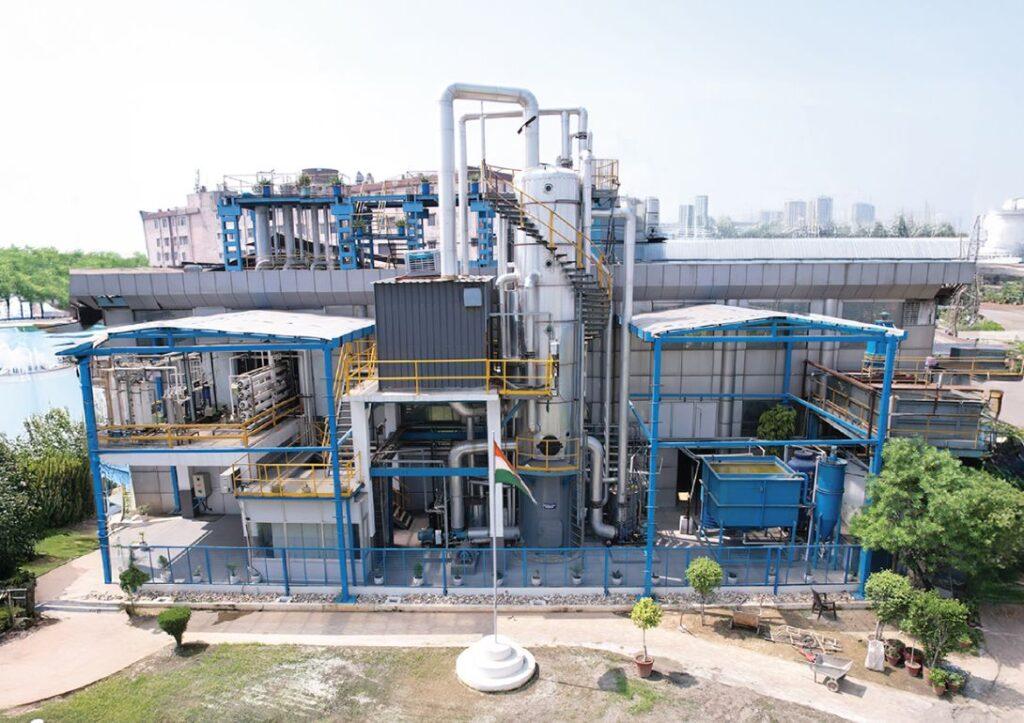
In an era where resource optimization and sustainability are no longer optional, the textile industry must rethink the way it manages its chemical usage and effluent treatment. Among the critical chemicals used, caustic (NaOH) plays a significant role in mercerization, dyeing, and scouring processes. Traditionally, after use, this valuable chemical ends up in wastewater — leading to high treatment costs and environmental degradation.
However, this outdated model is now being challenged by an innovative solution: caustic recovery through MVR-based Low Temperature Evaporation (LTE®). Spray Engineering Devices Limited (SEDL) is leading this transformation by offering a reliable, cost-effective, and sustainable alternative to conventional effluent treatment.
The Hidden Value in Waste: Pioneering Caustic Recovery with MVR
Spray Engineering Devices Limited (SEDL) has developed an advanced MVR-based Low Temperature Evaporation (LTE®) technology, specifically engineered to handle high-TDS effluents while enabling resource recovery. With over 300 systems successfully installed across India, this technology has consistently demonstrated its effectiveness in recovering both concentrated caustic and clean water from effluent streams.
When deployed in Caustic Recovery Plant (CRP) applications, SEDL’s MVR-based LTE® system has consistently delivered the following key performance outcomes:
• Efficiently treats effluent streams with Total Dissolved Solids (TDS) more than 100,000 ppm.
• Enables clean water recovery with TDS as low as 80 ppm, suitable for various reuse applications.
• Facilitates the recovery of concentrated caustic, significantly reducing the dependency on fresh caustic input.
• Achieves low specific power consumption, ranging between 9–11 kWh/m³, ensuring high energy efficiency.
• Operates without the need of steam or cooling water, making it an economically viable and utility-independent solution.
A Smart Step Toward Circularity
The ability to recover caustic and reusable water from the same effluent stream makes this technology a strong enabler of circular economy practices in the textile sector. What was once considered waste is now transformed into a reusable resource, helping industries lower operating costs, minimize freshwater usage, and reduce environmental footprint.
Moreover, the incoming caustic stream is often hot, allowing the MVR-based LTE® system to utilize this inherent thermal energy without the need for additional preheating. In return, the system delivers a hot concentrated caustic stream, which can be directly reused in downstream processes without further energy input—saving up to 63 kWh per m³ in reheating power. This smart thermal integration not only recovers chemicals but also optimizes energy use, further enhancing the system’s overall efficiency and cost-effectiveness.
The system is compact, fully automated, and easy to operate, requiring minimal manpower and space. Its modular design makes it ideal for both large-scale and mid-sized textile operations aiming to adopt sustainable practices without additional operational burden.
Conclusion
SEDL’s MVR-based caustic recovery system is not just an innovation, it is a statement of intent for the textile sector: to move from linear consumption models toward sustainable, circular operations. By recovering what was once discarded, industries can now turn effluent into opportunity.
The future of textile processing is not just about better fabrics — it’s about better resource management. And caustic recovery is a meaningful step in that direction.
- Core Fashion & Textile Value Chain
- Circularity, Sustainability & Waste Management
- Sustainability Enablers & Solutions
- Technology, Platforms & Innovation
- Retail, Trade & Market Access
- Knowledge, Institutions & Ecosystem Builders
- Finance, Investment & Support
- Logistics, Infrastructure & Operations
- Media, Communication & Culture
- Others

 English
 Arabic
 French
 Spanish
 Portuguese
 Deutsch
 Turkish
 Dutch
Dutch
 Russian
 Romaian
 Portuguese (Brazil)
 Greek
Greek