


Chinese Scientists Create Living Textile from Fungus
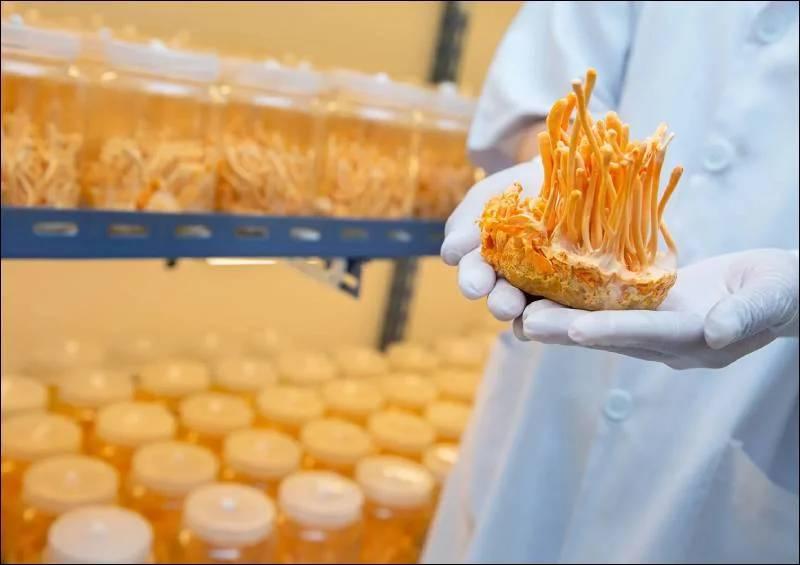
Chinese researchers have developed a novel living textile derived from Cordyceps militaris, a medicinal fungus widely used in traditional Chinese medicine that can self-clean, self-repair and completely biodegrade within 41 days. The breakthrough, published in Science Advances on July 27, 2026, could open new possibilities for circular fashion and sustainable textile manufacturing.
The research was led by scientists at the Shenzhen Institutes of Advanced Technology (SIAT), who engineered wearable textile structures using the fungus’s naturally occurring thread-like filaments known as hyphae. These microscopic filaments form dense, interconnected networks that can be transformed into durable fabric-like materials without the need for synthetic binders.
According to the researchers, the fungal hyphae provide a scalable platform for creating engineered living materials (ELMs), addressing one of the key challenges in the field converting living cells into practical, wearable structures that are both durable and functional.
Customizable and Functional
The team demonstrated that the living textile can be tailored to deliver additional functionalities by incorporating other microorganisms. For instance, the introduction of Aspergillus niger enabled the material to exhibit color pigmentation and enhanced ultraviolet (UV) protection, highlighting the potential for programmable textile properties.
Unlike conventional bio-based materials, which become inert after production, the fungal textile remains biologically active after fabrication. This allows it to retain living functions such as self-repair and surface adaptation, making it a significant advancement in the development of smart and responsive materials.
Advancing Circular Fashion
Environmental testing showed that the textile completely biodegraded within 41 days under suitable conditions, reinforcing its potential as a sustainable alternative to synthetic fibers. The rapid decomposition rate aligns with the growing demand for circular fashion solutions that minimize waste and support end-of-life material recovery.
Researchers noted that fungal hyphae naturally organize into robust fiber networks, overcoming limitations faced by previous engineered living materials, which often lacked sufficient strength or scalability for commercial applications.
Strategic Advantage of Cordyceps
The use of Cordyceps militaris may also offer a commercial advantage. Unlike many experimental fungal strains currently being explored for mycelium-based materials, Cordyceps militaris already has an established cultivation and supply chain in China due to its widespread use in traditional medicine.
This could potentially simplify raw material sourcing and support future scale-up efforts if the technology progresses toward commercialization.
Commercial Potential and Challenges
While the innovation remains at the laboratory stage, the development has attracted attention from sectors including fashion, technical textiles and biodegradable packaging. However, several challenges remain before industrial adoption becomes feasible.
Researchers have yet to determine how the living properties will perform through conventional textile processes such as dyeing, cutting, sewing, and garment finishing. Additionally, future studies will need to explore whether the degradation rate can be adjusted to suit products requiring longer service life.
As global interest in biofabricated materials continues to grow, the SIAT breakthrough highlights the expanding role of biotechnology in shaping the future of sustainable textiles and circular manufacturing systems.
- Core Fashion & Textile Value Chain
- Circularity, Sustainability & Waste Management
- Sustainability Enablers & Solutions
- Technology, Platforms & Innovation
- Retail, Trade & Market Access
- Knowledge, Institutions & Ecosystem Builders
- Finance, Investment & Support
- Logistics, Infrastructure & Operations
- Media, Communication & Culture
- Others

 English
 Arabic
 French
 Spanish
 Portuguese
 Deutsch
 Turkish
 Dutch
Dutch
 Italiano
 Russian
 Romaian
 Greek
Greek