


US Section 301 Tariff Poses Risk to Textile Exports: CITI
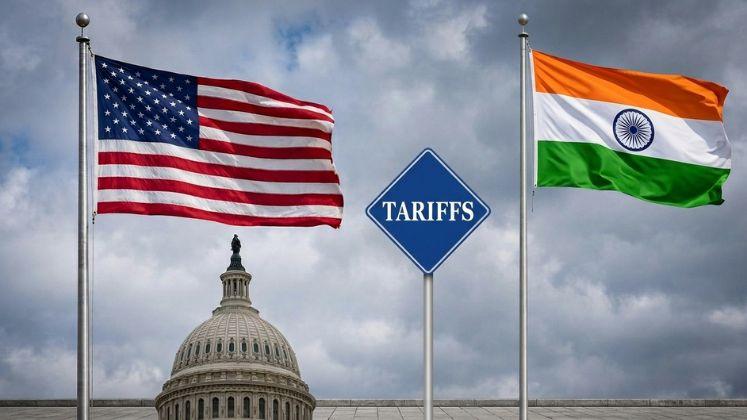
The Confederation of Indian Textile Industry (CITI) has expressed concern over the United States’ decision to impose a 10% tariff on Indian goods following investigations under Section 301 by the Office of the US Trade Representative (USTR) related to the enforcement of prohibitions on imports of goods produced with forced labour.
CITI Chairman Ashwin Chandran said the tariff is particularly concerning as it has no specified expiry date and could create reputational risks for Indian exporters.
He urged the Government of India to engage with the US authorities, warning that the measure could adversely impact India’s textile and apparel exports.
According to Chandran, a major concern is that while several competing countries are also subject to the same tariff, the US has introduced a mechanism that could allow textile and apparel exports from some of these countries to enter the US market without the additional Section 301 tariff.
Under the US Federal Register notice, Bangladesh, Cambodia, Indonesia and Malaysia will be eligible for Tariff-Rate Quotas (TRQs) for an initial period of three years. The TRQs are intended to encourage the use of US textile inputs and permit a specified volume of textile and apparel products from these countries to enter the US duty-free under the Section 301 framework.
Chandran said this differential treatment could divert sourcing orders away from India and towards competing exporting nations.
He also cautioned that the tariff could affect India’s exports of intermediate textile products to other countries. The United States remains India’s largest export market for textiles and apparel, with annual shipments typically valued at around US $ 11 billion.
Reiterating the industry’s commitment to ethical manufacturing, Chandran said India’s textile and apparel sector operates under a strong legal and institutional framework that prohibits forced labour and follows a zero-tolerance policy supported by compliance and enforcement mechanisms.
He also highlighted recent policy measures taken by the Indian government, including the Directorate General of Foreign Trade’s (DGFT) July 13 notification introducing provisions in the Foreign Trade Policy (FTP) related to the prohibition of imports produced using forced labour.
In addition, India has implemented four Labour Codes aimed at strengthening workers’ rights and labour protections.
- Core Fashion & Textile Value Chain
- Circularity, Sustainability & Waste Management
- Sustainability Enablers & Solutions
- Technology, Platforms & Innovation
- Retail, Trade & Market Access
- Knowledge, Institutions & Ecosystem Builders
- Finance, Investment & Support
- Logistics, Infrastructure & Operations
- Media, Communication & Culture
- Others

 English
 Arabic
 French
 Spanish
 Portuguese
 Deutsch
 Turkish
 Dutch
Dutch
 Italiano
 Russian
 Portuguese (Brazil)
 Greek
Greek