


Ensuring compliance, empowering industry
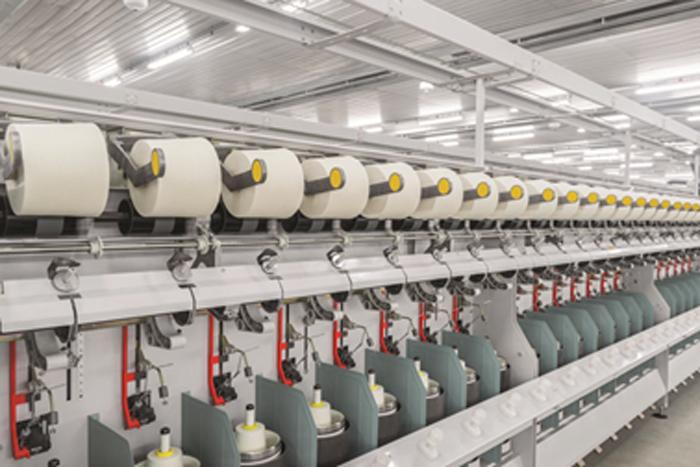
To align safety practices in Indian textile machinery with global standards, Quality Control Orders (QCOs) are being introduced in the sector—let’s break them down for better understanding.
Indian standards are currently being developed, revised, and updated on a priority basis across multiple Ministries and sectors. To date, a total of 187 Quality Control Orders (QCOs) covering 769 products have been issued, mandating BIS certification by various regulators and line ministries of the Government of India. Textile machinery is among the categories covered, with implementation scheduled to begin from August 2025.
Amid concerns and negative narratives circulating about the upcoming QCO, the Textile Machinery Manufacturers Association (TMMA) has taken steps to raise awareness among stakeholders. In this article, the association aims to clarify the objectives of the QCO and highlight its benefits for the textile industry.
Understanding QCO: What it is?
A Quality Control Order (QCO) is a legal notification issued under the BIS Act, 2016. It makes compliance with specific Indian Standards compulsory for manufacturing or importing specified products. Products listed under QCOs must carry the Standard Mark (ISI mark) after obtaining a valid license from the Bureau of Indian Standards.
For machinery, especially capital goods like textile processing equipment, weaving machinery, spinning machinery, gearboxes, compressors, motors, and other critical components, QCOs ensure that the design, safety, functionality, and reliability are maintained at an acceptable standard level.
Why the QCO matters for the Indian machinery sector
The QCO is a transformational policy tool with far-reaching implications. Here are the key reasons why this move is highly relevant and timely:
Protecting domestic industry: India has long faced the challenge of cheap, substandard machinery imports that undercut domestic prices, compromise quality, and discourage innovation. The QCO levels the playing field by ensuring all market players adhere to the same baseline quality standards, whether they are domestic or foreign manufacturers.
No dealers or agents, or assemblers are considered for this certification.
Boosting export potential: With BIS certification in place, Indian manufacturers align with global best practices. This builds international trust in Indian-made machinery, opening up opportunities for exports to developed markets that demand high quality and compliance.
Promoting safety and efficiency: QCOs mandate quality assurance across materials, design, electrical/mechanical safety, and environmental impact. This significantly reduces operational hazards, downtimes, and maintenance costs, especially in high-volume production industries like textiles.
Encouraging technological upgrades: To comply with BIS norms, many manufacturers will need to modernize their production processes, invest in R&D, and implement quality management systems—a move that ultimately leads to industrial modernization.
Strengthening Make in India and Atmanirbhar Bharat: By encouraging reliance on high-quality Indian machinery, the QCO supports the larger vision of building an independent, self-reliant industrial economy, less dependent on low-cost imports.
TMMA’s viewpoint: Supporting quality, securing growth
As a key industry body representing Indian textile machinery manufacturers, TMMA (India) strongly supports the implementation of QCOs. We believe this is a step in the right direction toward uplifting the standard of Indian capital goods and encouraging fair trade practices.
TMMA is actively working to:
- Educate stakeholders about the scope and implications of the QCO
- Assist manufacturers in understanding BIS compliance processes
- Collaborate with BIS and related authorities to streamline testing and certification infrastructure
- Encourage dialogue among government, industry, and users to resolve implementation challenges
Benefits of QCO for the industry
Impact on textile machinery manufacturers
For textile machinery makers, this is an opportunity to elevate industry standards. The textile sector is rapidly modernizing with smart manufacturing, automation, and energy-efficient solutions. QCOs will ensure that only high-performing, durable, and sustainable machines serve the market.
Manufacturers that embrace this change early will gain a first-mover advantage—becoming preferred vendors for large textile houses, government tenders, and international buyers.
Implementation and compliance: What manufacturers must do
Here’s what machinery manufacturers should do to ensure smooth compliance:
Ø Identify if your product is covered under the QCO
- Apply for BIS certification via the official BIS portal
- Prepare technical documentation, test samples, and factory audit readiness
- Cooperate with BIS auditors and testing agencies
- Label machinery with ISI mark upon approval
TMMA urges all members and stakeholders to not wait for the deadline and start early to avoid bottlenecks closer to the enforcement date.
What this means for buyers and end-users
Buyers, especially MSMEs, often fall prey to substandard, low-cost machinery that leads to frequent breakdowns and financial losses. QCO enforcement ensures they can now choose from certified suppliersand invest in equipment that guarantees:
- Longer lifespan
- Better after-sales support
- Compliance with energy and safety regulations
- Lower overall lifecycle cost
In short, QCOs empower users to make informed, risk-free purchases.
TMMA’s role going forward
As a responsible association, TMMA will continue to:
- Conduct awareness drives, webinars, and training for members
- Publish guidelines, FAQs, and compliance toolkits
- Liaise with BIS and the Ministry for implementation clarity
- Support members in certification and testing challenges
- Promote domestic R&D and indigenizationof high-value machinery components
Conclusion
The Quality Control Order is a reformative, future-forward regulation that will redefine India’s position in the global machinery landscape. By mandating quality, it ensures that Indian manufacturers no longer compete on cost alone, but on reliability, performance, and innovation.
TMMA calls upon all stakeholders—manufacturers, buyers, importers, and regulators—to come together and build a strong, quality-centric machinery ecosystem that is ready to meet the demands of modern industry and global trade.
- Core Fashion & Textile Value Chain
- Circularity, Sustainability & Waste Management
- Sustainability Enablers & Solutions
- Technology, Platforms & Innovation
- Retail, Trade & Market Access
- Knowledge, Institutions & Ecosystem Builders
- Finance, Investment & Support
- Logistics, Infrastructure & Operations
- Media, Communication & Culture
- Others

 English
 Arabic
 Spanish
 Portuguese
 Deutsch
 Turkish
 Dutch
Dutch
 Italiano
 Russian
 Romaian
 Portuguese (Brazil)
 Greek
Greek