


250 Tamil Nadu OE Mills Threaten 50% Production Cut Over Cotton Waste Pricing
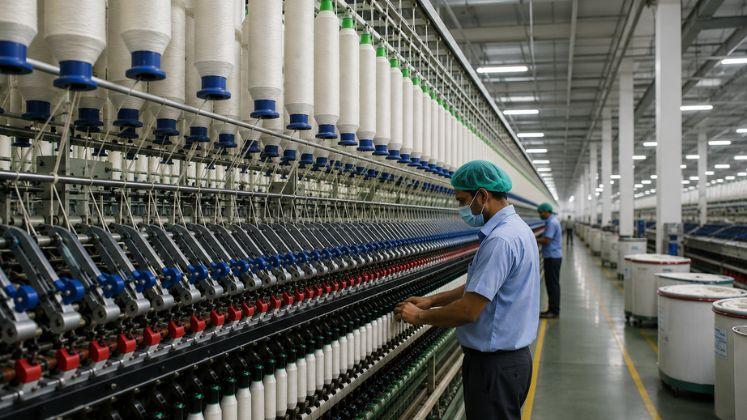
More than 250 grey yarn manufacturing open-end (OE) spinning mills across Tamil Nadu have warned that they may cut production by 50% from next week if cotton waste prices are not reduced further, according to the Open-End Spinning Mills Association (OSMA).
The association pointed out that after the Centre removed the 11 % import duty on cotton on 31 May, cotton prices fell from about Rs 195 per kg to Rs 172 per kg, a decline of nearly Rs 23 per kg.
However, despite the sharp decline in cotton prices, spinning mills have reduced Comber Noil pricesa key raw material for OE mills, by only Rs 10–15 per kg. OE spinning mills are therefore demanding a further reduction in Comber Noil prices.
Arulmozhi, President of OSMA said that “OE mills have been affected by the abnormal increase in cotton waste prices over the past few months, which has eroded profitability. Open-end spinning is a technology for creating yarn without using a spindle with cotton waste as the main raw material,”
Arulmozhi noted that for OE mills to remain viable and competitive, cotton waste prices must reflect the decline in cotton prices. The current pricing structure is unsustainable for the sector.
According to OSMA, the issue not only affects the 250 grey yarn-producing OE mills but also around 350 other OE mills that consume pre-consumer garment cutting waste and polyester fibre derived from recycled PET bottles.
More than 100 vendors across India supply cotton waste and other raw materials to these mills, either directly or through spinning mills.
Grey OE yarn produced by these mills is widely used by exporters in Karur and by powerloom manufacturers in textile hubs such as Somanur, Palladam, Avinashi and Erode.
The yarn is converted into a range of products including towels, lungies, jeans, bedspreads, nighties, petticoats, T-shirts, socks, kitchen linen, floor mats and cleaning mops. Many of these products cater to price-sensitive consumers and lower-income households in domestic and export markets.
The association has also resolved to seek the intervention of both the State and Central governments to evolve a long-term solution to recurring volatility in cotton waste prices.
- Core Fashion & Textile Value Chain
- Circularity, Sustainability & Waste Management
- Sustainability Enablers & Solutions
- Technology, Platforms & Innovation
- Retail, Trade & Market Access
- Knowledge, Institutions & Ecosystem Builders
- Finance, Investment & Support
- Logistics, Infrastructure & Operations
- Media, Communication & Culture
- Others
 Spanish
 English
 Arabic
 French
 Portuguese
 Deutsch
 Turkish
 Dutch
Dutch
 Italiano
 Russian
 Romaian
 Portuguese (Brazil)
 Greek
Greek