


Bangladesh RMG exports to major markets fall in July-May
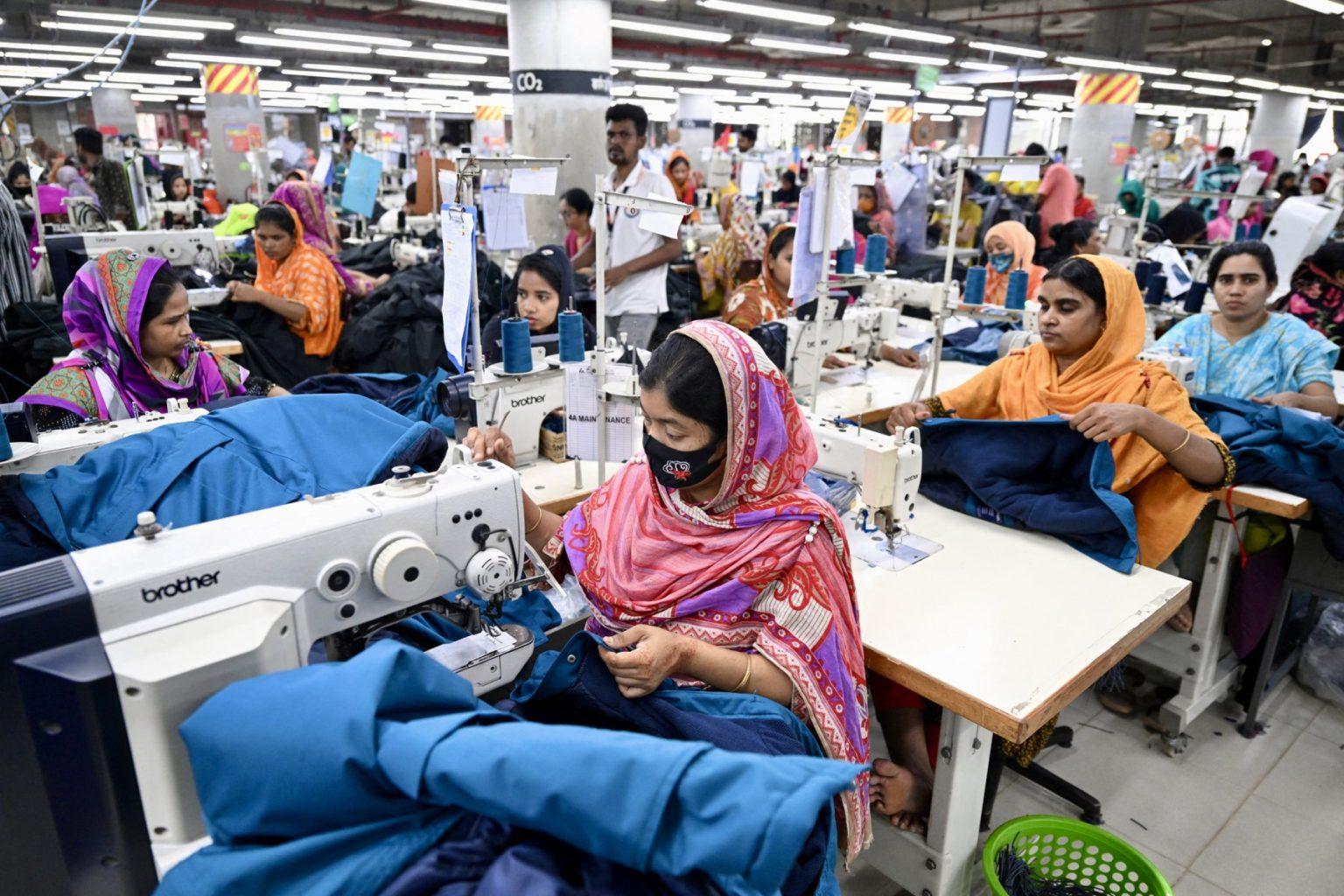
The country’s readymade garment exports to major global destinations declined persistently during the July-May period of the current financial year 2025-26 due to weak global demand. According to detailed country-wise export data from the Export Promotion Bureau, Bangladesh exported RMG items worth $35.31 billion in the July-May period of FY26, marking a 3.41 per cent decline from that of $36.56 billion earned in the same period of FY25.
In the single month of May of 2026, the RMG sector, the country›s highest export earner, earned $3.59 billion, an 8.29 per cent decline from $3.92 billion in May 2025. Exports have been declining for the past several months due to weak global demand, fewer buyer inquiries, geopolitical tensions, and intense competition, particularly in European markets, said the exporters.
They also expressed concerns that prolonged conflict in the Middle East and tensions in the Strait of Hormuz could again negatively affect the global economy, which could in turn affect the country’s exports.
In the eleven months of FY26, the downturn was more pronounced in the United States, the United Kingdom, the European Union, Canada and non-traditional markets. During July-May of FY26, Bangladeshi exporters recorded a 4.88 per cent decline in shipments to the EU – the largest destination for Bangladesh’s apparel exports – to $17.36 billion, down from that of $18.25 billion in the same period of FY25.
Export earnings from the EU accounted for more than 49 per cent of Bangladesh’s total RMG export revenues during the period. Exports to major EU countries such as Germany, France, and Denmark and Italy declined in the eleven months of FY26, although narrow to moderate growth was recorded in Spain, the Netherlands, and Poland.
Export earnings from the United States also declined narrowly by 0.04 per cent to $7.02 billion in July-May of FY26, compared with that of $7.03 billion in the same period of FY25. The US, the largest single-country destination for Bangladeshi apparel, accounted for 20 per cent of the total RMG export earnings, according to EPB data compiled by the Bangladesh Apparel Exchange, a private initiative promoting the country’s apparel and textile industry.
RMG exports to the UK declined by 0.5 per cent to $4.02 billion in the first eleven months of FY26, down from $4.04 billion in the same period of FY25.
From Canada, RMG exporters bagged $1.22 billion during the reporting period, up by 2.27 per cent from $1.2 billion in the corresponding period of the previous financial year.
In the apparel trade, the US, Canada, the UK, and the EU are considered traditional markets, while other destinations are classified as non-traditional. Major non-traditional markets include Japan, Australia, Russia, India, China, South Korea, the United Arab Emirates, Malaysia, Brazil and Mexico.
Despite hope, export earnings from non-traditional markets have declined since October. During July-May of FY26, exports to non-traditional destinations further fell by 5.95 per cent to $5.68 billion, compared with those of $6.04 billion in the same period of FY25.
Non-traditional markets accounted for 16.09 per cent of Bangladesh’s total RMG exports during the period. Among major non-traditional markets, exports to Japan, Australia, India, South Korea, and Mexico witnessed a substantial decline in the July-May period of FY26.
Bangladesh Knitwear Manufacturers and Exporters Association president Mohammad Hatem said the primary reasons for the pressure on exports are subdued global demand and a lack of new work orders. He said that the real challenge lies in securing new export orders and maintaining competitiveness in global markets, without which sustainable export growth would be difficult to achieve.
Mohiuddin Rubel, former director of the Bangladesh Garment Manufacturers and Exporters Association, said the data indicated a recalibration of global consumption patterns rather than a sector-wide crisis. Traditional buyers are optimising their sourcing strategies, which is an invitation to strengthen relationships and demonstrate competitive value beyond price, he added.
Moreover, global economic sluggishness, weaker demand, conflicts, and domestic political tensions throughout the FY26 impacted the exports. However, to stay competitive in such tense global markets, we must explore new markets, diversify products, invest in automation, design, and innovation, he added, urging proper governmental support. In FY25, the RMG sector earned $39.35 billion from global markets.
- Core Fashion & Textile Value Chain
- Circularity, Sustainability & Waste Management
- Sustainability Enablers & Solutions
- Technology, Platforms & Innovation
- Retail, Trade & Market Access
- Knowledge, Institutions & Ecosystem Builders
- Finance, Investment & Support
- Logistics, Infrastructure & Operations
- Media, Communication & Culture
- Others

 English
 Arabic
 French
 Spanish
 Portuguese
 Deutsch
 Turkish
 Dutch
Dutch
 Russian
 Romaian
 Portuguese (Brazil)
 Greek
Greek