


Avery Dennison, Texaid pilot using RFID technology for garment sorting in Europe
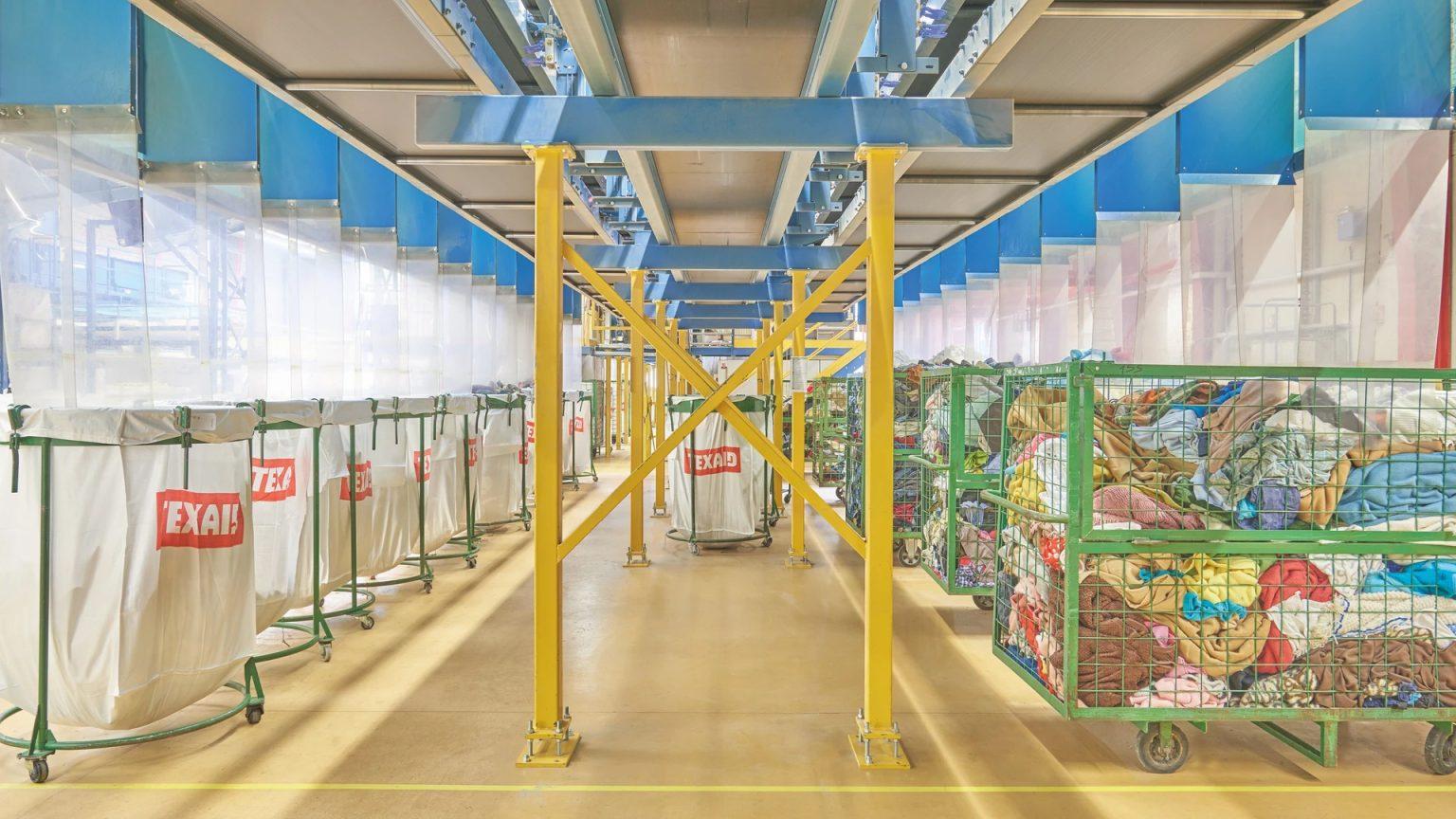
Avery Dennison, with European headquarters in the Netherlands, and Texaid, headquartered in Switzerland, have piloted the impact of RDIF-tagged garments on the textile collecting and sorting industry in Europe.
Texaid is one of Europe’s largest textile collection and sorting organizations, handling approximately 80,000 tons every year and sorting them into over 300 categories. Avery Dennison is a global materials science and manufacturing company that specializes in the design and manufacture of a wide variety of labeling and functional materials.
The EU Waste Framework Directive, which was updated in 2025, mandated separate textile collection in EU member states, the case study says, which increased the volumes of postconsumer material for sorters and collectors, such as Texaid.
The EU has planned legislation called the Digital Product Passport (DPP) that will require nearly all products sold to include details such as a unique product identifier, compliance documentation and information on substances of concern, according to an EU news release. It also will provide user manuals, safety instructions and guidance on product disposal.
“The DPP is designed to close the gap between consumer demands for transparency and the current lack of reliable product data,” according to the EU.
As the legislation approaches, one way for apparel brands to continue is to invest in embedded RFID technology that unlocks benefits across the value chain from inventory management and theft prevention to automated sorting and management end-of-life pathways, the case study says.
Avery Dennison and Texaid mapped out the current and future EU landscape of postconsumer textiles and how the rollout of the RFID-tagged garments will affect future sorting.
“As DPP approaches, brands must invest in embedded RFID technology-unlocking benefits across the value chain, from inventory management and theft prevention to automation sorting and end-of-life services,” says Martin Böschen, CEO of Texaid.
The pilot tested whether automated systems could accurately read RFID tags on garments and reduce sorting time. The pilot examined how reliably RFID data could be scanned and used by machinery rather than relying on manual visual checks, such as brand, color or garment type, the case study says.
The pilot used Fibersort technology from Valvan a Belgium-based producer of sorting machines, which incorporated 300 selected garments tagged with unique Avery Dennison RFID labels, Avery Dennison says. Texaid provided a database of the tagged garments that included diverse product categories and materials.
Trials of the technology took place at Valvan’s Sort Lab in 2025 in Menen, Belgium. The testing was conducted based on real-world scenarios, and the infrastructure was updated with scanning software and hardware from Avery Dennison.
The pilot found a “seamless integration of RFID technology with Valvan Fibersort,” according to the case study.
“The project signals a major leap forward in circular textile processing, highlighting collaboration as a direct catalyst for integrated smart sorting solutions,” the case study adds.
The pilot found that processing capacity increased significantly while maintaining up to 99.9 percent accuracy in item identification.
The automated platform is almost three times more efficient than manual according to the case study, with a single manual sorter processing roughly 22 garments per minute, while the RFID-enabled system could sort one garment per second, or 60 per minute.
The digital trail offered by RFID tags provided higher visibility into material flows, which allowed for better material flow tracking and more efficient and detailed reporting that can be provided to brands and retailers about the end-of-life journey for the products, the case study says.
“Most importantly, the pilot demonstrated that RFID-driven sorting offers a scalable pathway to large-scale processing of postconsumer textiles while generating the detailed material data essential for textile-to-textile recycling,” Avery Dennison conclude.
- Core Fashion & Textile Value Chain
- Circularity, Sustainability & Waste Management
- Sustainability Enablers & Solutions
- Technology, Platforms & Innovation
- Retail, Trade & Market Access
- Knowledge, Institutions & Ecosystem Builders
- Finance, Investment & Support
- Logistics, Infrastructure & Operations
- Media, Communication & Culture
- Others

 English
 Arabic
 French
 Spanish
 Portuguese
 Deutsch
 Turkish
 Dutch
Dutch
 Italiano
 Russian
 Romaian
 Greek
Greek