


Tamil Nadu Textile Sector Could Save Up to ₹3,250 Crore Annually Through Green Energy Transition: Report
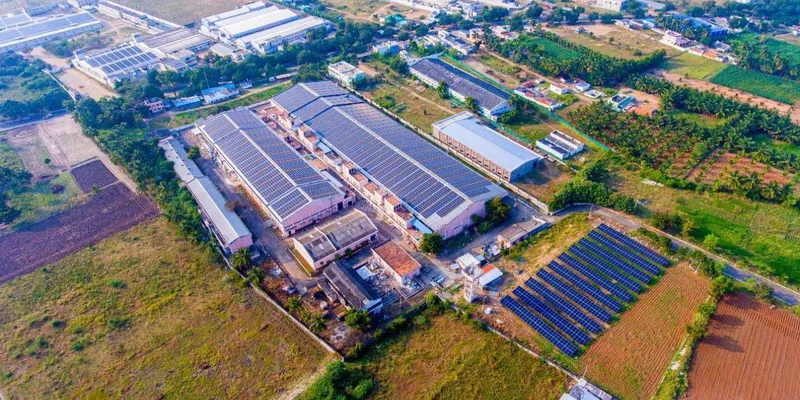
Study highlights cost savings, lower emissions and improved competitiveness through renewable electricity and electrified heat processes
Tamil Nadu’s textile sector has the potential to achieve annual savings of ₹1,560 crore to ₹3,250 crore through a transition to clean energy, according to a report released by Bengaluru-based think tank Climate Risk Horizons.
The report, which largely uses data from the Annual Survey of Industries (ASI) over the past decade, examined the current status and decarbonisation opportunities within Tamil Nadu’s textile industry. It found that moving to 100% renewable electricity could save the sector between ₹2,320 crore and ₹3,250 crore annually.
According to the study, production costs for textiles in Tamil Nadu have been increasing, largely due to fuel and energy expenses.
“Rising fuel costs are one of the reasons for the declining competitiveness of the State’s textiles, the exports of which have plateaued since 2017 at approximately $ 7.4 billion. Our analysis finds that transitioning towards RE can save the industry a lot of money, improving cost competitiveness and revitalising the sector,” said Rakesh Ranjan, co-author of the report.
The report noted that the Tamil Nadu textile sector’s total energy expenditure has nearly doubled over the past four years. It also found that fuel cost intensity, measured as the ratio of fuel costs to output, has increased during the same period.
Climate Risk Horizons stated that India’s textile industry records the highest carbon footprint among major textile-exporting countries, reaching more than 12.5 kg CO₂e per kg of textile. The report noted that this level is higher than those recorded in Vietnam, Bangladesh and China.
According to the study, shifting to renewable-powered electric heating systems could improve cost competitiveness while simultaneously reducing emissions.
The report further stated that large global brands should facilitate large-scale electrification of heat-based industrial processes, move away from biomass as a climate solution, and support policy and grid-level reforms required to accelerate decarbonisation.
Ashish Fernandes, director of Climate Risk Horizons, said global brands must enable large-scale electrification of heat-based processes, reject biomass as a climate solution and drive policy and grid-level reforms needed to accelerate decarbonisation.
- Core Fashion & Textile Value Chain
- Circularity, Sustainability & Waste Management
- Sustainability Enablers & Solutions
- Technology, Platforms & Innovation
- Retail, Trade & Market Access
- Knowledge, Institutions & Ecosystem Builders
- Finance, Investment & Support
- Logistics, Infrastructure & Operations
- Media, Communication & Culture
- Others
 Spanish
 English
 Arabic
 French
 Portuguese
 Deutsch
 Turkish
 Dutch
Dutch
 Italiano
 Russian
 Romaian
 Portuguese (Brazil)
 Greek
Greek