


TN Textile Sector Could Save Up To US $339 million Annually Through Decarbonisation: Report
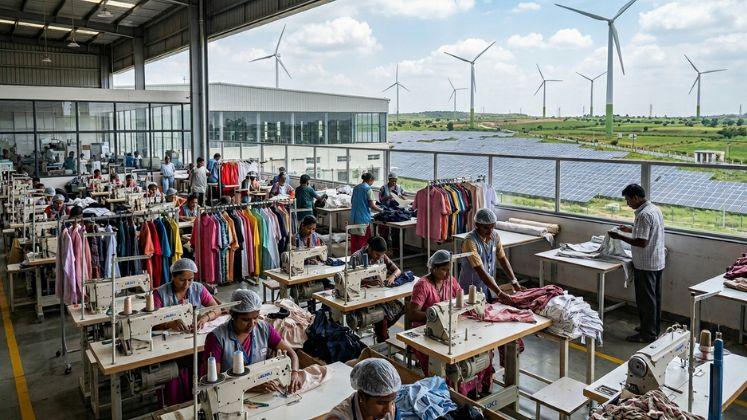
Tamil Nadu’s textile industry could achieve annual savings of up to Rs. 3,250 crore (US $339 million) by adopting renewable energy and cleaner production technologies, according to a new report.
The report, Fashioning a Net Zero Future for Tamil Nadu’s Textile Sector, published by Climate Risk Horizons, estimates that a complete transition to renewable electricity could generate annual savings of between Rs. 2,320 crore (US $242 million) and Rs. 3,250 crore (US $339 million). A broader shift that combines renewable energy with the electrification of industrial heat processes could deliver annual savings ranging from Rs. 1,560 crore (US $163 million) to Rs. 2,770 crore (US $289 million).
Total fuel expenditure across the industry increased by nearly 47% between FY ’21 and FY ’24. During the same period, fuel cost intensity—measuring the proportion of revenue consumed by energy expenses—rose by around 17%, placing additional pressure on margins as textile export growth remained largely stagnant.
Climate Risk Horizons warned that emerging regulations in key export markets, particularly Europe, could make emissions reduction a commercial necessity for textile exporters. Measures including the European Union’s Carbon Border Adjustment Mechanism (CBAM), Digital Product Passports and enhanced supply chain sustainability requirements are expected to increase pressure on manufacturers to lower embedded carbon emissions.
Despite the potential benefits of decarbonisation, several structural barriers were identified, limiting the adoption of renewable energy. These include open-access charges, banking restrictions, transmission bottlenecks and inadequate evacuation infrastructure for renewable power projects. Smaller textile manufacturers and micro, small and medium enterprises (MSMEs) also face challenges in securing financing for renewable energy systems and electrified heating technologies.
To accelerate the transition, it was recommended that the Tamil Nadu government and the state’s electricity regulator improve access to renewable energy, facilitate concessional financing and expedite grid infrastructure upgrades. It also urged textile associations to explore collective renewable energy procurement models and develop a sector-wide decarbonisation roadmap.
- Core Fashion & Textile Value Chain
- Circularity, Sustainability & Waste Management
- Sustainability Enablers & Solutions
- Technology, Platforms & Innovation
- Retail, Trade & Market Access
- Knowledge, Institutions & Ecosystem Builders
- Finance, Investment & Support
- Logistics, Infrastructure & Operations
- Media, Communication & Culture
- Others

 English
 Arabic
 French
 Spanish
 Portuguese
 Deutsch
 Turkish
 Dutch
Dutch
 Italiano
 Russian
 Portuguese (Brazil)
 Greek
Greek