


Ahmedabad Textile Units at 50% Capacity Amid Rising Raw Material Costs
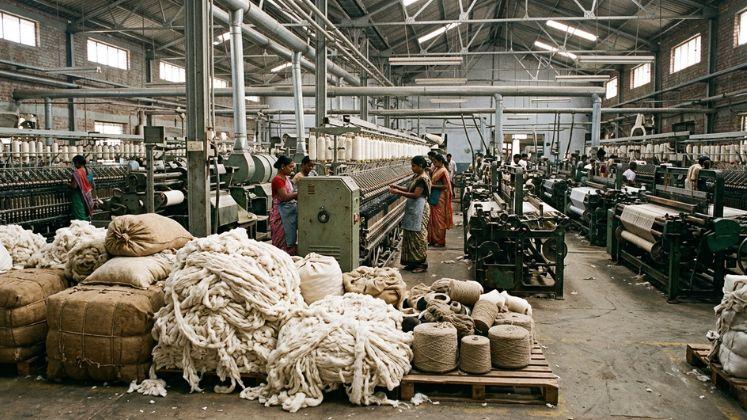
Ahmedabad’s textile weaving and processing industry is facing significant challenges as sharp increases in cotton, cotton yarn, and processing input costs have affected production costs and weakened market demand.
Industry stakeholders noted that the situation has worsened over the past three months. Rising prices have not only increased fabric costs but have also made grey fabric more expensive for buyers, leaving many units struggling to maintain operations.
Key inputs such as coal and colour chemicals have become considerably more expensive, driving up the cost of dyeing, printing, and finishing operations. Although processing charges have been increased by approximately 5% to 7%, industry players say the hike is insufficient to fully compensate for the higher input costs.
Several processing units in Ahmedabad are currently operating at only around 50% capacity utilisation. Some units have also started remaining closed for one or two days each week to minimise losses and manage inventory levels. The situation has raised concerns among small and medium-sized enterprises that rely heavily on a consistent flow of orders.
Traders have adopted a cautious approach amid uncertainty over future price trends. Many are restricting purchases due to concerns that any decline in prices could leave them holding high-cost inventories and result in substantial losses.
This cautious buying behaviour has led to a noticeable decline in demand for grey fabric across the market. Processing units reported that the slowdown in grey fabric procurement has directly affected production schedules and business activity.
The industry is also facing an acute labour shortage, further adding to operational difficulties. Unit owners noted that irregular production schedules and weak order books are making it increasingly difficult to retain workers.
“The industry is under pressure from every side, whether it is related to cotton, yarn, coal, chemicals or labour. If immediate relief is not provided, many units may find survival difficult. There is also a short supply of cotton yarn because spinning units have higher export commitments. Ahmedabad and surrounding areas have around 200 weaving units,” said Bharat Chhajer, former chairman of The Powerloom Development and Export Promotion Council (PDEXCIL).
- Core Fashion & Textile Value Chain
- Circularity, Sustainability & Waste Management
- Sustainability Enablers & Solutions
- Technology, Platforms & Innovation
- Retail, Trade & Market Access
- Knowledge, Institutions & Ecosystem Builders
- Finance, Investment & Support
- Logistics, Infrastructure & Operations
- Media, Communication & Culture
- Others
 Dutch
Dutch
 English
 Arabic
 French
 Spanish
 Portuguese
 Deutsch
 Turkish
 Italiano
 Russian
 Romaian
 Portuguese (Brazil)
 Greek
Greek