


Textile MSMEs Expected to Face Slower Revenue Growth and Margin Pressure in FY27: CRISIL Intelligence
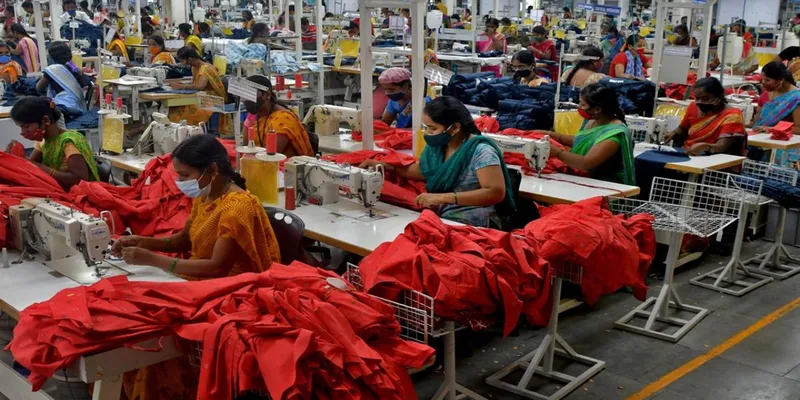
The readymade garment (RMG) industry, dominated by MSMEs, is expected to record revenue growth of 4–6 per cent in FY27, reaching ₹5.7 trillion. This compares with growth of 6–8 per cent in FY26.
CRISIL Intelligence noted that higher realisations and recovery in RMG exports are likely to support growth during the financial year. However, profit margins are projected to decline by 100–150 basis points due to increasing production costs and subdued domestic demand, limiting the ability of manufacturers to pass on higher costs to consumers.
RMG exports are expected to rise 6–8 per cent to ₹1.49 trillion in FY27, rebounding after a 3 per cent decline in FY26. The expected improvement is linked to free-trade agreements signed with the United Kingdom and the European Union, a depreciating rupee, and easing of higher tariffs by the United States.
At the same time, the report noted that the ongoing West Asia crisis and its impact on export markets remain a factor to monitor.
On the domestic front, demand conditions are expected to remain under pressure. Demand for RMG, which had grown 8–10 per cent in FY26, is projected to increase by 4–6 per cent in FY27. CRISIL Intelligence attributed this slowdown to inflationary pressures and the impact of the West Asia crisis on consumer spending.
The report also highlighted concerns on the supply side. Domestic cotton prices are likely to increase due to higher international cotton prices, rising fertiliser costs and increasing minimum support prices for cotton. In addition, the conflict has made domestic polyester more expensive.
MSMEs are expected to bear a major share of the impact, as they account for nearly 80 per cent of the textile industry’s production capacity. According to the report, these enterprises generally have limited financial flexibility to absorb economic shocks.
Export-oriented RMG clusters such as Tirupur and Bengaluru are projected to perform better in terms of revenue growth compared to domestic-focused clusters including Kolkata and Kanchipuram.
Despite the challenges, the report stated that the RMG sector is positioned for medium-term growth supported by free-trade agreements, establishment of large textile parks, Production-Linked Incentive scheme benefits, and remission of state and central taxes and levies aimed at boosting domestic manufacturing and exports.
The report also highlighted that MSMEs contribute 75–80 per cent of the textile industry’s production capacity, while non-MSME players account for 25–30 per cent.
- Core Fashion & Textile Value Chain
- Circularity, Sustainability & Waste Management
- Sustainability Enablers & Solutions
- Technology, Platforms & Innovation
- Retail, Trade & Market Access
- Knowledge, Institutions & Ecosystem Builders
- Finance, Investment & Support
- Logistics, Infrastructure & Operations
- Media, Communication & Culture
- Others

 English
 Arabic
 Spanish
 Portuguese
 Deutsch
 Turkish
 Dutch
Dutch
 Italiano
 Russian
 Romaian
 Portuguese (Brazil)
 Greek
Greek