


ReThinking Polyester Recycling In India: Why Chemical Recycling Needs A New Approach
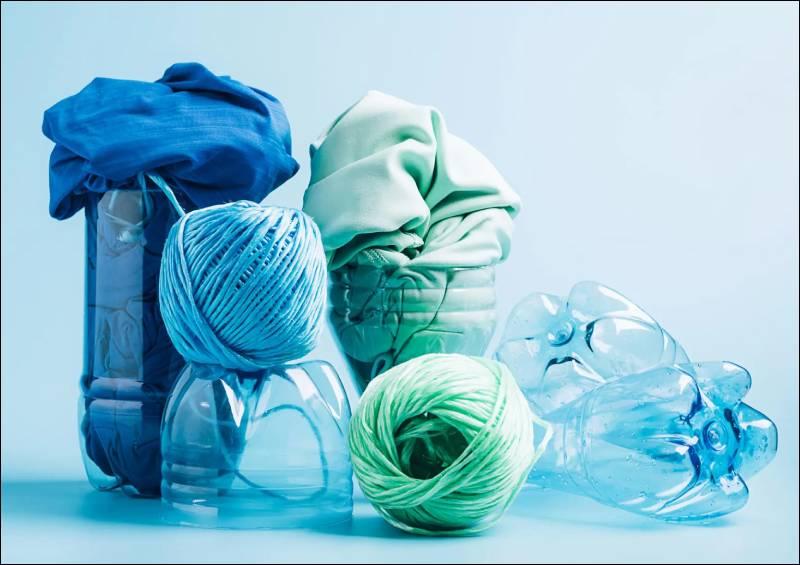
India’s polyester recycling industry is at a turning point. For years, fibre manufacturers relied heavily on a flexible raw material strategy, blending PET bottle flakes with lower-grade inputs to maintain production. This approach allowed the industry to function efficiently despite inconsistencies in feedstock quality.
However, recent shifts in sustainability practices and regulatory awareness have disrupted this balance. The growing emphasis on bottle-to-bottle recycling has redirected PET bottle waste away from fibre applications. At the same time, the principle that “textile waste should be recycled into textiles” has gained momentum. While environmentally sound, these changes have unintentionally created a significant shortage of PET flakes for fibre and filament manufacturers.
As a result, the industry is now being pushed to explore alternative raw materials primarily textile waste in the form of yarn waste, fabric scraps, and post-consumer garments.
The Reality of Indian Textile Waste
While textile waste appears to be a promising alternative, the Indian scenario presents a unique challenge. Unlike some global markets where relatively pure polyester waste streams are available, India’s textile waste is predominantly blended.
Common combinations include:
Polyester–cotton-Nylon-viscose-lycra
This widespread use of blended fabrics or Mixed waste, makes it extremely difficult to obtain 100% polyester feedstock, which is essential for efficient mechanical recycling. Sorting such materials at scale is both technically complex and economically unviable in many cases.
Consequently, mechanical recycling in India faces inherent limitations, pushing the industry to seriously consider chemical recycling as a viable alternative.
Chemical Recycling: Opportunity with Complexity
Chemical recycling offers a fundamentally different approach. Instead of mechanically processing the polymer, it breaks polyester down into its chemical building blocks—such as BHET (Bis(2-Hydroxyethyl) Terephthalate) or oligomers. This allows for the removal of impurities at a molecular level, including other polymers, dyes, and additives.
In theory, this makes chemical recycling ideally suited for handling mixed, coloured and contaminated textile waste. However, the practical implementation is far more complex—especially in the Indian context.
The Core Challenges
The success of chemical recycling depends on three critical factors: feedstock quality, yield, and purity.
- Feedstock Variability
Indian textile waste is highly inconsistent. Variations in blend composition, dye types, and finishing chemicals introduce unpredictability into the process. This variability directly impacts reaction efficiency and product quality.
- Yield Optimization
Achieving high monomer or oligomer yield is challenging when impurities are present. Side reactions, degradation, and contamination can significantly reduce output, affecting overall process economics.
- Product Purity
Purity is perhaps the most critical parameter. The presence of colour bodies, ash, and other residues can compromise the quality of the recovered monomer. This, in turn, affects downstream polymerization and the performance of the final fibre.
Why Global Solutions Don’t Directly Apply
Many chemical recycling technologies available today have been developed in regions such as Europe, Japan, and the United States. These processes are typically designed for clean, well-segregated textile waste streams with high polyester content.
In contrast, Indian waste streams are far more complex and less controlled. As a result, directly adopting these technologies without modification can lead to:
- Lower yields
- Higher operational costs
- Inconsistent product quality
This highlights a crucial point: chemical recycling solutions must be localized to succeed in India.
The Need for a Collaborative Approach
Unlike traditional equipment procurement, chemical recycling cannot be approached as a simple “buy and operate” model. Its success depends on a deep understanding of both the technology and the feedstock.
This calls for close collaboration between buyers (fibre producers) and technology suppliers.
Buyers must actively participate in:
- Feedstock characterization
- Process trials
- Product validation
Suppliers, on the other hand, must provide:
- Flexible process designs
- Support for calibration and optimization
- Adaptability to Indian conditions
Why Pilot Plants Are Essential
One of the most critical steps toward successful implementation is the development of a pilot plant, typically in the range of 500 kg/day to 1 ton/day.
A pilot plant serves multiple purposes:
- Validates process performance on real Indian waste
- Helps optimize yield and purity
- Identifies operational challenges early
- Builds confidence before scaling up
Importantly, the pilot plant should be designed as a scaled-down replica of the commercial facility, ensuring that learnings can be directly translated into large-scale operations.
Replicability
Another concern is whether such processes can be easily replicated by competitors. While the basic concept and equipment may be copied, the process know-how, optimization strategies, and feedstock handling expertise are far more difficult to replicate. These elements ultimately determine long-term success.
The Risk of Skipping the Pilot Stage
Some companies may be tempted to bypass pilot testing and move directly to commercial-scale plants, making adjustments later. While this approach may save time initially, it carries significant risks:
- Incorrect process design
- Poor yield and quality
- Expensive modifications
In most cases, the cost of correcting these issues far exceeds the investment required for a pilot plant.
The Way Forward
India stands at a crucial juncture in the evolution of polyester recycling. The shift toward textile-based recycling is inevitable, and chemical recycling offers a promising pathway forward.
However, success will depend on a fundamental shift in approach:
- Recognizing the complexity of Indian textile waste
- Investing in research and pilot-scale validation
- Building strong partnerships between industry stakeholders
Chemical recycling is not just a technological upgrade, it is a system-level transformation for the polyester industry in India.
- Core Fashion & Textile Value Chain
- Circularity, Sustainability & Waste Management
- Sustainability Enablers & Solutions
- Technology, Platforms & Innovation
- Retail, Trade & Market Access
- Knowledge, Institutions & Ecosystem Builders
- Finance, Investment & Support
- Logistics, Infrastructure & Operations
- Media, Communication & Culture
- Others

 English
 Arabic
 French
 Spanish
 Portuguese
 Deutsch
 Turkish
 Dutch
Dutch
 Italiano
 Russian
 Romaian
 Portuguese (Brazil)