


West Asia Conflict Disrupts Surat Textile Trade, Shipping Costs Surge 400%
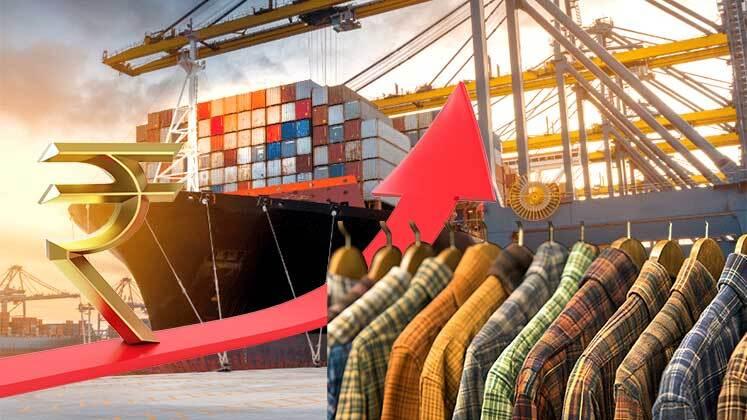
The ongoing conflict in West Asia is beginning to affect India’s textile trade, with manufacturers in Surat raising concerns over soaring shipping costs, delayed payments and rising raw material prices.
Industry leaders say shipping costs for consignments have risen by as much as 400%, while prices of man-made fibre — a key raw material for synthetic textiles — have increased by Rs. 10–15 (US $ 0.11- US $ 0.16) per kilogram. Traders also warn that tensions around the Strait of Hormuz could push crude oil prices higher, potentially driving further increases in production costs.
Surat is regarded as the world’s second-largest manufacturing hub for synthetic yarn and produces more than six crore metres of fabric daily. With much of its production linked to export markets, disruptions in international shipping are already being felt across the sector.
Ashok Jeerawala, president of the Surat Weavers Association, stated that consignments were currently stuck in transit, resulting in delayed payments to manufacturers, even as raw material prices were rising rapidly. According to him, this situation was likely to affect both international supply chains and domestic textile markets. He estimated that the industry could face an immediate revenue loss of Rs. 300–400 crore (US $ 32.74 million – US $ 43.65 million) because of the conflict.
Ashish Gujarati, former president of the South Gujarat Chamber of Commerce and Industry, said exports of narrow yarn, including laces, to markets such as Iran and Israel had been severely affected by the war. He also noted that instability linked to tensions involving Dubai had disrupted supply routes to African markets.
Gujarati explained that traders in Dubai typically import textile products from Surat and then re-export them to Africa. However, he said the current geopolitical situation had effectively halted that trade route. He added that shipping charges had surged dramatically, as many shipping operators were unwilling to risk vessels in the affected waters.
Textile merchants in the city say the conflict has compounded an already sluggish market and stated that the sector had been experiencing slow demand for some time and that the war had delivered a further setback. They also pointed to labour uncertainty, noting that many workers from states such as Uttar Pradesh and Bihar had returned to their home states for festivals, leaving manufacturers unsure about labour availability when production resumes.
Industry representatives warn that if the conflict continues to escalate, the combined pressures of higher logistics costs, supply disruptions and rising input prices could place significant financial strain on Surat’s vast textile manufacturing ecosystem.
- Core Fashion & Textile Value Chain
- Circularity, Sustainability & Waste Management
- Sustainability Enablers & Solutions
- Technology, Platforms & Innovation
- Retail, Trade & Market Access
- Knowledge, Institutions & Ecosystem Builders
- Finance, Investment & Support
- Logistics, Infrastructure & Operations
- Media, Communication & Culture
- Others

 English
 Arabic
 French
 Spanish
 Portuguese
 Turkish
 Dutch
Dutch
 Italiano
 Russian
 Romaian
 Portuguese (Brazil)
 Greek
Greek