


Textile Industry Seeks Relief Amid Rising Cotton Prices and Supply Concerns
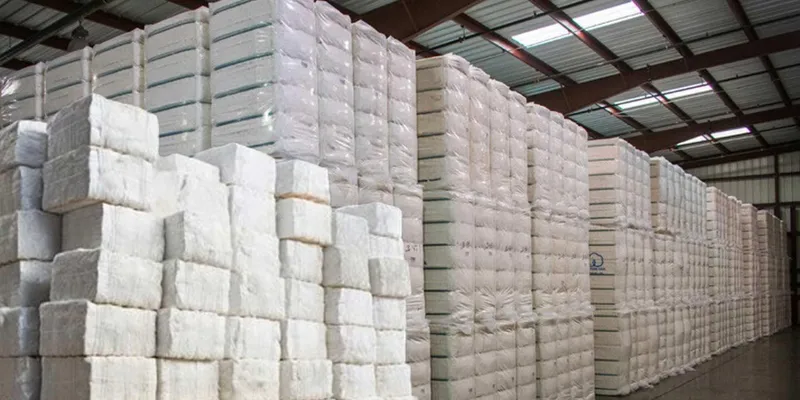
Industry bodies urge temporary exemption from 11% cotton import duty as input costs and supply pressures intensify
Textile manufacturers and industry bodies have sought government intervention following a sharp rise in cotton prices and concerns over tightening domestic supply.
Industry representatives said increasing cotton costs, along with higher raw material and logistics expenses, are putting pressure on manufacturing units and exporters across the textile value chain.
Neeraj Jain, managing director of Vardhman Textiles, highlighted concerns regarding domestic cotton availability during the company’s latest earnings call. He flagged the possibility of a cotton shortage beginning in August.
During a separate analyst interaction, Arvind Ltd’s management stated that higher input costs, particularly cotton prices, may pressure margins during the first half of the year. The company added that it has proactively secured long-term pricing arrangements and locked in a significant share of raw materials to manage inflationary pressures.
Industry bodies have called on the Union government to provide exemption from the existing 11 per cent cotton import duty at least until December. The demand comes amid rising cotton prices and a weakening rupee, which manufacturers say are increasing production costs and affecting competitiveness against other global textile hubs.
Manufacturing units stated that the increase in cotton prices has pushed up operational costs and reduced margin flexibility at a time when export orders are improving.
“A sustained domestic supply gap and higher prices force Indian textile manufacturers and exporters to battle higher input costs, especially at a time of growing orders. Some units cannot accept orders with certainty,” said Dr A Sakthivel, vice chairman, Apparel Export Promotion Council.
The report also noted that apparel exports declined 12 per cent year-on-year in April 2026, while combined textile and apparel exports fell 3.4 per cent compared to the same period last year.
Industry representatives said policy support and stable raw material availability will remain important for maintaining export competitiveness and supporting production planning in the coming months.
- Core Fashion & Textile Value Chain
- Circularity, Sustainability & Waste Management
- Sustainability Enablers & Solutions
- Technology, Platforms & Innovation
- Retail, Trade & Market Access
- Knowledge, Institutions & Ecosystem Builders
- Finance, Investment & Support
- Logistics, Infrastructure & Operations
- Media, Communication & Culture
- Others

 English
 Arabic
 French
 Spanish
 Portuguese
 Turkish
 Dutch
Dutch
 Italiano
 Russian
 Romaian
 Portuguese (Brazil)
 Greek
Greek