


Report Recommends US $158 Million Annual Support for Competitive Cotton Supply
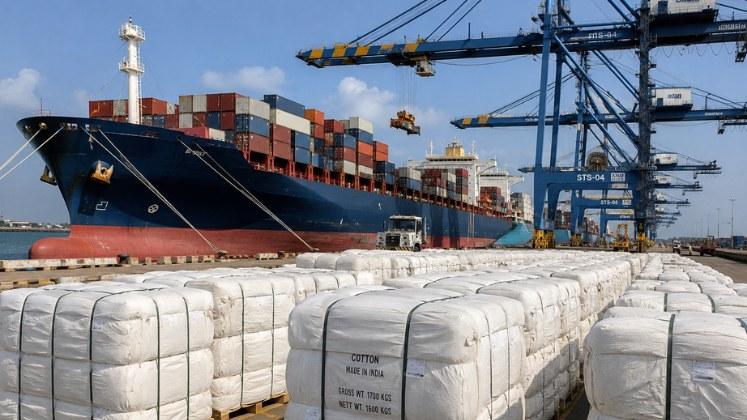
A comprehensive study on India’s cotton sector, jointly prepared by Gherzi and the International Cotton Advisory Committee (ICAC), highlighting the need for stable cotton trade policies and globally competitive raw material access to strengthen India’s textile and apparel industry has been released by the Confederation of Indian Textile Industry (CITI).
The report, titled Economic Analysis of Cotton Supply, Pricing, and Trade Policy in India, examines the structural factors influencing cotton production, pricing, trade policy and the broader competitiveness of the textile value chain.
A key finding of the study is the adverse impact of the existing 11% cotton import duty, which the report states has placed Indian textile manufacturers at a disadvantage compared to competing Asian markets that enjoy duty-free access to international cotton.
According to the report, temporary relief measures have offered limited support. India had waived cotton import duty between August and December 2025 before reinstating it on 1st January 2026.
The study stressed that stable and predictable policy measures were essential for mills to sustain operations and meet market demand. It recommended the withdrawal of import duty on cotton to ensure that mills could access raw material at internationally competitive prices.
It was further stated that improving fibre quality and aligning domestic cotton market conditions with global benchmarks would be critical to supporting both farmer incomes and long-term industry growth.
The study also recommended a stronger role for the Cotton Corporation of India (CCI), suggesting that the institution should be empowered to supply cotton to domestic mills at internationally competitive prices.
The CCI would require an annual financial buffer of around Rs. 1,500 crore (US $158 million) to supply nearly 100 lakh bales of cotton — approximately one-third of India’s crop — to local textile mills at international parity prices, offsetting the 11% import duty disadvantage.
Additionally, it was proposed that the CCI maintain a strategic cotton reserve equivalent to nearly three months of consumption to help stabilise market volatility, similar to reserve mechanisms adopted in countries such as China.
It also recommended that the CCI adopt a dynamic selling policy through warehouses located near major textile manufacturing clusters to meet mill demand more efficiently.
On productivity, the study stated that long-term policy planning should address structural constraints affecting cotton cultivation and improve productivity to ensure the economic viability of cotton farming.
The report observed that stagnant yields were increasing per-unit production costs for farmers, thereby limiting their ability to benefit fully from market opportunities.
In addition, the study called for the creation of an institutional mechanism to stabilise cotton prices and reduce the impact of speculative price movements across the value chain.
It proposed the introduction of a Cotton Price Stabilisation Fund scheme with a 5% interest subvention to ease working capital pressures during the peak cotton procurement season between November and March.
CITI Chairman Ashwin Chandran stated that the Gherzi-ICAC report provided a detailed and actionable roadmap to help the Indian textile and apparel sector achieve its target of becoming a US $350 billion industry by 2030, including exports worth US $100 billion by the end of the decade.
He further noted that one of the report’s central conclusions was that a strong textile and apparel industry could become the most reliable customer for cotton farmers, in line with the government’s 5F vision.
- Core Fashion & Textile Value Chain
- Circularity, Sustainability & Waste Management
- Sustainability Enablers & Solutions
- Technology, Platforms & Innovation
- Retail, Trade & Market Access
- Knowledge, Institutions & Ecosystem Builders
- Finance, Investment & Support
- Logistics, Infrastructure & Operations
- Media, Communication & Culture
- Others

 Arabic
 French
 Spanish
 Portuguese
 Deutsch
 Turkish
 Dutch
Dutch
 Italiano
 Russian
 Romaian
 Portuguese (Brazil)
 Greek
Greek