


Gen Z Drives Second-Hand Fashion Into The Mainstream
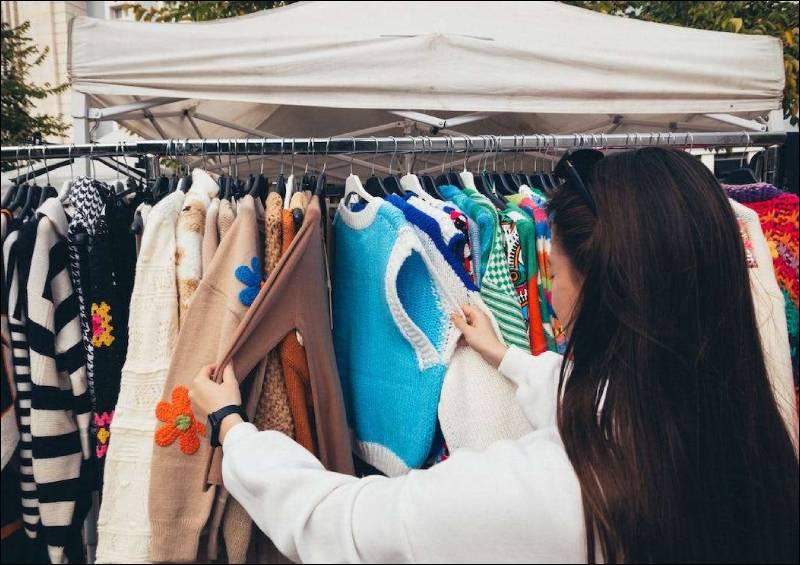
Second-hand fashion has rapidly evolved from a niche segment into a defining force within the global apparel industry, with Gen Z emerging as its most influential driver. Shaped by climate awareness, economic pressures and a digitally connected lifestyle, this generation is fundamentally redefining how fashion is consumed, valued and circulated.
At the heart of this transformation is the rise of digital resale platforms such as Depop, Vinted, ThredUp and Vestiaire Collective. These platforms have reshaped second-hand shopping into an interactive, community-driven experience, where users are not just buyers, but active participants in a circular fashion ecosystem. The process of buying and selling garments has become social, accessible and increasingly aspirational.
Beyond convenience, second-hand fashion strongly aligns with Gen Z’s pursuit of individuality. In contrast to the uniformity of fast fashion, vintage and pre-owned pieces offer uniqueness and authenticity. For a generation navigating trends that spread instantly through social media, owning distinctive, one-of-a-kind items provides a powerful means of self-expression.
Recent insights from the 2024 study Second Hand, First Choice?, conducted by Ipsos in collaboration with Humana People to People, highlight the evolving motivations behind this shift. Based on a survey of over 1,500 consumers in Italy across multiple generations, the study reveals that practical considerations continue to outweigh purely ethical ones.
Fit emerges as the primary driver for purchasing second-hand clothing, followed by affordability and material quality. Interestingly, sustainability ranks fourth among decision-making factors, indicating that while environmental awareness is important, it is not always the leading trigger for purchase.
Despite the rapid growth of digital platforms, physical retail channels remain dominant. The study finds that 79% of consumers still prefer buying second-hand through physical stores, flea markets and fairs, compared to 39% who shop online and 31% who use dedicated resale platforms such as Vinted. This underscores the continued importance of tactile experience and trust in second-hand purchasing.
Economic value is another key motivator, with 69% of respondents citing cost savings as a major reason for choosing pre-owned garments. However, barriers persist most notably concerns around hygiene, which are reported by 55% of participants. Addressing these concerns remains critical for further scaling the market.
Gen Z’s influence is particularly evident in participation rates. According to the study, the generation leads both in buying and selling second-hand fashion, accounting for 26% of buyers and 10% of sellers. This dual role highlights a shift from traditional consumption patterns to a more circular model, where garments are continuously reused, resold and reintroduced into the market.
The second-hand segment today encompasses not only resale but also exchange-based models, reflecting a broader rethinking of ownership and value in fashion. For Gen Z, clothing is no longer a disposable commodity but part of an ongoing lifecycle.
As this generation’s purchasing power continues to grow, the implications for the industry are significant. What was once considered an alternative channel is now becoming integral to mainstream retail strategies. Brands, retailers and policymakers alike are being pushed to adapt to a model that prioritises longevity, transparency and resource efficiency.
The rise of second-hand fashion is no longer a passing trend, it signals a structural shift in consumer behaviour. Driven by Gen Z, it represents a new vision for the industry, where sustainability, individuality and conscious consumption take precedence over excess and constant newness.
- Core Fashion & Textile Value Chain
- Circularity, Sustainability & Waste Management
- Sustainability Enablers & Solutions
- Technology, Platforms & Innovation
- Retail, Trade & Market Access
- Knowledge, Institutions & Ecosystem Builders
- Finance, Investment & Support
- Logistics, Infrastructure & Operations
- Media, Communication & Culture
- Others
 Spanish
 English
 Arabic
 French
 Portuguese
 Deutsch
 Turkish
 Dutch
Dutch
 Italiano
 Russian
 Romaian
 Portuguese (Brazil)
 Greek
Greek