


The Pali Model: How a Textile Cluster Turned a Wastewater Crisis into a Sustainability Benchmark
For years, the Bandi River was more than a water body for the people of Pali, it was a lifeline supporting communities, livelihoods, and the region’s textile economy. Over time, however, the river became associated with pollution as untreated and partially treated industrial effluents placed growing pressure on the local ecosystem.
As water quality declined, public concern intensified. Communities raised questions around environmental safety, groundwater stress, and long-term sustainability. What followed was a turning point: stronger regulatory intervention, stricter enforcement, and a clear message that industrial growth could no longer come at the cost of environmental degradation. For Pali’s textile sector, this became the beginning of transformation.
When Compliance Needed a New Approach
Pali has long been recognised as one of India’s important textile processing clusters. But like many industrial hubs, wastewater management remained a major challenge. Conventional treatment systems, including Zero Liquid Discharge (ZLD) setups and Common Effluent Treatment Plants (CETPs), offered solutions, but often with significant operational constraints such as high steam consumption, expensive maintenance, complex operations, and long-term commercial viability concerns.
For many small and medium textile processors, the challenge was not only meeting environmental norms, it was doing so sustainably and profitably.
Engineering Innovation Changes the Equation
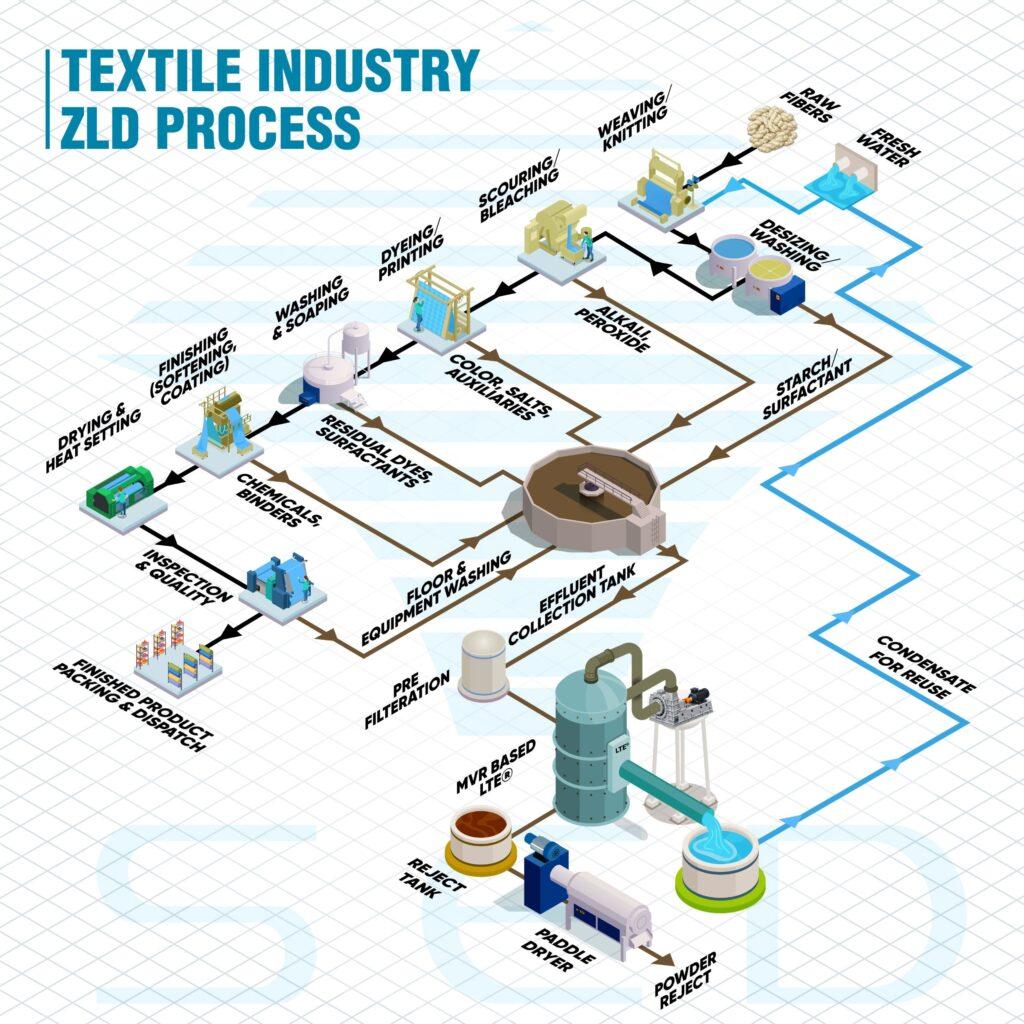
This is where Spray Engineering Devices Limited (SED) introduced a more practical alternative through its Low Temperature Evaporator (LTE®) technology powered by Mechanical Vapor Recompression (MVR).
Unlike conventional steam-intensive evaporation systems, MVR-based LTE® technology recovers and reuses thermal energy within the process, significantly reducing external energy demand.
The result is a next-generation wastewater treatment solution delivering:
- Up to 75% lower operating cost
- Elimination of dependence on boiler steam and fuel-intensive systems
- Faster ROI, with some projects achieving payback in under 12 months
- Reliable treatment of high-TDS effluents
- Improved water recovery and reuse potential
For textile processors operating under increasing cost pressure, this represented a critical shift: sustainability could now support profitability rather than compete with it.
A New Chapter for Rajasthan’s Textile Belt
Today, approximately 10,000 KLD of wastewater in the Rajasthan region is being treated through SED systems. Water recovery levels of up to 95% have enabled treated water to be reused in processes such as dyeing operations.
With TDS below 200 ppm in recovered water, reclaimed water has become a valuable production resource rather than a waste burden.
This circular water model has delivered:
- Reduced freshwater dependence
- Lower groundwater extraction pressure
- Improved compliance confidence
- Complete ZLD (Zero Liquid Discharge)
- Greater long-term resilience for textile operations
A Blueprint for Textile India
The success of the Pali model is now influencing textile centres such as Bhilwara, Jodhpur, and Balotra. With more than 50 project implementations across the wider region, it demonstrates that environmental responsibility and industrial competitiveness can progress together when supported by the right technology.
The lesson from Pali is clear: wastewater is not only a compliance challenge, it is an opportunity for resource recovery, cost optimisation, and sustainable growth.
- Core Fashion & Textile Value Chain
- Circularity, Sustainability & Waste Management
- Sustainability Enablers & Solutions
- Technology, Platforms & Innovation
- Retail, Trade & Market Access
- Knowledge, Institutions & Ecosystem Builders
- Finance, Investment & Support
- Logistics, Infrastructure & Operations
- Media, Communication & Culture
- Others

 Arabic
 French
 Spanish
 Portuguese
 Deutsch
 Turkish
 Dutch
Dutch
 Italiano
 Russian
 Romaian
 Portuguese (Brazil)
 Greek
Greek