


India aligns RoDTEP schedules with amended customs tariff structure
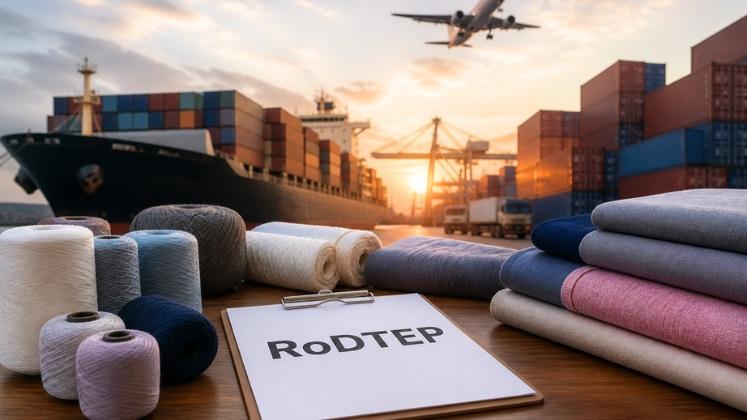
India has revised its export incentive framework by aligning the schedules under the Remission of Duties and Taxes on Exported Products (RoDTEP) scheme with the newly amended customs tariff structure. The changes, notified by the Department of Commerce on 30th April 2026, came into effect on 1st May 2026.
The update primarily focuses on synchronising tariff classifications to ensure consistency between export rebate mechanisms and the revised customs duty framework introduced through the Finance Act, 2026.
The revision impacts a total of 194 tariff lines across RoDTEP schedules where 142 new tariff lines have been added, 50 existing lines have been removed and descriptions of 2 tariff lines have been modified.
These changes apply to Appendix 4R (covering Domestic Tariff Area exports) and Appendix 4RE (covering exports from Advance Authorisation, Export Oriented Units, and Special Economic Zones).
The government has described the move as a technical alignment aimed at improving system efficiency and reducing classification ambiguities in export processing. By ensuring that RoDTEP tariff lines mirror the updated customs tariff structure, the revision is expected to enable seamless integration with the Customs Automated System, minimise discrepancies in classification and facilitate smoother processing of export claims.
Crucially, officials have emphasised that the update ensures continuity of duty remission benefits for exporters, maintaining stability in the incentive regime.
The alignment is part of India’s broader effort to streamline trade compliance and enhance ease of doing business. By reducing friction in export procedures and ensuring consistency across regulatory frameworks, the measure is expected to support exporters and improve operational efficiency in international trade.
Overall, while largely technical in nature, the revision reinforces policy coherence between tariff structures and export incentives—an important step for maintaining transparency and efficiency in India’s trade ecosystem.
- Core Fashion & Textile Value Chain
- Circularity, Sustainability & Waste Management
- Sustainability Enablers & Solutions
- Technology, Platforms & Innovation
- Retail, Trade & Market Access
- Knowledge, Institutions & Ecosystem Builders
- Finance, Investment & Support
- Logistics, Infrastructure & Operations
- Media, Communication & Culture
- Others
 Portuguese
 English
 Arabic
 French
 Spanish
 Deutsch
 Turkish
 Dutch
Dutch
 Italiano
 Russian
 Romaian
 Portuguese (Brazil)
 Greek
Greek