


Surat’s Textile Engine Drives Gujarat Growth Ahead of Vibrant Gujarat Regional Conference
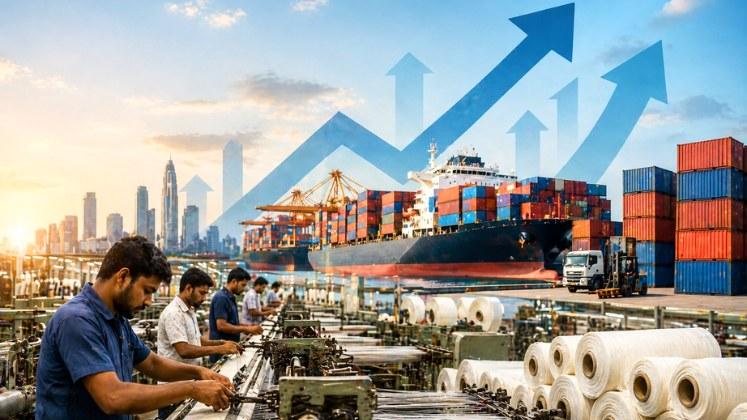
The textile industry in South Gujarat continues to serve as a cornerstone of Gujarat’s industrial economy, contributing more than 25% to the state’s GDP, according to the Gujarat government.
In a move aimed at accelerating regional industrial development, the government announced that the ‘Vibrant Gujarat Regional Conference (VGRC)’ will be held on 1st–2nd May 2026 in Surat. The conference is expected to function as a strategic platform to attract large-scale investments, particularly in the textile sector, while fostering stronger linkages between global buyers and local manufacturers. It will also promote the adoption of new technologies and innovation across the region.
According to an official statement, the textile sector in Surat and South Gujarat remains a key driver of the state’s economic growth. The government noted that Surat alone accounts for approximately 30% of global fabric production and contributes 65% to India’s man-made fibre segment. The city produces nearly 60 million metres of fabric daily and is supported by more than 600 processing houses and a vast network of power looms.
The statement further highlighted that Surat has evolved into a major manufacturing hub, producing a wide range of goods from sarees and national flags to high-end fashion garments. The region’s strength lies in its integrated supply chain and advanced production systems, with large volumes of goods dispatched daily via road, rail and air through an extensive logistics network of over 500 transporters.
The government also pointed to ongoing infrastructure and policy initiatives that are expected to further boost the sector. Projects such as the bullet train, coastal road developments and the PM MITRA Park in Navsari were described as potential game changers for the textile industry.
Under the Gujarat Textile Policy 2019, the sector has seen significant financial support, particularly in Surat district. Subsidies totalling Rs. 2,325.87 crore (US $246 million) have been disbursed so far, alongside incentives such as interest assistance of up to 6% for new and expanding units. Additional measures include electricity concessions of Rs. 2 (US $0.021) to Rs. 3 (US $0.032) per unit for weaving and knitting units, as well as capital investment support for technical textiles.
The policy framework also includes substantial funding for textile park infrastructure and the establishment of Common Effluent Treatment Plants (CETPs), aimed at improving environmental compliance. These initiatives, the government stated, have contributed to making Surat’s textile industry more modern, environmentally sustainable and globally competitive.
- Core Fashion & Textile Value Chain
- Circularity, Sustainability & Waste Management
- Sustainability Enablers & Solutions
- Technology, Platforms & Innovation
- Retail, Trade & Market Access
- Knowledge, Institutions & Ecosystem Builders
- Finance, Investment & Support
- Logistics, Infrastructure & Operations
- Media, Communication & Culture
- Others

 English
 Arabic
 French
 Spanish
 Portuguese
 Deutsch
 Turkish
 Dutch
Dutch
 Italiano
 Russian
 Romaian
 Greek
Greek