


CITI Urges Inclusion of Spinning Segment in TEEM to Strengthen Textile Value Chain
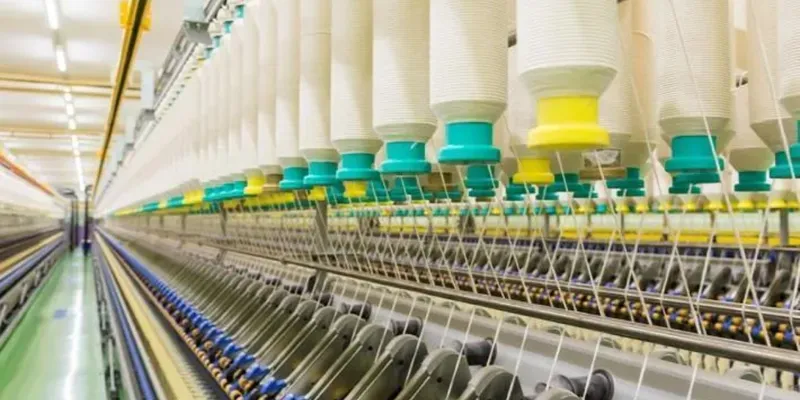
Industry body highlights need for balanced fibre-to-fashion development and modernisation of upstream capacity
The Confederation of Indian Textile Industry (CITI) has recommended including the spinning segment under the Textile Expansion and Employment Mission (TEEM). The move is aimed at improving alignment across the textile value chain and supporting sector-wide competitiveness.
CITI Chairman Ashwin Chandran said, “A balanced and synchronised development, from fibre to finished products, is critical for realising the government’s vision of scaling India’s textile and apparel industry to USD 350 billion, including USD 100 billion exports, by 2030.”
“Inclusion of the spinning segment within the ambit of the Textile Expansion and Employment Mission will enhance efficiency and ensure that upstream capabilities are fully aligned with the Mission’s downstream expansion strategy,” Chandran added.
TEEM, announced in the Union Budget by Finance Minister Nirmala Sitharaman, focuses on modernising textile clusters through support for machinery, technology upgrades, and testing infrastructure.
CITI raised concerns that while TEEM is expected to drive growth in weaving, processing, and garmenting, the absence of similar support for spinning may result in supply mismatches, increased dependence on imports, and lower domestic value addition.
According to industry estimates cited by CITI, around 25 per cent of India’s spindle capacity remains idle due to outdated technology, high energy consumption, and low productivity levels.
A recent industry report commissioned by CITI indicated that only 26 per cent of India’s spindles are modern, compared with a global average of 33 per cent. The share of modern spindles is higher in countries such as China (40 per cent) and Vietnam (38 per cent).
CITI also highlighted cost differences between modern and older mills. The tentative cost of producing yarn in a modern mill is approximately Rs 1.2 per count per kg, compared to about Rs 1.8 in a 10-year-old mill.
The adoption of modern technologies can increase productivity by 25 per cent, improve quality by 20 per cent, reduce power consumption by 15 per cent, and enhance raw material realisation by 1.5 per cent. These factors are considered important for strengthening competitiveness in both domestic and export markets.
India’s textile and apparel exports recorded a decline of 2.21 per cent year-on-year in FY26 (in dollar terms), according to the data referenced by CITI.
- Core Fashion & Textile Value Chain
- Circularity, Sustainability & Waste Management
- Sustainability Enablers & Solutions
- Technology, Platforms & Innovation
- Retail, Trade & Market Access
- Knowledge, Institutions & Ecosystem Builders
- Finance, Investment & Support
- Logistics, Infrastructure & Operations
- Media, Communication & Culture
- Others

 English
 Arabic
 French
 Spanish
 Portuguese
 Deutsch
 Dutch
Dutch
 Italiano
 Russian
 Romaian
 Portuguese (Brazil)
 Greek
Greek