


New era of textile superpowers: energy efficiency and sustainability
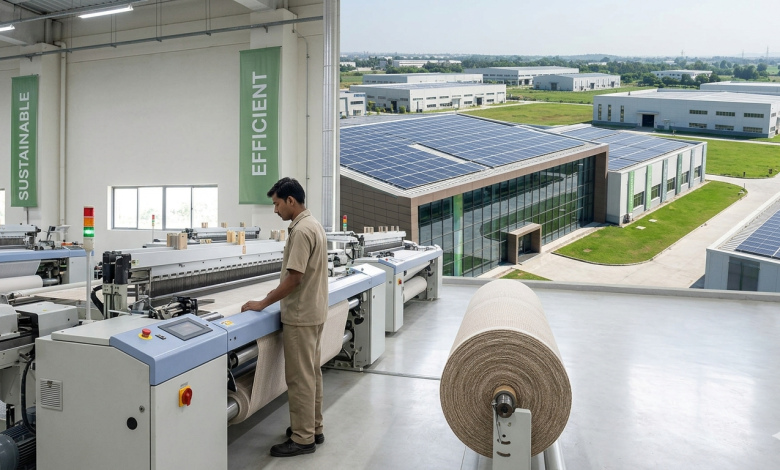
For decades, the global textile industry ran on a single competitive principle: lower labor costs meant stronger market position. Bangladesh, Vietnam, and China built their export dominance on this logic, attracting massive orders from the world’s largest apparel brands. That equation is now changing and energy is the force rewriting it.
The cost, reliability, and carbon footprint of energy have become the defining competitive variables of modern textile manufacturing. Countries that can secure affordable, stable, and clean energy for their factories are positioning themselves as the next generation of textile superpowers. Those that cannot are losing ground regardless of how low their wages remain.
Energy: the new competitive currency
Textile manufacturing is one of the most energy-intensive industries on earth. Spinning, weaving, dyeing, washing, and finishing all demand sustained inputs of electricity and heat. Dyeing units, in particular, require uninterrupted thermal energy and advanced water treatment systems, making them acutely sensitive to price volatility in gas and electricity markets.
The Russia-Ukraine war exposed this vulnerability with force. As European gas supplies tightened and energy prices surged to historic levels, factories in Germany and Italy faced cost structures they could no longer sustain. Many dyeing and finishing plants – the core of Europe’s premium textile value chain sharply reduced output or temporarily shut down. This made clear that energy pricing is now a primary driver of global sourcing decisions, not merely an operational footnote. And the geopolitical risks driving that volatility are not confined to Europe. Escalating tensions in the Persian Gulf, particularly around the Strait of Hormuz amid the Iran–USA conflict, pose a significant threat to global energy supply chains. Approximately 20 percent of the world’s traded oil passes through this corridor. Already, oil and energy prices have increased. Any further serious disruption in this passage would send energy price shocks across every major textile-producing region simultaneously, exposing the industry’s deep structural dependence on stable fossil fuel supplies.
Regulation as accelerating the shift
Market forces are being reinforced by regulation. The European Union’s Carbon Border Adjustment Mechanism (CBAM), entering full implementation in 2026, will apply a carbon price to goods imported into the EU equivalent to what EU producers pay under the Emissions Trading System. While textiles are not in CBAM’s initial product scope, the regulatory direction is unmistakable and major European brands are already embedding carbon performance into supplier evaluation criteria, independently of formal tariff requirements.
For manufacturers still dependent on high-carbon energy sources, this trend represents growing financial and reputational exposure. The window to transition is open, but it is narrowing.
Efficiency as a commercial metric
Across product categories, energy efficiency has moved from cost-saving measure to commercial differentiator. In denim, ozone washing and laser finishing are cutting both energy and water use substantially. In knitwear, whole-garment knitting technology reduces material waste and lowers energy input per unit. Newer generations of air-jet and water-jet looms across woven fabric production consume significantly less power than the equipment they replace.
Global buyers conducting factory assessments are increasingly incorporating energy performance indicators energy consumed per kilogram of output alongside traditional metrics of quality, compliance, and capacity. How efficiently a factory produces is becoming as commercially relevant as how cheaply it can produce.
The next textile superpowers
The countries that will lead the next era of global textile manufacturing are those that can meet three conditions simultaneously: energy affordable enough to keep production costs competitive; supply reliable enough to sustain large-scale uninterrupted manufacturing; and a carbon profile clean enough to satisfy the hardening expectations of international buyers and regulators.
No country perfectly satisfies all three today. But the direction of competition is clear. Nations investing in renewable energy infrastructure and industrial efficiency standards are accumulating structural advantages that will compound over time. Nations that delay – whether due to policy constraints, capital gaps, or fossil fuel dependence are building exposure to risks that will only intensify as carbon pricing spreads and buyer expectations continue to tighten.
- Core Fashion & Textile Value Chain
- Circularity, Sustainability & Waste Management
- Sustainability Enablers & Solutions
- Technology, Platforms & Innovation
- Retail, Trade & Market Access
- Knowledge, Institutions & Ecosystem Builders
- Finance, Investment & Support
- Logistics, Infrastructure & Operations
- Media, Communication & Culture
- Others

 English
 Arabic
 French
 Spanish
 Portuguese
 Turkish
 Dutch
Dutch
 Italiano
 Russian
 Romaian
 Portuguese (Brazil)
 Greek
Greek