


Zara, H&M and Primark Face Rising Costs as West Asia Conflict Disrupts Asian Polyester Supply Chains
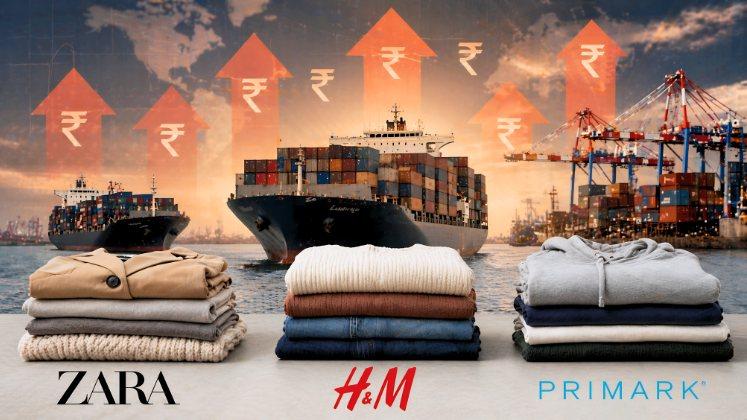
Apparel sold by major fast fashion retailers, including Zara and H&M, may become more expensive as the ongoing conflict in West Asia disrupts the supply of key raw materials, placing significant strain on textile producers in India and Bangladesh, according to a report by Reuters.
The closure of the Strait of Hormuz has disrupted shipments of refined petroleum products, which are critical to polyester production. Polyester, derived from oil-based inputs, accounts for 59% of global fibre output and is widely used across garments ranging from dresses to athleisure wear. With supplies constrained, Chinese exporters have raised prices, resulting in Indian polyester yarn manufacturers paying nearly 30% more for essential petroleum derivatives.
The ripple effects are being felt across Asia’s clothing supply chain. In addition to rising raw material costs, the fuel crisis has sharply increased the price of chemicals and dyes used in textile processing.
Cost pressures are expected to move downstream, potentially impacting global fast fashion brands that depend heavily on polyester-based supply chains in Asia. H&M indicated that it had not observed significant disruption in Bangladesh and reported no notable increase in supplier requests to adjust orders due to energy costs. Some brands, including Zara, have shifted partially towards recycled polyester made from plastic waste, though such materials account for only 12% of global polyester production.
British retailer Primark stated that its spring/summer inventory and a substantial portion of its autumn/winter stock would remain unaffected, noting that it does not directly procure energy-related raw materials vulnerable to inflation.
The impact extends beyond apparel. Petrochemical derivatives are widely used in footwear manufacturing, prompting concerns among US retailers. The Footwear Distributors and Retailers of America identified 25 oil-based components in footwear production, ranging from synthetic rubber soles to polyurethane foams and adhesives. However, a spokesperson for Nike downplayed the risk, stating that while oil-based materials do influence product costs, the impact is manageable.
Data from Wood Mackenzie shows that polyester staple fibre prices in India increased from Rs. 100 (US $1.06) per kilogramme at the end of February to Rs. 126.5 (US $1.34) per kilogramme a month later. Although prices eased slightly following government cuts to import tariffs on petrochemical inputs, they remained elevated at around Rs. 120 (US $1.27) per kilogramme as of 9th April. Meanwhile, textile dyeing and printing units in Surat have begun operating at reduced capacity, with some shutting down for two days a week due to rising operational costs.
- Core Fashion & Textile Value Chain
- Circularity, Sustainability & Waste Management
- Sustainability Enablers & Solutions
- Technology, Platforms & Innovation
- Retail, Trade & Market Access
- Knowledge, Institutions & Ecosystem Builders
- Finance, Investment & Support
- Logistics, Infrastructure & Operations
- Media, Communication & Culture
- Others

 English
 Arabic
 French
 Spanish
 Portuguese
 Deutsch
 Turkish
 Dutch
Dutch
 Italiano
 Russian
 Romaian
 Portuguese (Brazil)