


RSWM Advances Strategic Transformation Amid Textile Industry Shift
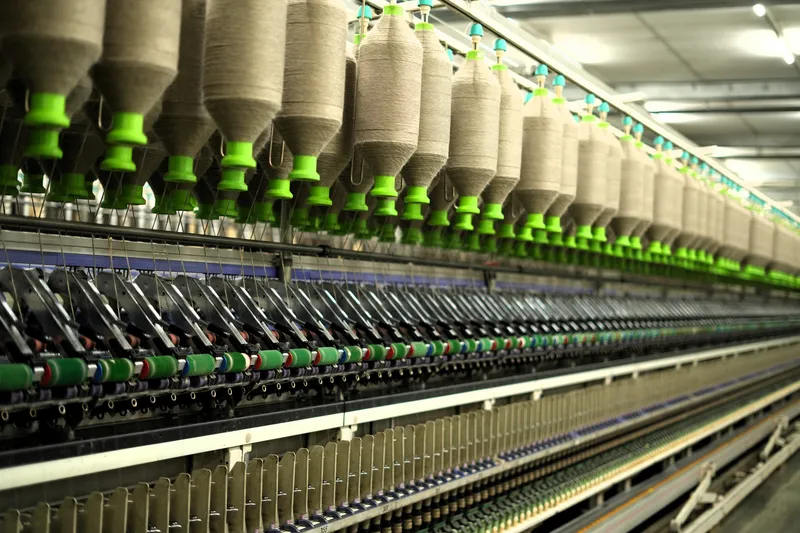
India’s textile industry is undergoing structural changes driven by global demand fluctuations, sustainability requirements, and technological shifts. Within this environment, RSWM Limited is undertaking a structured transformation to align its operations with emerging industry priorities. The company’s recent initiatives reflect a focus on operational discipline, sustainability integration, and long-term capability building.
India’s textile sector continues to balance its traditional strengths with emerging global demands. Contributing nearly 2% to the national GDP and supporting over 45 million livelihoods, the industry remains a key economic driver. While domestic consumption is expected to improve and export markets show gradual stabilisation, future growth is increasingly linked to value addition, sustainable manufacturing, and technology adoption.
Against this backdrop, RSWM Limited has been progressing through a defined transformation phase over the past year. The company’s approach indicates a shift from short-term cycle management toward building long-term operational and strategic resilience. This includes strengthening internal processes, improving execution consistency, and aligning business units with evolving market requirements.
The transformation is guided by the RSWM 2.0 framework based on Reflect, Restore and Reshape. Under this approach, the company has undertaken a detailed review of operational processes, cost structures, product positioning, and market engagement. The emphasis has been on enhancing internal efficiencies rather than immediate capacity expansion.
Efforts under the “Restore” phase focus on reinforcing core strengths such as integrated manufacturing, established customer relationships, and product quality. The company has also taken steps to improve transparency and organisational alignment, including the release of its first Integrated Annual Report for FY 2024–25, covering financial, environmental, governance, and strategic aspects.
To support organisational alignment, RSWM has conducted leadership discussions and marketing conclaves focused on operational challenges, market dynamics, and customer engagement. Programmes such as COCICA and RAPIDD have been introduced to define value systems, competencies, and performance accountability across the organisation.
Sustainability has become a central component of the company’s strategy. Through its Panchtatva initiative, RSWM is integrating responsible manufacturing practices across operations. Currently, 70% of its energy requirements are met through renewable sources, compared to India’s national average of approximately 31%. The company is also progressing toward transitioning to 100% biofuel-based boilers by the end of Q2 FY 2026–27, aiming to reduce fossil fuel dependence and align with ESG-focused markets.
In parallel, digital transformation is being integrated into operational processes. The introduction of an ESG and AI-driven Sustainability Dashboard supports data-driven decision-making, performance tracking, and improved transparency across functions.
RSWM has also expanded its engagement with domestic and international industry platforms to strengthen market presence and promote its product portfolio and manufacturing capabilities. These interactions support efforts to diversify markets and increase participation in value-added segments.
The company has received recognitions across areas such as environmental practices, workplace standards, and manufacturing performance. Leadership-level acknowledgements have also been recorded, reflecting organisational focus on governance and strategic direction.
The transformation programme is being led by Riju Jhunjhunwala, Chairman, Managing Director & CEO, with strategic direction from Rajeev Gupta, Joint Managing Director, and Manoj Kumar Bansal, Chief Transformation Officer & Chief Risk Officer. The approach integrates operational efficiency, sustainability, digitalisation, and customer-focused value creation within a unified framework.
As the company enters the new financial year, the focus is expected to remain on optimising existing capacities and increasing the share of value-added products. RSWM is also monitoring domestic demand recovery while maintaining readiness to capture export opportunities.
Recent developments indicate a continued effort to balance legacy strengths with future readiness. Investments in sustainability and digital systems are positioned as key enablers in building resilience and supporting long-term growth within a changing industry environment.
- Core Fashion & Textile Value Chain
- Circularity, Sustainability & Waste Management
- Sustainability Enablers & Solutions
- Technology, Platforms & Innovation
- Retail, Trade & Market Access
- Knowledge, Institutions & Ecosystem Builders
- Finance, Investment & Support
- Logistics, Infrastructure & Operations
- Media, Communication & Culture
- Others

 English
 Arabic
 French
 Spanish
 Portuguese
 Deutsch
 Turkish
 Dutch
Dutch
 Italiano
 Russian
 Romaian
 Greek
Greek