


Axens, IFPEN And JEPLAN Validate Large-Scale Textile-To-Textile Recycling Of Polyester Waste
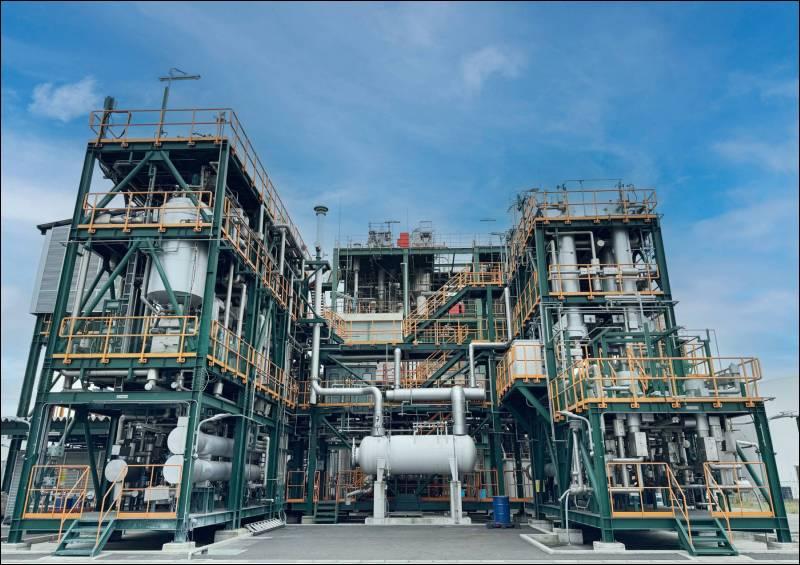
Axens, IFPEN and JEPLAN have successfully completed a major semi-industrial trial to recycle post-consumer, polyester-rich textile waste into high-quality raw material for new polyester production, marking a significant step toward circularity in the textile industry.
The trial involved processing several tens of tonnes of European textile waste, sourced from public collection systems in France and sorted by Nouvelles Fibres Textile and Mapea. The materials were treated at JEPLAN’s semi-industrial demonstration facility in Japan, which has a processing capacity of 1,000 tonnes per year.
Using the Rewind PET technology, the partners converted the waste into BHET, the base monomer used in polyester production. The recovered monomer will be further processed into yarns, fabrics and finished garments, enabling a complete textile-to-textile recycling loop.
This validation under real industrial conditions represents one of the first demonstrations of chemical recycling of post-consumer polyester textiles at this scale. It establishes a viable pathway for scaling textile-to-textile recycling and integrating it into broader industry strategies focused on reduction, reuse and recycling.
The Rewind PET process combines scientific innovation, engineering scale-up and operational expertise to deliver consistent and reproducible results. Designed for closed-loop recycling, the technology can be integrated into existing industrial sites worldwide, enabling the substitution of fossil-based raw materials with recycled alternatives.
Already commercialised for PET packaging, including food-contact applications, the technology has now been validated for textile recycling. Under an exclusive global licensing agreement, Axens will offer the solution to industrial players seeking to develop local or regional textile recycling ecosystems.
The recycled polyester produced through this process can be converted into fibres, fabrics and garments across key segments such as sportswear, outdoor applications, home furnishings including upholstery and curtains, as well as select luxury applications incorporating polyester.
Polyester and other synthetic fibres account for nearly 60% of global textile production, while less than 1% of fibres are currently recycled back into textiles. With textile waste volumes continuing to rise, scalable recycling solutions remain critical for advancing circularity.
This successful semi-industrial trial demonstrates that circular polyester production from post-consumer waste is now achievable at scale. The Rewind PET process offers a short-loop recycling pathway, enabling efficient material recovery while reducing dependence on virgin resources and supporting a lower environmental footprint.
- Core Fashion & Textile Value Chain
- Circularity, Sustainability & Waste Management
- Sustainability Enablers & Solutions
- Technology, Platforms & Innovation
- Retail, Trade & Market Access
- Knowledge, Institutions & Ecosystem Builders
- Finance, Investment & Support
- Logistics, Infrastructure & Operations
- Media, Communication & Culture
- Others
 Portuguese
 English
 Arabic
 French
 Spanish
 Deutsch
 Turkish
 Dutch
Dutch
 Italiano
 Russian
 Romaian
 Portuguese (Brazil)
 Greek
Greek