


Government strengthens DGFT norms framework to ease exporter bottlenecks
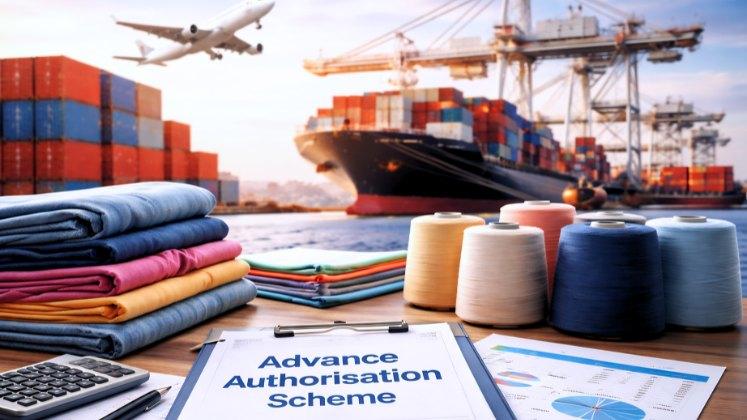
India has introduced a series of targeted reforms to strengthen the functioning of norms committees operating under the Directorate General of Foreign Trade (DGFT), in a move aimed at improving efficiency, transparency and faster approvals within key export schemes.
According to the Ministry of Commerce & Industry, the reforms are designed to streamline processes under the Advance Authorisation (AA) scheme, which allows duty-free imports of inputs used in export production. The measures are expected to enhance predictability for exporters while reducing delays in approvals.
Norms committees play a central role in determining standard input-output norms (SION), which define the quantity of inputs required to produce export goods. In cases where such norms are not pre-defined, exporters can submit self-declared data, which is subsequently evaluated by these committees.
However, the system has faced operational bottlenecks in recent months due to limited technical capacity. As of early February 2026, only 12 technical members were handling committee responsibilities, leading to rising backlogs and slower decision-making.
To address this, the government has significantly expanded technical capacity by appointing 10 additional experts, taking the total number of technical members to 22. This is expected to improve sector-specific expertise and reduce dependency on a small pool of officials.
Process-level reforms have also been introduced. These include fixed fortnightly meeting schedules, prioritisation of long-pending cases, and time-bound finalisation of meeting minutes. Additionally, systematic monitoring of pending applications and case ageing has been implemented to ensure accountability and faster disposal.
The ministry has also initiated a special disposal drive to clear existing backlogs and is working to convert frequently recurring cases into standard norms, thereby reducing repetitive approvals in the future.
Early results indicate a positive impact. Between January 2026 and 7th April 2026, norms committees held 38 meetings, reviewed 3,925 cases and disposed of 1,770 cases, signalling improved operational throughput.
The reforms are part of a broader effort to enhance the ease of doing business for exporters and strengthen India’s foreign trade ecosystem by making regulatory processes more predictable, efficient and responsive.
- Core Fashion & Textile Value Chain
- Circularity, Sustainability & Waste Management
- Sustainability Enablers & Solutions
- Technology, Platforms & Innovation
- Retail, Trade & Market Access
- Knowledge, Institutions & Ecosystem Builders
- Finance, Investment & Support
- Logistics, Infrastructure & Operations
- Media, Communication & Culture
- Others

 English
 Arabic
 French
 Spanish
 Portuguese
 Deutsch
 Dutch
Dutch
 Italiano
 Russian
 Romaian
 Portuguese (Brazil)
 Greek
Greek