


Bombay High Court Clears German Textile Firm, Rules Exporter Not Liable for Importer Violations
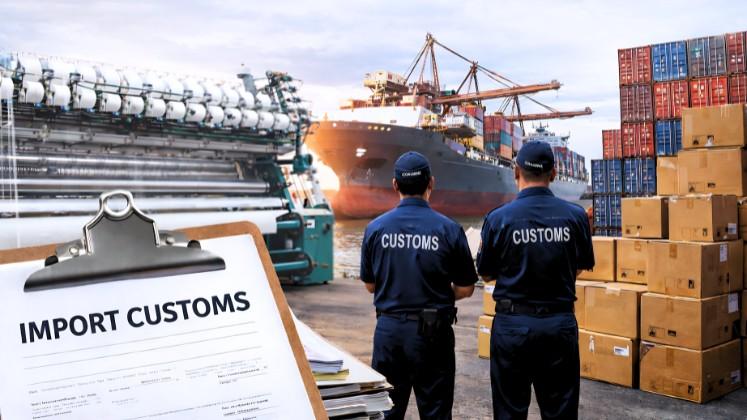
The Bombay High Court has set aside show cause notices issued to German textile machinery manufacturer Karl Mayer STOLL Textilmaschinenfabrik GmbH, ruling that a foreign exporter cannot be held liable for alleged misdeclaration by Indian importers.
A Division Bench comprising G S Kulkarni and Aarti Sathe observed that the customs department had sought to penalise the German firm for the alleged acts of importers in India, which was contrary to the legal framework governing such transactions. The court held that an exporter’s responsibility ends once goods are shipped in accordance with the buyer’s requirements.
The case arose from a petition filed by the German firm challenging show cause notices issued by customs authorities. A second petitioner, an Indian company incorporated under the Companies Act, 1956, provides technical and support services to the Karl Mayer Group, including installation, start-up assistance and warranty services for machines supplied to India. The company also assembles creels for warping machines at its Ahmedabad facility.
The court noted that between June 2014 and May 2017, the German firm had supplied warp knitting machines to various Indian importers. Subsequently, the Directorate of Revenue Intelligence (DRI) initiated an investigation based on intelligence inputs alleging that certain importers had misdeclared “high-speed warp knitting machines” as “fully fashioned high-speed knitting machines”.
Following its probe, the DRI launched inquiries against multiple importers and, based on findings from December 2020 to May 2021, the customs department issued show cause notices alleging that the petitioners had aided or abetted the importers in committing fraud.
In its ruling, the High Court clarified that responsibility for classification, declaration and payment of customs duty rests entirely with the importer once goods enter India. It further held that the provisions of the Customs Act, 1962 did not extend to foreign entities at the relevant time, as extra-territorial application was introduced only through amendments made in 2018.
The Bench noted that the alleged transactions predated the 2018 amendment and therefore could not be subject to retrospective application of the law. It also observed that the authorities had failed to produce any evidence demonstrating active involvement or abetment by the foreign exporter.
Accordingly, the court quashed the show cause notices, reaffirming that liability in such cases lies with the importer rather than the overseas supplier.
- Core Fashion & Textile Value Chain
- Circularity, Sustainability & Waste Management
- Sustainability Enablers & Solutions
- Technology, Platforms & Innovation
- Retail, Trade & Market Access
- Knowledge, Institutions & Ecosystem Builders
- Finance, Investment & Support
- Logistics, Infrastructure & Operations
- Media, Communication & Culture
- Others

 English
 Arabic
 French
 Spanish
 Portuguese
 Deutsch
 Turkish
 Dutch
Dutch
 Italiano
 Romaian
 Portuguese (Brazil)
 Greek
Greek