


India Rejects USTR Section 301 Probes, Seeks Immediate Termination
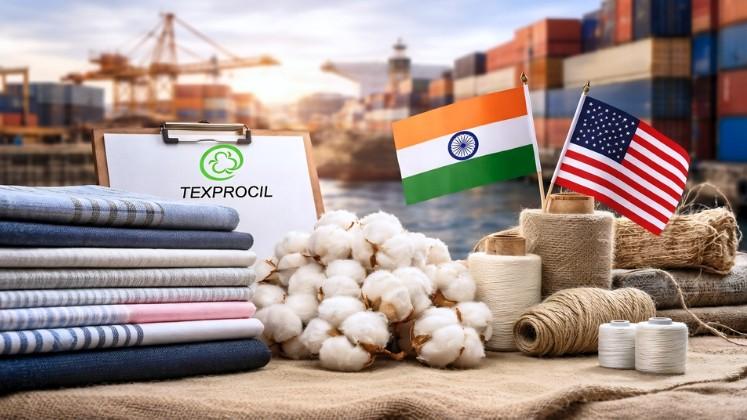
Industry body The Cotton Textiles Export Promotion Council (TEXPROCIL) has rejected allegations of excess capacity and forced labour raised by the United States Trade Representative, under Section 301 of the Trade Act of 1974. The response was submitted amid ongoing investigations covering multiple economies and industrial sectors.
The body described India’s US $42 billion trade surplus with the US in 2025 as a macroeconomic outcome driven by various global and domestic factors, noting that its share in overall US trade remains relatively small and limits its role in widening the US trade deficit. It also emphasised that ongoing negotiations for a Bilateral Trade Agreement provide a more appropriate platform to address trade concerns, rather than unilateral investigations.
“India is not an export-surplus economy in cotton textiles and the production trends across cotton, yarn, and fabric segments show stagnation or decline, not expansion indicative of excess capacity,” said Vijay Agarwal, chairman, TEXPROCIL.
After the US Supreme Court rejected President Trump’s tariff on imports, the USTR launched Section 301 investigations to examine whether countries maintain “structural excess capacity” in manufacturing through subsidies, suppressed wages or other policies that could distort trade.
The USTR has initiated two separate Section 301 investigations focusing on excess structural capacity and forced labour practices. The excess capacity probe covers 16 economies, including India, across sectors such as petrochemicals and textiles.
Meanwhile, the forced labour probe spans 60 economies, again including India, citing alleged harm to US trade interests. These investigations allow the US to potentially impose unilateral trade measures following their findings.
The Indian textile industry has been impacted by the earlier 50% tariff, with India’s textile and apparel exports to the US falling by 28.7% in February 2026 to US $630 million, following an 18.2% drop in January. For the full FY 2025–26, overall Indian textile and apparel exports slipped 2.21%.
Following the removal of the 50% tariff, the industry is closely watching current developments, with expectations that issues will be resolved through trade talks.
India’s textile and apparel exports to the US stood at nearly US $11 billion in FY25, accounting for around 28% of total sector exports.
- Core Fashion & Textile Value Chain
- Circularity, Sustainability & Waste Management
- Sustainability Enablers & Solutions
- Technology, Platforms & Innovation
- Retail, Trade & Market Access
- Knowledge, Institutions & Ecosystem Builders
- Finance, Investment & Support
- Logistics, Infrastructure & Operations
- Media, Communication & Culture
- Others

 English
 Arabic
 French
 Spanish
 Portuguese
 Deutsch
 Turkish
 Dutch
Dutch
 Italiano
 Romaian
 Portuguese (Brazil)
 Greek
Greek