


India Eyes Duty Cuts to Cushion Textile Sector Amid West Asia Disruptions
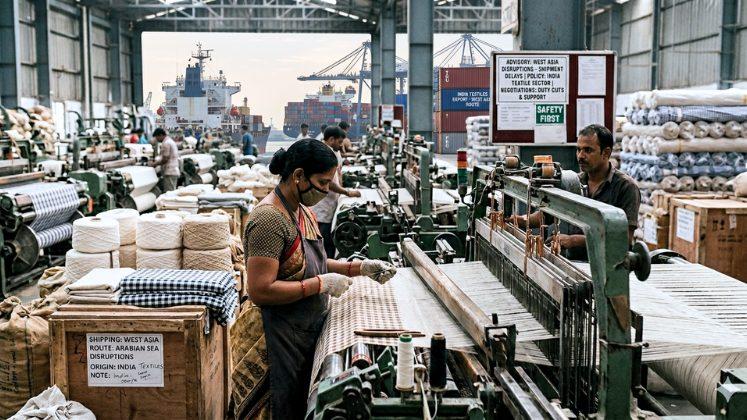
The Ministry of Textiles has proposed a series of duty reductions and regulatory relaxations aimed at securing raw material supplies, as ongoing disruptions linked to the West Asia crisis place mounting pressure on India’s textile industry. The measures under consideration include lowering import duties on rayon pulp and select cotton varieties, as well as deferring anti-dumping duties on certain yarns.
According to officials, the ministry is engaged in consultations with the Ministries of Agriculture and Finance to finalise these proposals. An official was reported as stating that discussions were ongoing with the agriculture ministry regarding a reduction in customs duties, noting that while some stakeholders favour eliminating duties due to inadequate domestic production, the interests of farmers remain a primary concern.
The ministry has also recommended the removal of the minimum import price (MIP) on certain knitted fabrics. This comes amid rising input costs and shipping disruptions, which are threatening the sector’s ability to meet production targets and maintain competitiveness in global markets.
In response to declining exports, the government is encouraging textile manufacturers to diversify into East Asian markets. Readymade garment exports recorded a 19% year-on-year decline in March, largely attributed to instability in West Asia.
India’s cotton imports remain limited and are primarily restricted to specialised varieties such as extra-long staple cotton, sourced mainly from the United States and Egypt. Rayon pulp imports, currently subject to a 5% duty, are largely sourced from Europe.
The government had previously exempted cotton imports from the standard 11% duty for a four-month period ending 31st December last year, in an effort to cushion the impact of steep tariffs imposed by the United States.
Earlier this month, in a related move, the government granted full customs duty exemption on 40 petrochemical products, 29 of which are used in the textile sector, particularly in the production of man-made fibres.
Additionally, the textiles ministry has taken up with the finance ministry the issue of deferring or removing proposed anti-dumping duties on elastomeric fibre yarn and viscose rayon filament yarn, which are predominantly imported from China and Singapore.
- Core Fashion & Textile Value Chain
- Circularity, Sustainability & Waste Management
- Sustainability Enablers & Solutions
- Technology, Platforms & Innovation
- Retail, Trade & Market Access
- Knowledge, Institutions & Ecosystem Builders
- Finance, Investment & Support
- Logistics, Infrastructure & Operations
- Media, Communication & Culture
- Others

 Arabic
 French
 Spanish
 Portuguese
 Deutsch
 Turkish
 Dutch
Dutch
 Italiano
 Russian
 Romaian
 Portuguese (Brazil)
 Greek
Greek