


Fashion for Good project targets textile waste recycling at scale
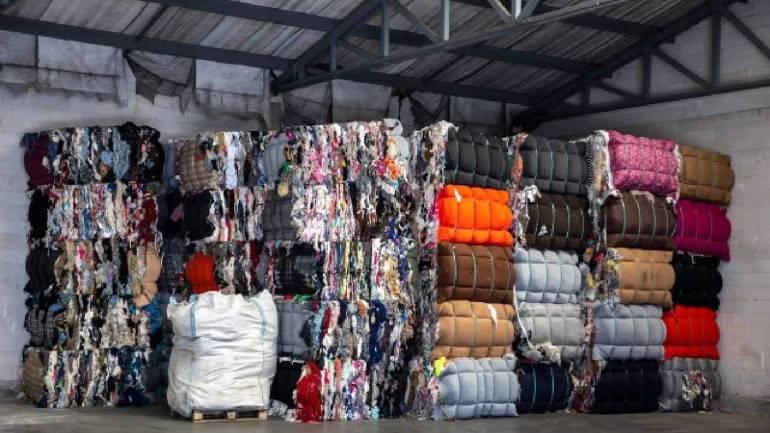
Fashion for Good has introduced Project Feedstock Activation Europe (FAE), to build the infrastructure needed for large-scale textile-to-textile (T2T) recycling across Europe.
The initiative will focus on creating workable systems for sorting and preparing post-consumer textiles that cannot be reused, to turn such material into commercially useful feedstock for recycling operations.
The project addresses the difficulties in using post-consumer waste as a raw material in textile recycling, specifically the need to make it cost-effective and practical for recyclers.
Fashion for Good’s approach centres on two main activities, including developing advanced processes for preparing waste textiles and setting up a network of regional hubs to manage the sorting and pre-processing steps.
Project FAE will first review advanced pre-processing methods, including the separation of fibre blends, removal of elastane, and extraction of contaminants, to assess their readiness for industrial use.
The aim is to identify which technologies are feasible for immediate deployment and which require further development.
In addition to technology assessment, the project intends to design a framework for creating regional hubs across Europe. These hubs would collect post-consumer textiles, use automated sorting and mechanical pre-processing, and generate feedstock streams adapted to recycler requirements.
By implementing automation and centralising processes, the model seeks to lower processing costs and enhance the quality and consistency of material supplied to recyclers.
The initiative brings together expertise from throughout the textile value chain. Involved parties include sorters such as Boer Group, Circle-8 Textile Ecosystems, Erdotex, Formació i Treball, Humana People to People, Kringwinkel Antwerpen, New Retex, Nouvelles Fibres Textiles, Plaxtil-Essaimons, Sympany, Texaid, and Texlimca. Recyclers contributing to the project cover a range of techniques, with participation from Circ, Circulose, CuRe Technology, eeden, Infinited Fiber Company, Kipas (fibR-e), Matterr, Meltem Kimya, Recover, Reju, OnceMore from Södra, and WornAgain.
The project is also supported by ecosystem partners, including InvestNL, Landbell Group, Refashion, Reverse Resources, TEXroad, Wargon Innovation, WRAP, ZDHC, and the Global Fashion Agenda.
Fashion for Good aims for Project FAE to deliver not only technical results but also a viable commercial structure that the textile industry can adopt.
The project intends to contribute a practical framework that facilitates the development of a European post-consumer textile waste value chain.
Fashion for Good managing director Katrin Ley said: “We have been talking about textile circularity for years, and the honest truth is that the technology is no longer the bottleneck. What is holding us back is much more unglamorous: the sorting lines, the pre-processing steps, the supply systems that need to exist before a single fibre can be recycled.
“Project FAE is our attempt to tackle that unglamorous, necessary work head-on – together with the brands, sorters and recyclers who know this problem better than anyone. If we get this right, we unlock something the industry has been trying to reach for a long time.”
- Core Fashion & Textile Value Chain
- Circularity, Sustainability & Waste Management
- Sustainability Enablers & Solutions
- Technology, Platforms & Innovation
- Retail, Trade & Market Access
- Knowledge, Institutions & Ecosystem Builders
- Finance, Investment & Support
- Logistics, Infrastructure & Operations
- Media, Communication & Culture
- Others

 English
 Arabic
 French
 Spanish
 Portuguese
 Deutsch
 Turkish
 Dutch
Dutch
 Italiano
 Romaian
 Portuguese (Brazil)
 Greek
Greek