


Gujarat Spinning Mills Face Cost Pressures Amid Renewable Power Curtailments
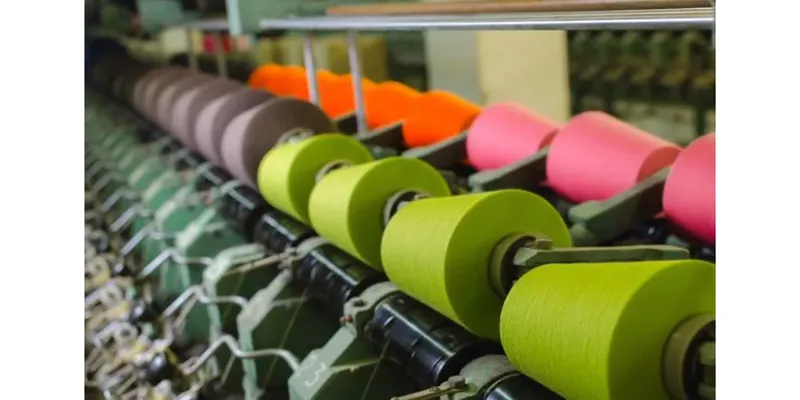
Reduced availability of wind and solar energy forces mills to shift to higher-cost power sources
Textile spinning mills in Gujarat are experiencing operational and cost challenges due to reduced access to renewable energy. Over the past 20 months, significant curtailments in wind, solar, and hybrid power generation have affected energy availability. The situation has increased reliance on costlier power sources.
Spinning mills in Gujarat are facing production and cost-related pressures following reduced availability of renewable energy. Over the past 20 months, grid authorities have curtailed between 50–70% of wind, solar, and hybrid power generation during peak periods.
The curtailments are attributed to grid stability concerns, transmission constraints, and a mismatch between peak renewable energy generation and actual demand. High wind and solar output periods have not aligned with consumption patterns. In addition, limited energy storage capacity and insufficient evacuation infrastructure have contributed to the restrictions.
As a result, spinning mills have been required to depend on more expensive electricity sources, while their renewable energy installations remain underutilised.
The Spinners’ Association of Gujarat stated that these curbs are affecting investments made under the state’s development plans. According to the association, wind and solar projects were established following approvals and grid assessments but are now subject to restrictions despite prior capacity clearances by Gujarat Energy Transmission Corporation.
Electricity costs for commercial users in Gujarat range from Rs. 6 (US $0.065) to Rs. 9 (US $0.097) per unit. In comparison, solar power can be generated at an effective cost of Rs. 2 (US $0.022)–Rs. 3 (US $0.032) per unit over its lifecycle, offering potential long-term savings of 70%–80% on energy expenses.
Gujarat’s spinning sector includes more than 100 mills located primarily in Surat, Ahmedabad, and Rajkot, contributing approximately 25% to India’s yarn production.
The state continues to be a significant renewable energy producer, with over 64% of its power consumption sourced from clean energy and accounting for 27.2% of India’s wind energy capacity, despite ongoing curtailments.
- Core Fashion & Textile Value Chain
- Circularity, Sustainability & Waste Management
- Sustainability Enablers & Solutions
- Technology, Platforms & Innovation
- Retail, Trade & Market Access
- Knowledge, Institutions & Ecosystem Builders
- Finance, Investment & Support
- Logistics, Infrastructure & Operations
- Media, Communication & Culture
- Others

 English
 Arabic
 French
 Spanish
 Portuguese
 Deutsch
 Turkish
 Dutch
Dutch
 Italiano
 Romaian
 Portuguese (Brazil)
 Greek
Greek