


Textile Ministry Formulates Time-bound Action Plan To Implement Schemes Announced In The Budget
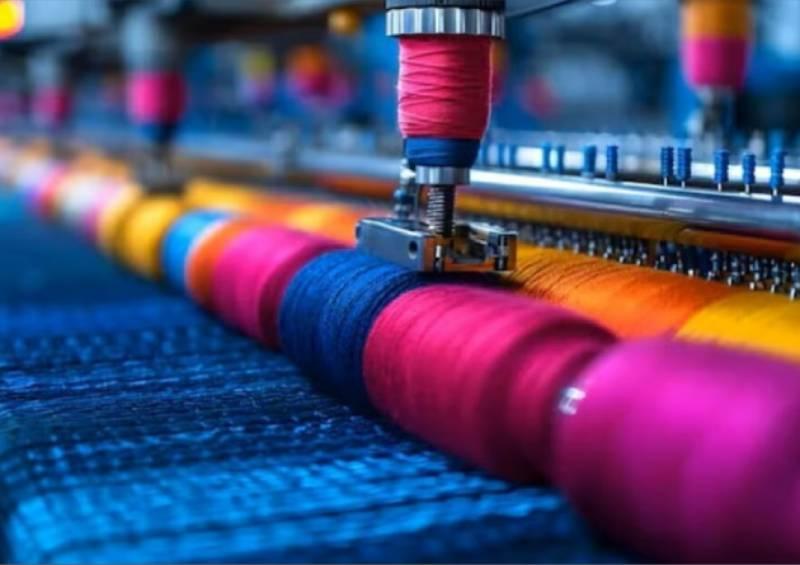
The Union Ministry of Textiles has come-up with a comprehensive time-bound action plan to implement the various schemes and policies that were announced by Finance Minister Nirmala Sitaraman in the recent Union Budget. The move follows the policymakers and other industry stakeholders realising the significance of promptly implementing these initiatives which can help the industry put up a more resilient supply chain to effectively face the future uncertainties and headwinds.
Experts are of the view that mission-mode approach is much more warranted today than ever before as the industry is currently passing through its most difficult phase following a slew of disruptions encountered recently — ranging from imposition of abnormally higher tariff by the US to the more recent West Asia crisis, which have severely disrupted both supply as well as demand. They view that the policymakers in the given situation strongly believe that while external factors are not within their control, facilitating a much stronger and robust manufacturing base for textiles and apparel is the need of the hour and can go a long way in mitigating the challenges in a more systematic way.
It may be noted that in the recent Union Budget, the Finance Minister had announced ‘Integrated Programme for the Textile Sector’. The programme having five schemes aims to strengthen the entire textile value chain, targeting a massive expansion in manufacturing capacity and job creation to meet the Vision 2030 goals. While the Union textile ministry recently convened a consultation meeting of stakeholders to operationalise two of the key schemes — the Textile Expansion and Employment (TEEM) Scheme as also the Tex Eco Initiative, it has now also initiated deliberation on other remaining schemes of the Integrated Programme.
National Fibre Scheme is designed to build self-reliance across natural (silk, wool, jute) and man-made fibres (MMF), reducing import dependency and encouraging innovation, whereas Samarth 2.0 (skilling), an upgraded version of the flagship skill development scheme Samarth 2.0, will focus on training over 10 lakh people, aligning with industry requirements. On the other hand, National Handloom and Handicraft Programme integrates existing schemes into a unified programme aimed at improving artisan incomes, market linkages and preserving heritage.
“The ministry is pushing for early implementation of all these schemes since it believes that these will go a long way in creating a robust and much more competitive textile manufacturing base which will help to not only withstand the headwinds more effectively but also leverage the emerging opportunities in a much emphatic manner. Policymakers are also evaluating some of the existing schemes so that they can deliver the desired results in a time-bound manner,” states an official with the ministry.
“Pro-activeness on the part of policymakers is something that is very much warranted in the given situation as we face multiple disruptions and uncertainties due to rising energy costs and supply chain anomalies. Along with policymakers, other stakeholders will also have to play their role if we want to build an industry which can exhibit resilience in trying times like what we are undergoing at present,” says GV Aras, Independent Director & Strategic Advisor.
“It is good to see the ministry prioritising the implementation of recently announced schemes which are part of an integrated programme aimed at transitioning the sector toward a much robust production base. Apart from making it more resilient against headwinds, the sector needs a solid manufacturing base through multi-pronged strategy and that is where an integrated approach will be called for,” says an industry observer.
Meanwhile, the ongoing geopolitical challenges are weighing on the domestic textile sector, adversely impacting the exports. During the April 2025-February2026 period, Indian textile exports registered a de-growth of -2.1 per cent over the previous year while apparel exports registered a meagre growth of 0.51 per cent during the same time. Cumulative exports of textiles and apparel during April 2025-February 2026 have registered a degrowth of one per cent.
For April 2025-February 2026, textile exports reached US$ 18,355.43 million as compared to US$ 18,761.87 million in the corresponding period of the previous year, while apparel exports reached US$ 14,531.65 million as compared to US$ 14,458.02 million. The cumulative textile and apparel exports during the period reached US$ 32,887.08 million as against US$ 33,219.89 million.
- Core Fashion & Textile Value Chain
- Circularity, Sustainability & Waste Management
- Sustainability Enablers & Solutions
- Technology, Platforms & Innovation
- Retail, Trade & Market Access
- Knowledge, Institutions & Ecosystem Builders
- Finance, Investment & Support
- Logistics, Infrastructure & Operations
- Media, Communication & Culture
- Others
 Portuguese
 English
 Arabic
 French
 Spanish
 Deutsch
 Turkish
 Dutch
Dutch
 Italiano
 Russian
 Romaian
 Portuguese (Brazil)
 Greek
Greek