


Iran-US Conflict Disrupts Karur Textile Cluster; Costs Surge, Exports Stall
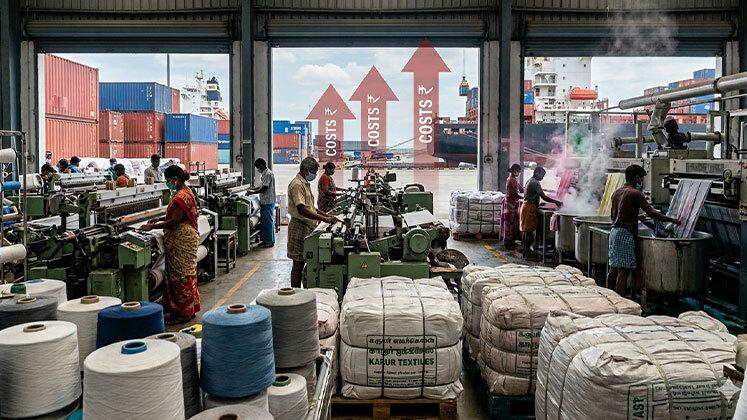
The ongoing conflict in West Asia has severely impacted textile manufacturers in Karur, disrupting exports, inflating input costs, and constraining production in one of India’s key home textile hubs.
The Karur cluster, known for its long-standing reputation in global home textile exports, contributes significantly to India’s outbound trade. With an annual manufacturing value estimated at Rs. 9000 crore (US $950 million), exports account for approximately Rs. 6000 crore (US $633 million), largely directed towards the United States and the European Union. The sector supports an estimated workforce of around two lakh people engaged in the production of bed linen, table covers, kitchen textiles, mats, and sofa covers.
Industry stakeholders indicated that, since the onset of the West Asia crisis around three weeks ago, exporters have faced growing difficulties in moving containers due to disruptions in global logistics and shipping routes. The impact has been compounded by the sector’s reliance on petroleum-based raw materials, which have seen both supply shortages and sharp price increases.
P. Gopalakrishnan, President of the Karur Textile Manufacturer Exporters Association, stated that overall raw material costs had risen by approximately 40% to 60%. He noted that the price of certain varieties of polyester fibre had increased to Rs. 130 (US $1.37) per kilogram from Rs. 80 (US $0.84), rendering it commercially unviable for exporters to execute existing orders.
Industry sources further indicated that processing costs across dyeing, printing, and finishing units had also risen significantly. Shortages of commercial and industrial gases—critical for several manufacturing processes—have exacerbated operational challenges, leading to disruptions across the production cycle. As both input and processing costs continue to escalate, manufacturers and exporters are facing mounting pressure on margins and viability.
Gopalakrishnan added that a majority of exporters had been unable to dispatch shipments to clients in key markets such as the United States and Europe. He further indicated that exporters were reluctant to accept fresh orders from overseas buyers due to the inability to ensure production within viable cost parameters. He warned that continued disruption could trigger cascading effects across the industry and urged both the Union and State governments to intervene promptly to address the challenges faced by textile manufacturers and exporters.
- Core Fashion & Textile Value Chain
- Circularity, Sustainability & Waste Management
- Sustainability Enablers & Solutions
- Technology, Platforms & Innovation
- Retail, Trade & Market Access
- Knowledge, Institutions & Ecosystem Builders
- Finance, Investment & Support
- Logistics, Infrastructure & Operations
- Media, Communication & Culture
- Others

 English
 Arabic
 French
 Spanish
 Portuguese
 Deutsch
 Turkish
 Dutch
Dutch
 Italiano
 Romaian
 Portuguese (Brazil)
 Greek
Greek