


What 2025 revealed about scaling sustainable materials
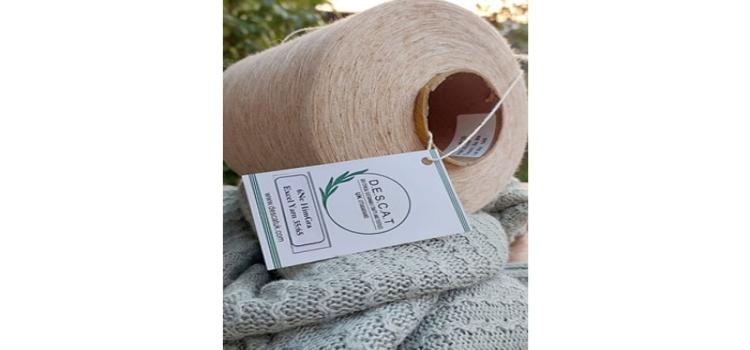
In 2025, the evolution of HimGra, a natural fibre developed from wild Himalayan grass, offered a practical case study of this transition.
The fashion and textile industry is not short of sustainable material innovations. What remains scarce are materials that successfully move beyond early validation into systems capable of supporting long-term, responsible scale.
In 2025, the evolution of HimGra, a natural fibre developed from wild Himalayan grass, offered a practical case study of this transition. Rather than prioritising rapid expansion, the year focused on building the conditions required for durability—technical credibility, early market adoption, climate-aligned sourcing, and supply-chain readiness.
Material validation was a critical first step. HimGra’s fibre and yarn systems demonstrated compatibility with existing spinning, weaving, and finishing infrastructure, lowering adoption barriers for mills and brands. Recognition through innovation platforms reinforced relevance, but more importantly, early engagement from designers and luxury-focused brands provided real-world stress testing—where performance, hand feel, and seasonal adaptability mattered as much as sustainability claims.
HimGra cultivation and community readiness form the foundation of climate-aligned material scaling
Equally significant was the work beyond the market. Pilot cultivation initiatives were initiated in Uttarakhand’s hill regions, alongside mobilisation of Self-Help Groups. These efforts underscored a central lesson for material innovators: cultivation, livelihoods, and climate resilience cannot be treated as peripheral impact narratives. They are core infrastructure decisions that determine whether a material can scale without externalising risk.
Another notable shift was the early integration of system enablers—traceability planning, certification pathways, and governance structures—well before volume expansion. In an era of tightening regulatory and disclosure expectations, this sequencing is increasingly non-negotiable.
“Sustainable materials do not fail because they lack innovation. They fail when the systems required to support them are built too late. In 2025, our focus was not acceleration, but readiness.”
The experience of 2025 highlights a broader insight for the textile industry. Sustainable materials that endure are not those that accelerate fastest, but those that invest earliest in credibility, compatibility, and context. Moving from innovation to system readiness is less about visibility and more about deliberate design—of both materials and the ecosystems that support them.
As brands and suppliers navigate material transitions under climate and compliance pressures, such approaches offer a reminder: responsible scale is built long before scale begins.
- Core Fashion & Textile Value Chain
- Circularity, Sustainability & Waste Management
- Sustainability Enablers & Solutions
- Technology, Platforms & Innovation
- Retail, Trade & Market Access
- Knowledge, Institutions & Ecosystem Builders
- Finance, Investment & Support
- Logistics, Infrastructure & Operations
- Media, Communication & Culture
- Others

 English
 Arabic
 Spanish
 Portuguese
 Deutsch
 Turkish
 Dutch
Dutch
 Italiano
 Russian
 Romaian
 Portuguese (Brazil)
 Greek
Greek