


Downstream Textiles Benefit From QCO Revocation - Polyester Yarn Makers Face Pressure
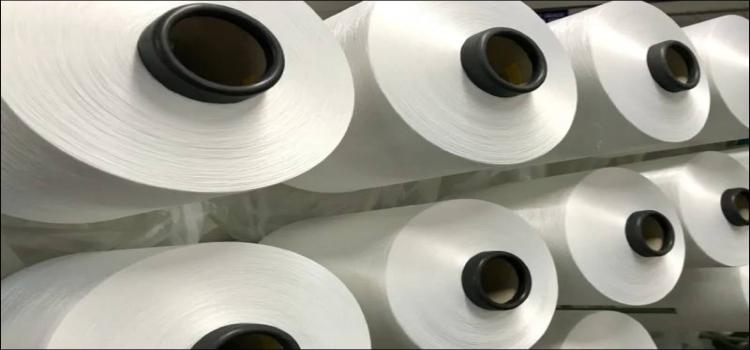
The Indian government’s recent decision to rescind the Quality Control Order (QCO) on several polymer and fibre intermediates is expected to provide relief to the downstream textile sector, especially readymade garments, which will now have access to more competitively priced imported raw materials. The move comes amid ongoing US export tariffs that have impacted key textile segments.
The revocation, announced on November 12, 2025, follows the 2023 QCO that mandated BIS certification for imported yarn to curb cheaper polyester imports from China. With the QCO removed, cheaper imports are likely to support downstream sectors, particularly readymade garments, which rely heavily on polyester yarn, a lower-cost alternative to cotton. In contrast, the home textile segment, more dependent on cotton-based exports, may see limited benefits.
Analysis of 20 polyester yarn manufacturers, accounting for 40-45% of the sector’s revenue, indicates that upstream yarn producers could face intensified competition from imports, keeping revenue growth muted at 3–5% in FY26.
While reduced GST and cheaper input costs (PTA and MEG) may boost volumes, realisation pressure and lower crude prices are likely to shrink operating margins by ~100 bps to 5.5–6%. Interest coverage is expected to moderate to 2.7–2.9 times from 3.5–3.7 times.
Crisil Ratings experts note that while the QCO revocation eases cost pressures for downstream manufacturers, polyester yarn makers will need to navigate import competition, global crude price volatility and persistent US tariffs, which will influence the overall performance across the textile value chain.
This development highlights the delicate balance between supporting downstream textile competitiveness and safeguarding domestic upstream yarn producers.
- Core Fashion & Textile Value Chain
- Circularity, Sustainability & Waste Management
- Sustainability Enablers & Solutions
- Technology, Platforms & Innovation
- Retail, Trade & Market Access
- Knowledge, Institutions & Ecosystem Builders
- Finance, Investment & Support
- Logistics, Infrastructure & Operations
- Media, Communication & Culture
- Others

 English
 French
 Spanish
 Portuguese
 Deutsch
 Turkish
 Dutch
Dutch
 Italiano
 Russian
 Romaian
 Portuguese (Brazil)
 Greek
Greek