


Textile Exporters see higher wage bills, compliance costs
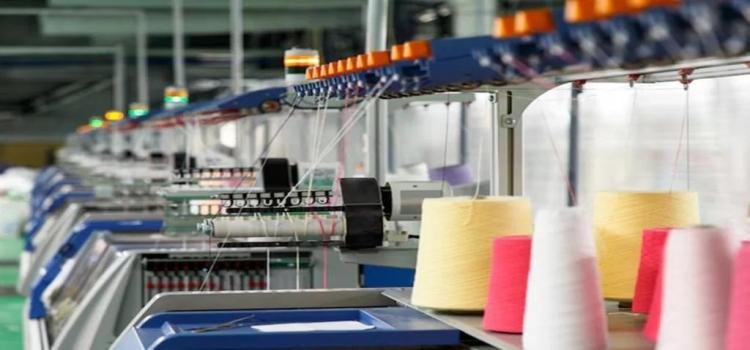
The codes introduce a universal minimum wage across organised and unorganised sectors, replacing a framework that covered only about 30% of workers.
Industry experts, however, point out that the full impact on businesses and workers will become clear only after states notify their own rules.
India’s textile and apparel exporters — already hit by US tariffs — fear that provisions in the new labour codes, recently notified by the Union government, could push up wage bills and compliance costs, further squeezing their wafer-thin margins.
“The directive to treat migrant workers on par with local employees in wages and welfare is well-intentioned but can be financially straining,” a Tiruppur-based MSME exporter said. “The industry already operates on a wafer-thin margin of 5–10%. Bringing every worker — direct or contract — under full compliance will sharply increase costs and hit small exporters like us.”
Exporters concerns
Some exporters also worry that extending gratuity eligibility to fixed-term employees (FTEs) after one year of service could increase attrition in labour-intensive clusters such as Tiruppur, Coimbatore, Surat and Ahmedabad. Under current rules, gratuity applies only after five years of continuous service. FTEs are workers hired under a contract for a specific period or project.
However, Kumar Duraiswamy, Joint Secretary, Tiruppur Exporters Association, said implementing the codes will not be a major challenge in Tiruppur, where exporters already comply with Corporate Sustainability Due Diligence Directive norms required for EU and US shipments. “Migrant workers are anyway treated at par with locals here and the textile sector is already covered under minimum wages, so the impact is limited,” he said.
The codes introduce a universal minimum wage across organised and unorganised sectors, replacing a framework that covered only about 30% of workers.
What did N Thirukkumaran say?
N Thirukkumaran, Chairman of Tiruppur-based Estee Exports, acknowledged that compliance costs may rise but said the broader benefits outweigh concerns. He said allowing women to work night shifts will significantly benefit export operations, given the predominance of women workers on the textile shop floor. Tiruppur hosts over 22,000 companies and employs around 10 lakh workers, 60% of them women and a large share of migrants. The city, often called India’s knitwear capital, exports about ₹45,000 crore worth of apparel annually, accounting for 60% of the country’s knitwear shipments.
According to Vishal Pacheriwal, MD of Parnika India, a Surat-based women’s wear manufacturer and exporter, the cost impact of the labour codes is likely to be material but manageable, as the new framework also provides flexibility, formalisation and ease of compliance. “Under the Industrial Relations Code, firms now have more leeway. they can lay off or retrench up to 300 workers without prior government approval,” Pacheriwal said. He added that the Occupational Safety Code permits 8–12-hour workdays within a 48-hour week, offering operational flexibility.
Industry experts, however, point out that the full impact on businesses and workers will become clear only after states notify their own rules. Since labour is a concurrent subject, states can frame their own regulations, which must align with the central codes.
K Venkatachalam, Chief Advisor, Tamil Nadu Spinning Mills Association, said that while the labour codes extend a range of benefits, implementation ultimately depends on state-level rulemaking. For instance, Tamil Nadu has already issued draft rules under the Code on Wages 2019, Industrial Relations Code 2020 and Occupational Safety, Health and Working Conditions Code 2020, but final enforcement rules are yet to be notified. “Until the State Rules are notified for enforcement, the provisions in the Codes would remain silent, without any implementation,” Venkatachalam said.
- Core Fashion & Textile Value Chain
- Circularity, Sustainability & Waste Management
- Sustainability Enablers & Solutions
- Technology, Platforms & Innovation
- Retail, Trade & Market Access
- Knowledge, Institutions & Ecosystem Builders
- Finance, Investment & Support
- Logistics, Infrastructure & Operations
- Media, Communication & Culture
- Others

 English
 Arabic
 Spanish
 Portuguese
 Deutsch
 Turkish
 Dutch
Dutch
 Italiano
 Russian
 Romaian
 Portuguese (Brazil)
 Greek
Greek