


New labour codes: Textile industry says night shifts for women will boost production, exports
Industry bodies also said measures such as single registration, single licence and single return for employers, along with an inspector-cum-facilitator system instead of strict enforcement, would make it easier to do business.
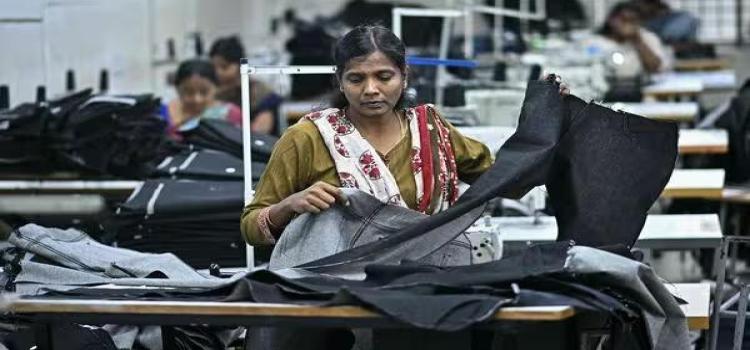
New Delhi: India’s textile industry largely welcomed the government’s rollout of four new labour codes on Friday. It especially praised the decision to allow women to work night shifts, saying this would help factories operate more efficiently and increase production. Exporters said the change would improve productivity and make Indian garments more competitive in global markets.
Industry bodies also said measures such as single registration, single licence and single return for employers, along with an inspector-cum-facilitator system instead of strict enforcement, would make it easier to do business.
The new labour codes come at a time when the textile and apparel industry is pushing for deeper integration into global supply chains as India aims to become a global hub for sourcing textiles. The country’s textile and apparel exports stood at $36.55 billion in FY25, up from $34.40 billion the previous year.
A giant leap
Amit Thapar, president, Ganga Acrowools Limited, a yarn manufacturer and exporter, said higher wages would boost confidence among workers and encourage them to stay longer in factories, thereby addressing the long-standing issue of high attrition in spinning units. Thapar added, however, that the new rule allowing workers to receive gratuity after one year of service could increase attrition. Earlier, workers could receive their gratuity only after completing five years at a company.
According to Mithileshwar Thakur, secretary general, Apparel Export Promotion Council (AEPC), the long-awaited rollout of the four labour codes marks a giant step towards simplifying and streamlining myriad existing labour laws.
“These labour reforms will unshackle Indian industry and help it realise its true potential through improvements in productivity, while ensuring transparency, job security, social and financial security, and social compliance for workers,” he said, adding that the sector would benefit immensely from the change allowing women to work nights in all types of jobs across establishments.
Section 66 (1)(b) of the Factories Act, 1948, which prohibited women from working in factories at night, was a major impediment to the introduction of double shifts in the apparel sector, where the workforce is dominated by women. Though some states had introduced their own laws permitting women to work in factories at night, it was not allowed in all states.
“This change will immediately address the capacity-augmentation challenges in the sector and help India emerge as a major global sourcing hub for clothing,” Thakur said.
‘Need a fair balance’
Prabhu Dhamodharan, convenor of Indian Texpreneurs Federation (ITF), a textile entrepreneurs’ body based in Coimbatore, said, “For the textile sector, this will directly support our efforts to build scale and global competitiveness, enabling companies to operate with greater stability, flexibility and efficiency, while making compliance easier.”
“We appreciate the changes such as single registration, single licence and single return for employers, and the inspector-cum-facilitator model instead of pure enforcement, which will strengthen the ease of doing business,” he added.
Raja M Shanmugam, former president of the Tiruppur Exporters’ Association, said, “While the new labour codes focus on workers’ welfare, it is also important to recognise that industries act as major employment generators on behalf of the government.”
“Their role needs to be protected, especially during periods of economic stress. The government should consider a pro-industry approach by looking at a company’s long track record of taxes paid and past compliance, and use that to ease legal pressures on units that default unintentionally. This will create a fair balance for both workers and employers,” said Shanmugam.
- Core Fashion & Textile Value Chain
- Circularity, Sustainability & Waste Management
- Sustainability Enablers & Solutions
- Technology, Platforms & Innovation
- Retail, Trade & Market Access
- Knowledge, Institutions & Ecosystem Builders
- Finance, Investment & Support
- Logistics, Infrastructure & Operations
- Media, Communication & Culture
- Others
 Dutch
Dutch
 English
 Arabic
 French
 Spanish
 Portuguese
 Deutsch
 Turkish
 Italiano
 Russian
 Romaian
 Portuguese (Brazil)
 Greek
Greek