


Turning Wastewater into Wealth: How SEDL is Redefining Sustainability in Textiles
A New Vision for Wastewater in the Textile Industry
Water has always been the textile industry’s greatest ally and its greatest challenge. Every meter of fabric, every shade of dye, every finish owes its existence to water. Yet as freshwater resources decline and regulatory pressures rise, the textile industry faces a pressing reality: the traditional “use-and-dispose” water model is no longer viable.
At Spray Engineering Devices Limited (SEDL), we believe the future lies not in consuming more water, but in recovering, reusing, and reimagining what is already at hand. Wastewater, often dismissed as an unwanted byproduct, can in fact become the cornerstone of a circular, resource-efficient textile economy.
Beyond Treatment: Towards a Circular Water Economy
Conventional effluent treatment has always focused on compliance, treating wastewater to meet discharge norms. While necessary, this approach overlooks the true potential of effluent as a resource reservoir.
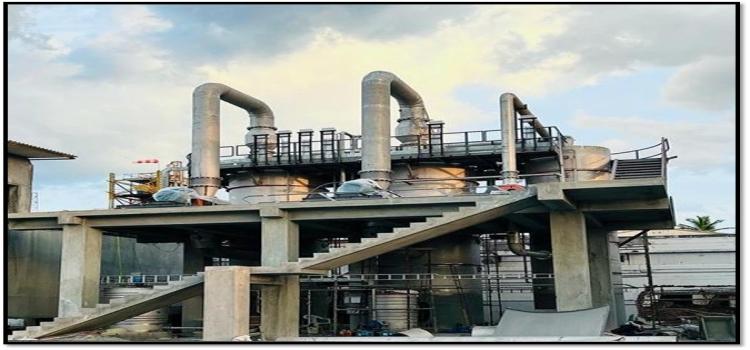
SEDL’s philosophy is different. With our advanced MVR Based Low Temperature Evaporator (LTE®), wastewater is no longer just treated — it is transformed:
- Clean Water Recovery – Up to 99% of effluent is reclaimed as high-quality water in the form of condensate with TDS less than 200 ppm suitable for reuse in dyeing and finishing processes.
- Salt Recovery – Salts such as sodium sulfate are extracted, purified, and reintroduced into production cycles, reducing raw material costs.
- Dye Concentration – Used dyes can be reclaimed through concentration and recovery
- Energy Reuse – Heat energy, often wasted in conventional systems, is captured and reintegrated into plant operations.
In this model, nothing is wasted. Water, salts, dyes and energy flow back into the system, creating a self-sustaining loop.
Case in Point: Arthanari Loom Center (ALC), India
A leading example of this transformation can be seen at Arthanari Loom Center (ALC) in Salem, Tamil Nadu. Serving iconic global brands such as ZARA, GAP, and Ralph Lauren, ALC had to meet both customer sustainability expectations and strict Zero Liquid Discharge regulations from Central Pollution Control Board & Tamil Nadu Pollution Control Board.
The challenges were formidable:
- High Total Dissolved Solids (TDS), making direct discharge impossible.
- High Chemical Oxygen Demand (COD) from dyes and organic sizing agents, which resisted biological degradation.
- High Hardness, leading to scaling in process equipment and utilities.
- Excess Chlorides, causing corrosion of pipelines and pumps while posing risks to ecosystems also.
Traditional biological treatment methods and primary effluent plants could not adequately reduce salt loads or COD levels, leaving ALC in need of a cutting-edge, reliable solution.
SEDL’s solution was decisive. With SEDL’s MVR-based LTE®, ALC unlocked the hidden value in its wastewater while achieving
Key outcomes:
- >75% clean water recovered and fed back into dyeing and processing lines.
- 7,000–9,000 kg of salts reclaimed daily and reused in operations.
- 5 million kilo calories of heat energy reused every day, slashing energy costs.
- Achieving full ZLD to ensure compliance with PCB regulations.
- Cutting operation costs to 1/4th of that of conventional systems.
- Energy Efficiency: Reduced power consumption (20–22 kWh/m³), and negligible steam consumption with zero reliance on boiler.
What began as a regulatory necessity became a strategic advantage. Today, ALC not only meets environmental standards but also reduces costs, enhances efficiency, and strengthens its brand as a sustainable supplier to the world’s biggest fashion retailers.
Turning Challenges into Opportunities
The ALC story illustrates a larger truth: wastewater is not a liability; it is a resource waiting to be unlocked. For textile manufacturers worldwide, the benefits are compelling:
- Operational security – A steady, in-house supply of high-quality water.
- Regulatory peace of mind – effortless compliance with global discharge norms.
- Easy to Retrofit – Seamless integration into existing systems
- One-Step ZLD Solution – Pure evaporation, no chemical pre-treatment
- Less CIP & Higher Uptime – Maximizes productivity and profitability
- Resource Recovery & Circular Economy – Supports sustainable operations
- Sustainability credentials – Stronger appeal to eco-conscious brands and buyers.
By adopting circular solutions, textile companies are not just protecting the environment they are future-proofing their businesses.
The Road Ahead: A Self-Sustaining Textile Industry
The textile industry of tomorrow will not rely on ever-depleting freshwater reserves. Instead, it will thrive on closed-loop systems where every drop of water, every grain of salt, and every unit of energy is reclaimed and reused.
SEDL’s mission is to make this future accessible, one textile plant at a time, across the globe. By helping manufacturers reclaim, reuse, and reintegrate resources, we are proving that wastewater is not waste at all. It is the foundation of a circular economy that benefits industry, society, and the globe alike.
- Core Fashion & Textile Value Chain
- Circularity, Sustainability & Waste Management
- Sustainability Enablers & Solutions
- Technology, Platforms & Innovation
- Retail, Trade & Market Access
- Knowledge, Institutions & Ecosystem Builders
- Finance, Investment & Support
- Logistics, Infrastructure & Operations
- Media, Communication & Culture
- Others

 English
 Arabic
 French
 Spanish
 Portuguese
 Deutsch
 Dutch
Dutch
 Italiano
 Russian
 Romaian
 Portuguese (Brazil)
 Greek
Greek