


50 Percent tariff an opportunity in disguise-3 ways Modi is planning to beat tariff pain
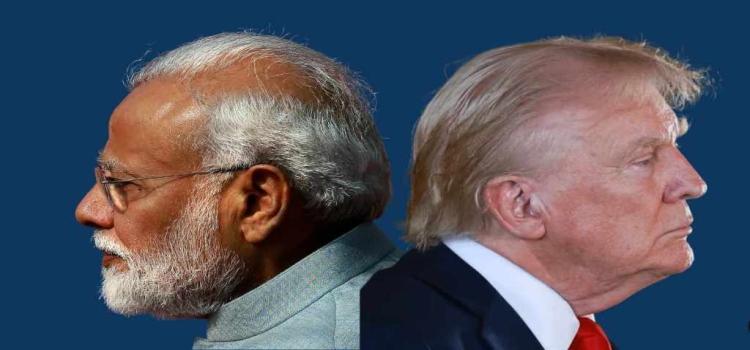
US slaps 50% tariff on $86.5 bn Indian exports from Aug 27. Here’s how Modi plans to counter the tariff shock with three strategic moves.
India’s $45 billion exports to the United States are staring at a steep tariff setback. SBI report expects India’s trade surplus to convert to trade deficit with GDP facing headwinds.
From August 27, Washington will levy a 50% tariff on most Indian goods, ending hopes of a last-minute reprieve. The notification, issued on Monday, spares only a handful of sectors such as pharmaceuticals, energy and electronics. For others — from textiles and gems to shrimp and handicrafts — the duty hike lands at a time when orders are already slowing and margins are under strain.
Trump’s unprecedented move has not just forced India to review its US ties by choosing not to seek exemptions or waiting for Washington to reconsider, it has also forced Modi government to focus on internal resilience to absorb the shock. India is now looking at a three-pronged approach to counter the onslaught of Trump’s tariff bomb –
1. Strategic Hedge: Looking Beyond Washington
Trump’s tariff pain has given India an opportunity to reduce its overdependence on the US for its exports. Brazilian political scientist Matias Spektor has summed India’s move against Trump’s “tools of political coercion” as a strategic hedge. In Spektor’s words, strategic hedging is not about complete self-sufficiency but about preserving freedom of action through multiple, overlapping partnerships, something India appears to be prioritising.
“The ultimate goal isn’t self-sufficiency but rather preserving freedom of action. When alternatives exist, no single partner can dictate terms,” he explains.
India’s response is now moving in a clear direction — diversify trade partners and reduce reliance on the US. Trade channels with China are being reopened in select sectors, and Russia is being actively considered for expanded trade relationships. Indian firms are also fast-tracking certifications to access markets in Africa, West Asia, and Southeast Asia.
2. Boosting Domestic Consumption with GST reforms
The Indian economy, unlike many export-reliant nations, draws its strength from domestic consumption. Private spending contributes around 61.4% to the GDP, whereas the $87.4 billion in exports to the US account for just 2% of India’s total output.
One of the key levers has been GST reform that Modi announced from the ramparts of Red Fort on Independence Day. A long-pending proposal to reduce the number of tax slabs has been escalated. A panel of state finance ministers has cleared the move to simplify GST into two tiers — 12% and 28%, with goods in the 5% and 18% categories shifting accordingly.
These reforms, long demanded by industry, are now being pushed to signal that India remains an attractive and reform-minded destination. “Notwithstanding what’s going on with the US, to send a signal that India is reforming… remains an attractive investment destination,” said Sonal Varma of Nomura Holdings.
According to Bloomberg, not all state finance ministers were consulted before the move was discussed, showing the urgency with which the Centre is acting.
3. Self-Reliance and Ease of Doing Business
A Bloomberg report indicates, top officials from the Prime Minister’s Office, the commerce ministry and the finance ministry met today to discuss possible measures, including lower-interest loans and support for accessing new markets.
Modi has set up two high-level panels to focus on the policy changes needed. One of the committees, which met last week for the first time, is led by Cabinet Secretary TV Somanathan and will focus on state-level deregulations, an official familiar with the matter said. The second panel is led by Rajiv Gauba, a member of the government think tank Niti Aayog, which will prepare recommendations for the next-generation reforms highlighted by Modi, the person said.
Modi also met with his Economic Advisory Council recently to gather policy recommendations on improving living standards and the ease of doing business. The view of many of the economists at the meeting was that 6.5% growth in the fiscal year through March 2026 was still achievable, with low inflation and interest rate cuts likely to help support the economy, a person familiar with the discussions said. There was a recognition that policy changes were needed to boost demand in the economy, the person told Bloomberg.
While the 50% US tariff poses an immediate challenge, it has also prompted India to sharpen its long-term strategy. By leaning inwards on domestic consumption, reforming tax structure, and recalibrating global alliances, the Modi government is hoping to turn a pressure point into a policy pivot.
- Core Fashion & Textile Value Chain
- Circularity, Sustainability & Waste Management
- Sustainability Enablers & Solutions
- Technology, Platforms & Innovation
- Retail, Trade & Market Access
- Knowledge, Institutions & Ecosystem Builders
- Finance, Investment & Support
- Logistics, Infrastructure & Operations
- Media, Communication & Culture
- Others

 English
 Arabic
 French
 Spanish
 Portuguese
 Deutsch
 Turkish
 Dutch
Dutch
 Italiano
 Russian
 Romaian
 Greek
Greek