


System-wide improvements could boost textile recycling rate: BCG
Insights
- System-wide improvements could boost textile recycling rate with a raw material value of more than $50 billion, a Boston Consulting Group commentary said.
- Reaching that level will require industry-wide changes, including expanding efforts to collect discarded textiles, adopting new tech, raising operational efficiency, boosting investments and making more companies sell recycled products, it noted.
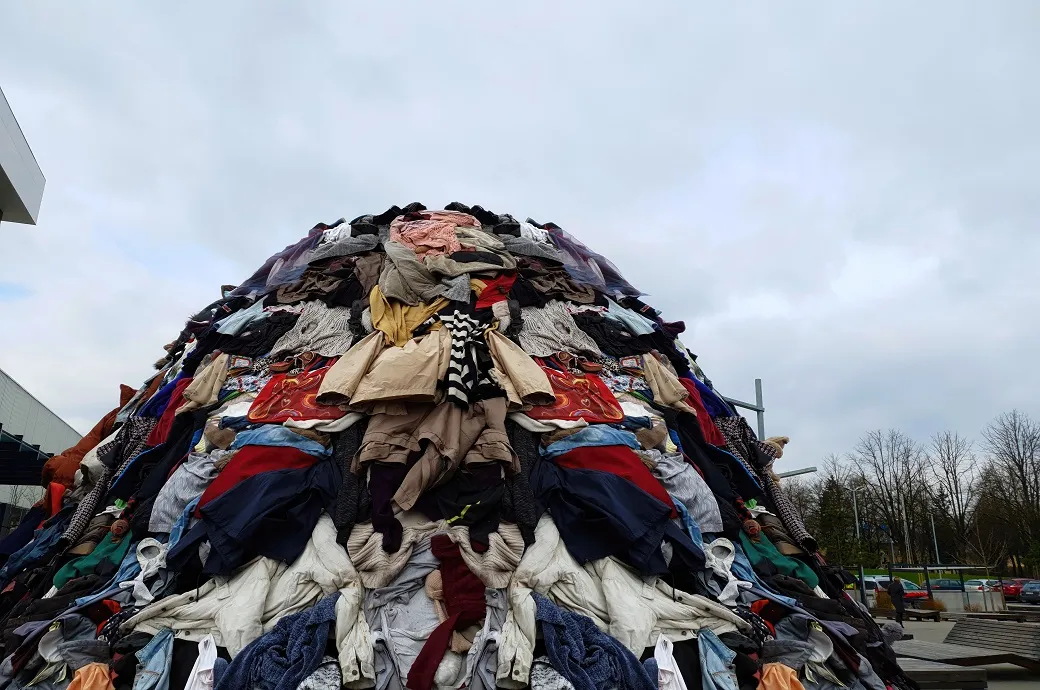
With the world discarding 120 million metric tonnes of clothes a year and only a fraction of discarded textiles being remade into fibres suitable for use in new, apparel-grade fabric, system-wide improvements could boost that recycling rate to more than 30 per cent new fibres with a raw material value of more than $50 billion, according to a commentary by the Boston Consulting Group (BCG).
Reaching that level will require industry-wide changes, including expanding efforts to collect discarded textiles, adopting new technologies, increasing operational efficiency and boosting investments, it noted.
It will also require more companies to make and sell products created from recycled materials—and more people to buy them.
In 2024, discarded clothing worldwide reached 120 million metric tonnes—a clear indication of how dramatically fashion consumption has changed. As a direct result of these trends, global fibre production has more than doubled since 2000, amplifying both consumption patterns and waste.
The increase in textile waste imposes significant economic and environmental burdens. In 2024, approximately 80 per cent of discarded clothing ended up in landfills or incinerators, while only 12 per cent was reused, and substantially less than 1 per cent was recycled into new textile fibres.
The environmental toll is particularly high, the commentary by Rohan Sajdeh, Catharina Martinez-Pardo, Alexander Meyer zum Felde, Tom Lange, Eleonora Tieri and Elian Evans observed.
Producing textiles accounts for 92 per cent of the fashion industry's greenhouse gas emissions. Disposal exacerbates such emissions. Open dumping adds another layer of risk, releasing harmful micro-plastics into the environment.
The authors expect demand for recycled textiles to exceed supply by 30 to 40 million metric tonnes by 2030.
Despite the growing momentum for change, the existing textile value chain includes many barriers to recovering and reusing more waste. Three, in particular, pose challenges to meaningful change, the authors said.
First, several factors often make recycled materials less desirable economically and practically than virgin fibres. While enthusiasm for recycled fibers is rising, concerns about quality, availability and integration into established supply chains can make them less appealing.
Moreover, the cost disparity is significant: recycled polyester can be more than twice as expensive as virgin polyester, and recycled cotton usually commands a higher price as well.
Second, today’s textile waste management infrastructure falls short. Current textile recycling systems simply weren't designed for the immense volumes the world generates. Most collection channels primarily support resale markets, both charitable and commercial, rather than recycling initiatives.
Consequently, sorting processes rely heavily on manual labour that is optimised for resale rather than recycling. These manual processes cannot efficiently categorize textiles by recyclability, fabric composition, and colour, or effectively remove disruptors like buttons and zippers. Consumer confusion further complicates this already strained system.
Third, complex fabrics require innovating beyond current recycling capabilities. Most modern fabrics are made from blends of different fibre types. However, most existing industrial recycling solutions, which are primarily mechanical, can handle only single-material textiles.
This mismatch between waste and technology has led to an urgent need for innovative solutions that can handle a broad range of modern textile waste and deliver products that are competitive in cost and quality, the authors wrote. Such techniques have yet to reach the scale necessary to tackle current waste volumes.
To build a profitable system for all stakeholders, the industry should focus on five key actions designed to work across all of the barriers mentioned above: promote demand for textiles with recycled fibres; collect more waste; modernise sorting; scale effective recycling solutions; and invest in innovation, they said.
Success will also depend on creating meaningful economic incentives for businesses and consumers, and harnessing synergies across the value chain, the authors added.
- Core Fashion & Textile Value Chain
- Circularity, Sustainability & Waste Management
- Sustainability Enablers & Solutions
- Technology, Platforms & Innovation
- Retail, Trade & Market Access
- Knowledge, Institutions & Ecosystem Builders
- Finance, Investment & Support
- Logistics, Infrastructure & Operations
- Media, Communication & Culture
- Others

 English
 Arabic
 French
 Spanish
 Portuguese
 Deutsch
 Turkish
 Dutch
Dutch
 Russian
 Romaian
 Portuguese (Brazil)
 Greek
Greek