


EU Textile Circularity Rules Surge Ahead Of Recycling Capacity
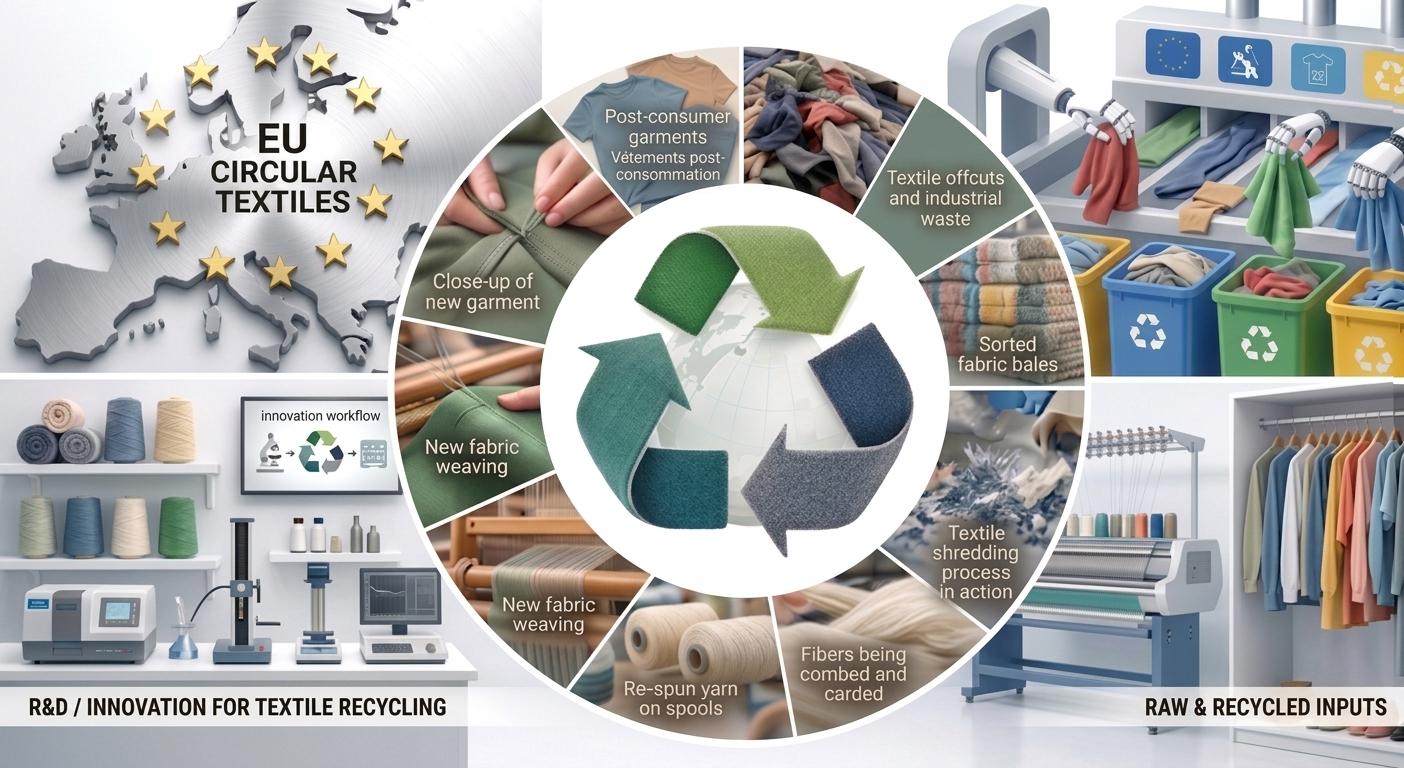
EU Textile circularity regulations are moving rapidly to reshape Europe’s apparel and textile industry, but recycling infrastructure is struggling to keep pace with the speed of regulatory change. New EU requirements are pushing brands, manufacturers and producers toward stronger collection, reuse and recycling systems, even as textile-to-textile recycling capacity remains limited. The growing gap highlights a critical challenge for the European textile sector: regulation is advancing faster than the infrastructure needed to deliver circularity at scale.
EU Rules Raise the Circularity Pressure
The European Union has already made separate textile collection mandatory, while its revised Waste Framework Directive introduces harmonised Extended Producer Responsibility (EPR) requirements for textiles. Under the new framework, producers will increasingly be responsible for financing and supporting the collection, sorting, reuse and recycling of textile products.
The EU’s wider textile strategy also targets a future in which products placed on the European market are durable, repairable and recyclable, with greater use of recycled fibres and significantly higher recycling capacity.
The regulatory push has intensified further with new rules restricting the destruction of unsold apparel, clothing accessories and footwear by large companies from 19 July 2026. Companies are being encouraged to explore resale, reuse, remanufacturing and other alternatives instead of destroying surplus products.
Recycling Infrastructure Remains the Critical Gap
While policy is creating strong incentives for circularity, the recycling ecosystem has yet to reach the required scale. EU data indicates that around 5 million tonnes of clothing are discarded annually, while only about 1% of clothing material is recycled into new clothing.
A 2026 analysis by ReHubs and Boston Consulting Group also highlights the economic challenge. Europe generates substantial volumes of post-consumer textile waste, but current textile-to-textile recycling economics remain difficult, with recycled fibres carrying structurally higher processing costs than established recycling routes.
The Global Fashion Agenda’s 2030 Circularity Blueprint estimates that Europe could require €8–11 billion in capital expenditure to build the infrastructure needed to scale textile-to-textile recycling.
This means the next phase of Europe’s circularity transition will depend not only on legislation, but also on investment in collection networks, automated sorting, fibre separation, recycling technologies and commercially viable markets for recycled materials.
Sorting and Collection Become Strategic Priorities
For the circular textile model to work, discarded garments must first be collected and accurately sorted. Mixed fibres, dyes, finishes and contamination can make textile recycling technically and economically challenging.
The EU’s EPR framework is therefore significant because it creates a mechanism through which producers can contribute financially to the management of products after use. The framework also places emphasis on sorting materials suitable for reuse, remanufacturing and recycling, including fibre-to-fibre recycling where technology permits.
For brands and manufacturers supplying the European market, this could eventually influence product development itself. Simpler material compositions, improved traceability and recyclable design could become increasingly important as regulatory requirements tighten.
Implications for Global Textile Suppliers
The EU’s circularity transition is not limited to European manufacturers. Apparel and textile exporters supplying European brands may also face growing expectations around material traceability, recycled content, product durability and end-of-life management.
For textile-producing countries such as India, Bangladesh, Vietnam and Türkiye, the shift could create both compliance challenges and new opportunities. Companies investing early in textile waste recovery, recycled fibres and circular production systems could strengthen their position with European buyers.
At the same time, rising demand for recycled inputs could create opportunities for manufacturers developing high-quality recycled yarns and fibres that meet European sourcing requirements.
- Core Fashion & Textile Value Chain
- Circularity, Sustainability & Waste Management
- Sustainability Enablers & Solutions
- Technology, Platforms & Innovation
- Retail, Trade & Market Access
- Knowledge, Institutions & Ecosystem Builders
- Finance, Investment & Support
- Logistics, Infrastructure & Operations
- Media, Communication & Culture
- Others
 Dutch
Dutch
 English
 Arabic
 French
 Spanish
 Portuguese
 Deutsch
 Turkish
 Italiano
 Russian
 Romaian
 Portuguese (Brazil)
 Greek
Greek