


Dye Effluent: From Discharge to Recovery
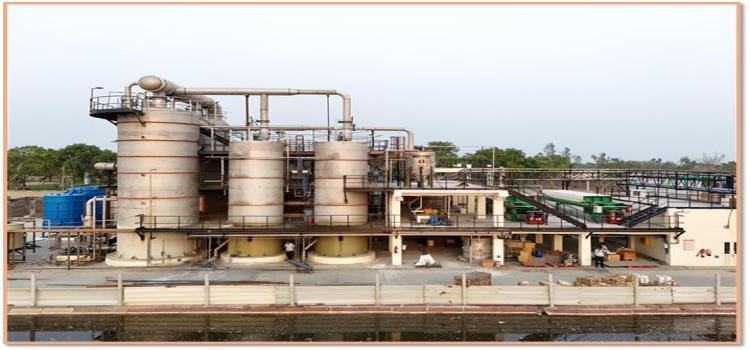
As global focus sharpens on sustainability, the textile industry long seen as a water-intensive and pollution-heavy sector is undergoing a much-needed transformation. While the spotlight often falls on raw material innovation or renewable energy, there’s a silent revolution taking place in the treatment of wastewater specifically, dye-laden effluents. And it’s not just about pollution control anymore. It’s about resource recovery.
When Colour Isn’t Just Waste – It’s a Resource – The textile industry uses over 100 billion liters of water every year and dyeing and finishing alone contribute to 20% of global industrial water pollution (World Bank). For decades, the dyed wastewater discharged from these operations has been treated as hazardous waste complex, expensive to manage, and unrecoverable.
But what if we told you that this colourful waste is hiding an opportunity?
The effluent that once required heavy treatment and disposal is now being reimagined by SEDL as a source of reusable dye and clean water, all while consuming very little energy.
Smart Solutions for a Colourful Problem: SEDL’s Approach to Dye Effluent – At the heart of this innovation is SEDL’s Low-Temperature Evaporation (LTE®) system, powered by Mechanical Vapor Recompression (MVR). This isn’t just another wastewater treatment system it’s a closed-loop resource recovery unit.
What Sets It Apart?
- Dual Recovery: The system simultaneously recovers valuable dye concentrate and distilled-quality water suitable for reuse.
- Low Energy Use: Operates at 60–70°C, utilizing waste heat or low-energy MVR, consuming less power compared to traditional thermal evaporators.
- Smart Design: Fully automated with minimal manpower needs, it fits into both new and retrofitted setups.
- Compact & Modular: Requires less space and is scalable based on effluent volume.
Key Advantages
Most treatment methods neutralize pollutants, but SEDL’s solution transforms them. Recovered dye concentrate can be used again in dyeing or processed into secondary applications, while the recovered water re-enters the production cycle helping factories inch closer to true Zero Liquid Discharge (ZLD).
This approach aligns strongly with SDG 6 (Clean Water) and SDG 12 (Responsible Consumption) and is gaining interest from brands demanding greener supply chains.
“The best part is this isn’t just sustainable; it’s economically viable. The system pays for itself through savings in fresh dye, water, and power,”
Turning Problems into Progress – Whether you’re processing cotton, viscose, polyester, or blends, dye recovery is often feasible when the right separation and evaporation technologies are applied. While traditional RO and MEE setups struggle with coloured, high-TDS streams, SEDL’s LTE® system thrives where others failed on handling tricky dye effluents with ease, efficiency, and elegance.
With regulatory compliance tightening and ESG targets rising on the corporate radar, textile units cannot afford to ignore resource recovery. Systems like SEDL’s aren’t just about compliance they’re about competitiveness, credibility, and cost-efficiency.
Wastewater as a Resource – If your dye house is still paying to treat and discharge coloured wastewater, it’s time to rethink. SEDL’s Dye Concentration & Recovery Solution is more than a tool it’s a strategy for forward-looking, future-proof textile production.
- Core Fashion & Textile Value Chain
- Circularity, Sustainability & Waste Management
- Sustainability Enablers & Solutions
- Technology, Platforms & Innovation
- Retail, Trade & Market Access
- Knowledge, Institutions & Ecosystem Builders
- Finance, Investment & Support
- Logistics, Infrastructure & Operations
- Media, Communication & Culture
- Others

 English
 Arabic
 French
 Spanish
 Portuguese
 Deutsch
 Turkish
 Dutch
Dutch
 Italiano
 Russian
 Portuguese (Brazil)
 Greek
Greek