


Wearing Wellness: Fashion’s New Value Proposition
Key Takeaways
- Wellness is emerging as fashion’s new value proposition as consumers seek clothing that supports comfort, performance and well-being.
- From Ayurvastra and natural fibres to mineral-infused materials and smart textiles, innovation is blending nature, science and technology.
- Credible claims, testing and transparency will be crucial as wellness fashion moves mainstream.
Fashion has always reflected the aspirations of society. There was a time when luxury symbolised status, craftsmanship defined exclusivity, and sustainability became the industry’s most compelling narrative. Today, another powerful movement is quietly reshaping the relationship between consumers and clothing. Wellness has emerged as fashion’s newest value proposition, transforming garments from objects of style into tools that promise comfort, health, emotional balance, and improved quality of life.
This evolution is taking place at a time when consumers are becoming increasingly conscious of the products they bring into their daily lives. Wellness is no longer confined to nutrition, fitness, or skincare. It now influences purchasing decisions across industries, including textiles and apparel. Clothing is being evaluated not only for its aesthetics or environmental credentials but also for how it interacts with the body, supports physical comfort, and contributes to overall well-being.
The result is a growing demand for fabrics that offer more than conventional functionality. From naturally therapeutic textiles such as Ayurvastra to mineral-infused fibres, temperature-regulating materials, antimicrobial fabrics, and bio-responsive smart textiles, wellness has become a defining force in textile innovation. What was once considered a niche category is steadily moving into the mainstream, giving brands an opportunity to differentiate themselves in an increasingly competitive marketplace.
For the fashion industry, wellness is no longer simply an emerging trend. It is becoming a strategic marketing narrative built upon scientific innovation, consumer trust, and the growing desire for products that deliver measurable benefits beyond appearance.
The relationship between textiles and health is far from new. Across cultures, fabrics have historically been associated with protection, comfort, and healing. Natural fibres such as cotton, silk, wool, and linen have long been valued for their breathability, softness, and ability to regulate body temperature, contributing to physical comfort in different climates.
Today, however, advances in textile engineering are expanding this relationship beyond traditional fibre properties. Consumers increasingly expect clothing to perform multiple roles. A garment should be comfortable, lightweight, functional, durable, and capable of supporting an active lifestyle. Increasingly, it is also expected to promote a sense of well-being.
This shift reflects broader changes in consumer behaviour. Modern lifestyles often involve long working hours, increased screen time, urban pollution, disrupted sleep patterns, and heightened stress. As people seek holistic approaches to health, they are extending wellness principles into every aspect of daily living, including the clothes they wear.
Fashion has responded by integrating wellness into product development rather than treating it as an additional feature. Instead of simply selling apparel, brands are beginning to market comfort, recovery, relaxation, and performance.
Ayurvastra: An Ancient Concept Finds Modern Relevance
Few innovations illustrate the wellness movement more effectively than Ayurvastra.
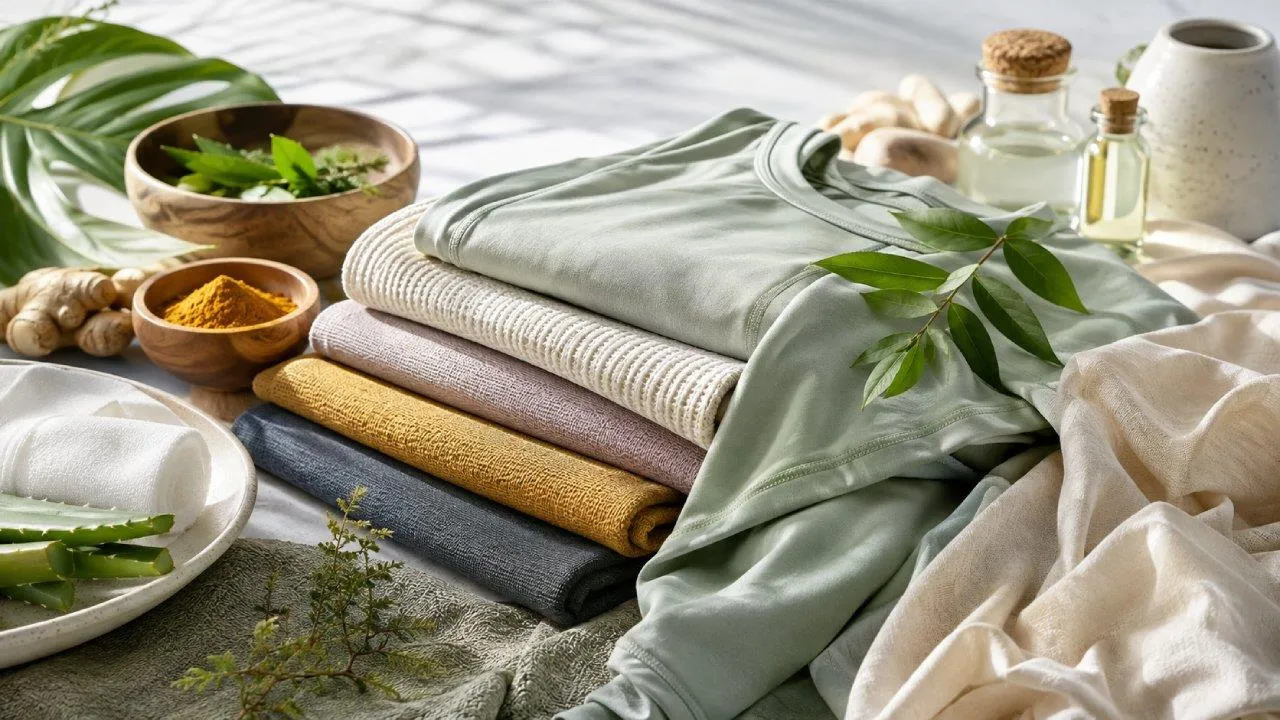
Rooted in India’s Ayurvedic traditions, Ayurvastra refers to textiles treated with medicinal herbs through natural dyeing and finishing techniques. Ingredients such as neem, turmeric, tulsi, sandalwood, aloe vera, and vetiver are infused into fabrics using time-honoured processes.
Traditionally associated with promoting overall well-being, these textiles have gained renewed relevance as consumers increasingly seek natural alternatives to chemically intensive products. Interest has grown across wellness-focused markets in Europe, Japan, and North America, where Ayurvastra is often seen as an extension of holistic living.
While scientific validation continues to evolve for some traditional claims, Ayurvastra’s appeal lies in its blend of heritage, botanical ingredients, and artisanal craftsmanship. Its growing popularity also reflects a broader shift in fashion marketing, where brands are moving beyond aesthetics to tell stories centred on wellness, authenticity, and mindful living.
The Rise of Functional Wellness Fabrics
Beyond traditional herbal textiles, fibre innovation is creating a new generation of wellness-oriented materials where performance and well-being go hand in hand.
Temperature-regulating fabrics adapt to body heat, moisture-management fibres enhance breathability, antimicrobial textiles help garments stay fresher for longer, and compression fabrics support circulation and muscle recovery. Mineral-infused fibres, designed to reflect body heat as far-infrared energy, are also gaining attention for their potential to improve comfort and recovery.
Similarly, fabrics infused with naturally derived ingredients such as aloe vera, lavender, or chamomile are finding applications in sleepwear and wellness apparel, offering enhanced comfort and sensory appeal. As these innovations evolve, the line between apparel and wellness products continues to blur.
Consumers are Buying Experiences, not just Clothing
The appeal of wellness textiles extends beyond technology. Today’s consumers increasingly seek products that reflect their lifestyles, values, and aspirations, making emotional value as important as functionality.
A garment promoted as temperature-regulating or skin-friendly promises more than technical performance. It conveys comfort, confidence, and support for everyday well-being. This has expanded wellness messaging beyond activewear into categories such as loungewear, maternity wear, children’s clothing, travel apparel, workwear, and luxury fashion.
As a result, clothing is increasingly positioned as part of a broader lifestyle centred on comfort and personal well-being.
Smart Textiles: Where Wellness Meets Technology
One of the most significant developments in wellness fashion is the rise of smart textiles. Unlike conventional fabrics, these materials are designed to interact with the wearer and respond to changing conditions.
Advances in textile engineering have produced fabrics that regulate temperature, improve moisture management, and enhance breathability, while some integrate conductive yarns and flexible sensors to monitor physiological indicators such as heart rate, body temperature, or movement. Other innovations include phase change materials, infrared-emitting fibres, and built-in UV protection, expanding the role of textiles in sportswear, healthcare, and everyday apparel.
As wearable technology becomes more discreet, consumers are increasingly looking for garments where functionality is woven into the fabric itself. The future of wellness apparel lies in intelligent textiles that seamlessly combine comfort, performance, and technology.
Natural Fibres Continue to Shape the Wellness Narrative
While technology is expanding the capabilities of textiles, natural fibres remain central to the wellness conversation. Cotton, linen, hemp, bamboo-derived fibres, silk, and wool continue to appeal because of their inherent comfort, breathability, and skin-friendly characteristics.
Consumers increasingly associate these fibres with authenticity, simplicity, and everyday well-being. Their ability to regulate temperature, absorb moisture, and provide tactile comfort makes them particularly attractive in products designed for relaxation, sleep, travel, and extended wear.
Textile manufacturers are building upon these natural advantages through innovative finishes and fibre combinations that enhance performance while preserving the familiar comfort consumers value. Rather than replacing traditional materials, innovation is elevating their functionality to meet modern expectations.
This balance between nature and technology is becoming one of the defining characteristics of wellness-focused textile development.
Wellness as a Brand Differentiator
As fashion markets become increasingly crowded, product differentiation has become both more difficult and more important. Design trends can be replicated quickly, and consumers have access to countless brands offering similar aesthetics at comparable price points.
Wellness provides companies with an opportunity to compete on value rather than appearance alone.
A fabric that promotes thermal comfort, supports an active lifestyle, or enhances the wearing experience offers a compelling reason for consumers to choose one product over another. More importantly, wellness creates opportunities for brands to build long-term emotional connections rather than relying solely on seasonal fashion trends.
Successful wellness marketing is also inherently educational. Consumers want to understand how a textile works, what technologies are involved, and what measurable benefits they can realistically expect. Brands that communicate these aspects clearly are more likely to build credibility and consumer trust.
The emphasis is gradually shifting from promotional claims to informed storytelling, where scientific research, material innovation, and transparent communication strengthen brand positioning.
As wellness becomes an increasingly attractive marketing proposition, maintaining credibility will be essential.
Consumers today are well informed and increasingly sceptical of broad health-related claims. Marketing messages that promise unrealistic therapeutic outcomes without supporting evidence risk undermining consumer confidence and attracting regulatory scrutiny.
This places greater responsibility on textile manufacturers and apparel brands to substantiate product claims through recognised testing, scientific validation, and transparent communication. Rather than exaggerating benefits, successful companies focus on clearly explaining how specific fibres, finishes, or technologies contribute to comfort, performance, or user experience.
Authenticity has become a competitive advantage.
Brands that combine traditional knowledge with modern research, and innovation with measurable performance, are better positioned to establish lasting relationships with increasingly discerning consumers.
Global Demand Continues to Expand
The growing interest in wellness textiles reflects broader changes in global consumer behaviour. Rising health awareness, ageing populations, urban lifestyles, and increasing attention to preventive well-being have created favourable conditions for products that contribute to everyday comfort. As a result, demand is expanding across diverse market segments.
Performance apparel continues to integrate recovery-focused textiles. Hospitality increasingly incorporates wellness bedding and sleep-enhancing fabrics. Healthcare applications are adopting advanced functional textiles designed to improve patient comfort. Travel apparel is embracing temperature regulation, odour management, and lightweight performance, while children’s products increasingly emphasise skin-friendly materials.
Luxury fashion is also responding by highlighting craftsmanship alongside comfort, recognising that modern consumers increasingly define premium products through the quality of the wearing experience rather than visual appeal alone.
Collectively, these developments suggest that wellness is evolving from a niche category into a broader design philosophy influencing the entire textile value chain.
The future of wellness fashion will be shaped by continued collaboration between textile science, biotechnology, material engineering, and digital innovation.
Researchers are exploring fibres capable of adapting to environmental conditions, fabrics that respond dynamically to changes in body temperature, advanced botanical finishes, and next-generation smart textiles that integrate seamlessly into everyday clothing.
Artificial intelligence is expected to accelerate material development by identifying optimal fibre combinations and predicting performance outcomes before production begins. Personalised apparel designed around individual lifestyles, climates, and wellness needs may also become increasingly common.
At the same time, consumers are likely to demand greater transparency regarding how wellness claims are developed, tested, and communicated. This will encourage the industry to move beyond marketing narratives towards evidence-based innovation.
- Core Fashion & Textile Value Chain
- Circularity, Sustainability & Waste Management
- Sustainability Enablers & Solutions
- Technology, Platforms & Innovation
- Retail, Trade & Market Access
- Knowledge, Institutions & Ecosystem Builders
- Finance, Investment & Support
- Logistics, Infrastructure & Operations
- Media, Communication & Culture
- Others
 Portuguese
 English
 Arabic
 French
 Spanish
 Deutsch
 Turkish
 Dutch
Dutch
 Italiano
 Russian
 Romaian
 Portuguese (Brazil)
 Greek
Greek