


Government Forms Working Group to Identify Textile Products for Domestic Manufacturing
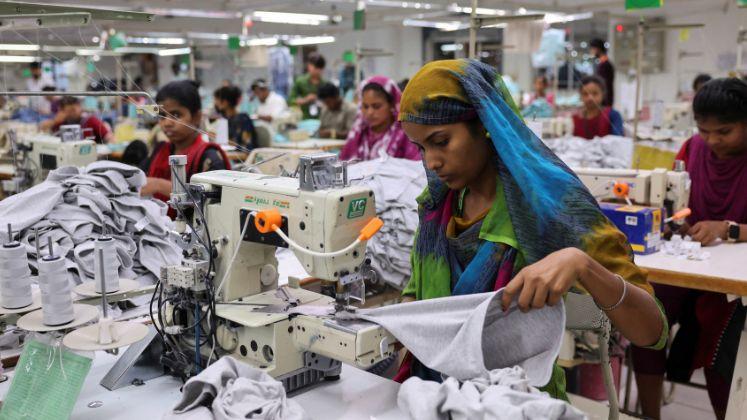
The government has constituted six sector-specific working groups to identify up to 100 products for increased domestic manufacturing, as part of a broader effort to reduce import dependence and strengthen India’s industrial capabilities.
According to an official, the initiative is aimed at promoting the indigenisation of products that are either not manufactured in India or are produced in insufficient quantities to meet domestic demand.
The working groups have been tasked with preparing a list of products that could be prioritised for local manufacturing. Their recommendations will be submitted to the Cabinet Secretariat within three weeks.
The six groups cover industries including textiles and footwear; pharmaceuticals, biotechnology and medical devices; chemicals and petrochemicals; capital goods, automotive and electric vehicles, advanced capital goods; energy; construction equipment and infrastructure; and defence and aerospace products with civilian applications, as well as electronics.
The panels comprise representatives from a range of ministries and government departments, including the Ministry of Commerce and Industry, the Department for Promotion of Industry and Internal Trade (DPIIT), NITI Aayog, the Ministry of Textiles and more.
All six working groups will be chaired by the Secretary of the Department for Promotion of Industry and Internal Trade.
The identified products will be those that currently face supply gaps due to limited domestic production capacity or a complete absence of local manufacturing. The exercise is expected to support the government’s broader objective of expanding India’s manufacturing base and enhancing its competitiveness in both domestic and international markets.
Officials indicated that the initiative is intended not only to reduce reliance on imports but also to create opportunities for Indian manufacturers to serve global markets by building capacity in strategically important sectors.
- Core Fashion & Textile Value Chain
- Circularity, Sustainability & Waste Management
- Sustainability Enablers & Solutions
- Technology, Platforms & Innovation
- Retail, Trade & Market Access
- Knowledge, Institutions & Ecosystem Builders
- Finance, Investment & Support
- Logistics, Infrastructure & Operations
- Media, Communication & Culture
- Others

 Arabic
 French
 Spanish
 Portuguese
 Deutsch
 Turkish
 Dutch
Dutch
 Italiano
 Russian
 Romaian
 Portuguese (Brazil)
 Greek
Greek